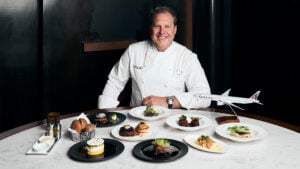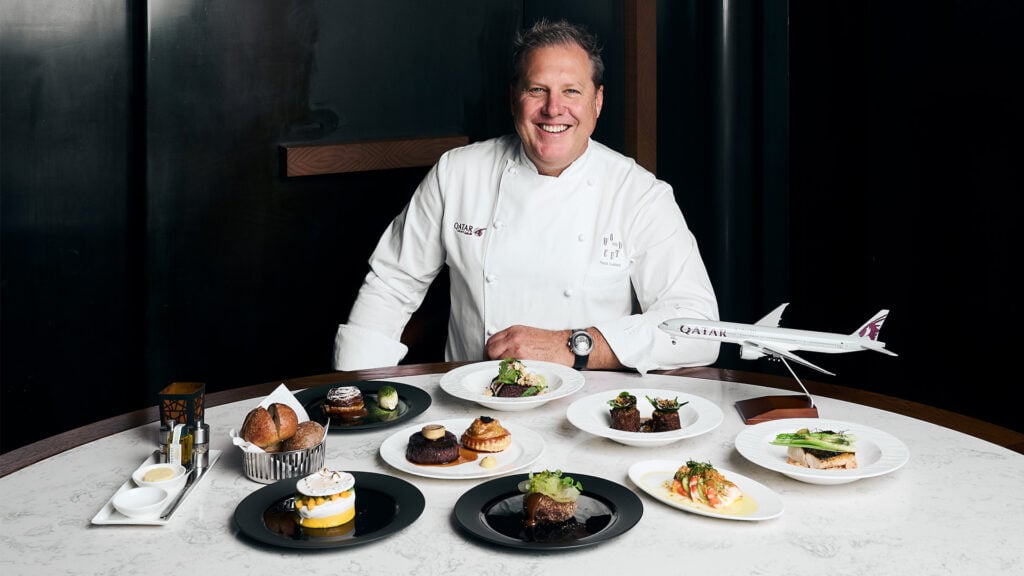
Qatar Airways enters its second year of partnership with Sydney restaurant Woodcut to bring a new menu to its premium cabins. But getting a dish from the restaurant kitchen to an aircraft galley takes more than simply scaling up a recipe.
Chef Ross Lusted, co-owner of Woodcut, tells Point Hacks that the process involves close collaboration between the restaurant, Qatar Airways and the airline’s catering partners. The challenge: recreating the dishes consistently while working within the practical constraints of inflight dining.
“There’s no point in trying to replicate what we do on the ground if we can’t do it equally as good in the air,” Lusted said. “Let’s change and do something else.”
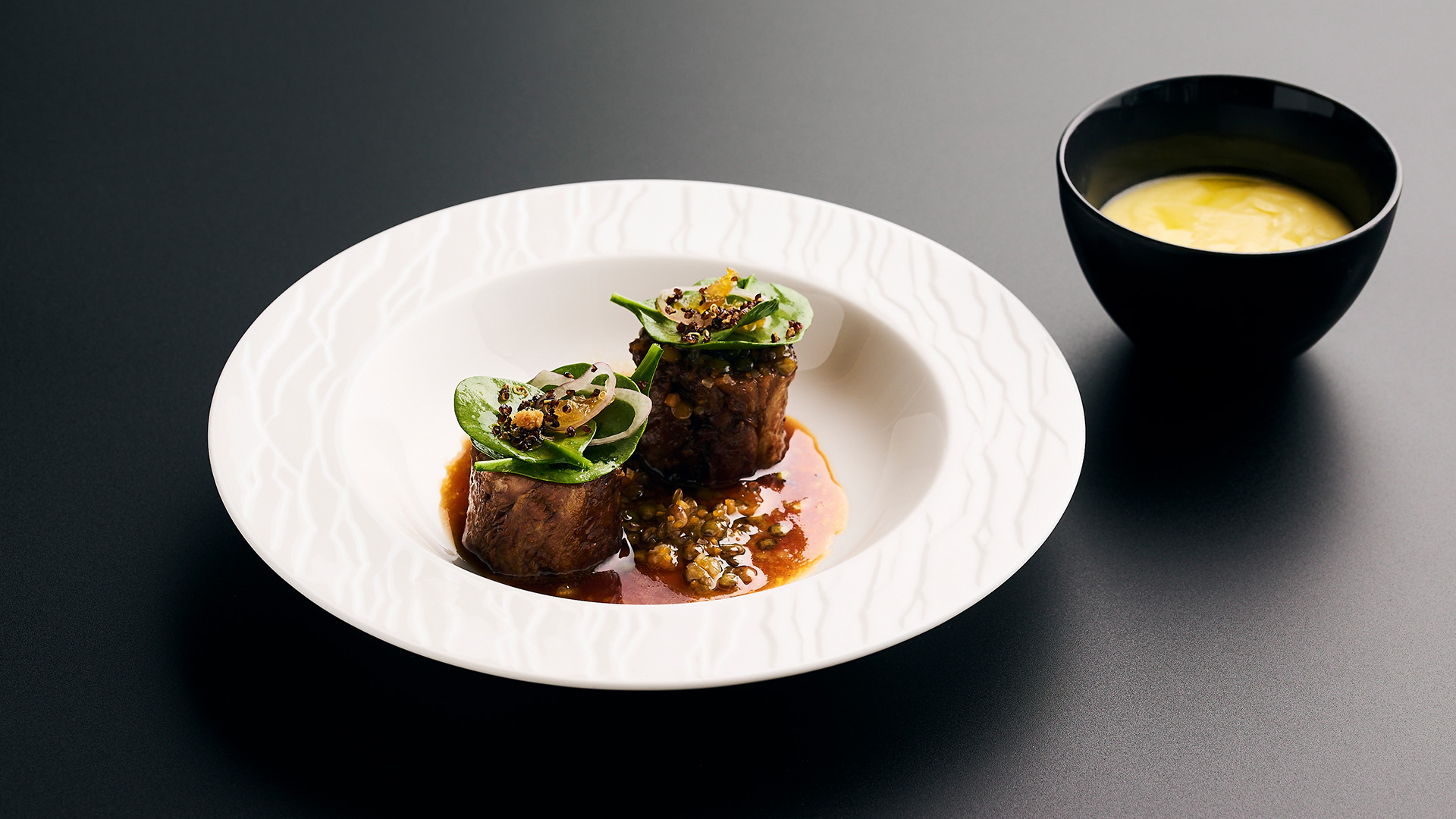
The latest menu, available on Qatar Airways flights departing Australia from February 2027, includes Woodcut slow-cooked lamb shoulder with softened lentils, young spinach and puffed quinoa in Business Class.
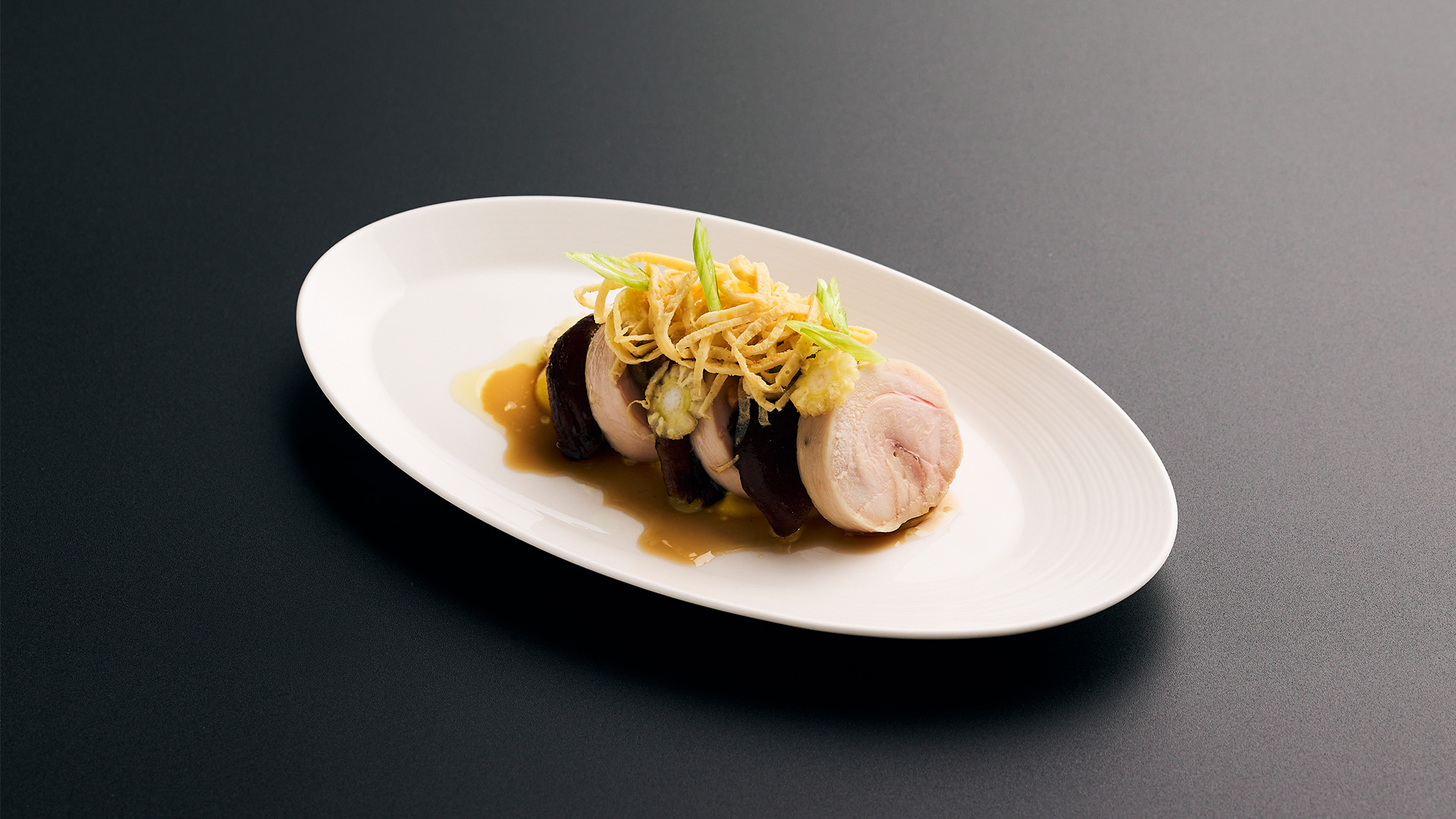
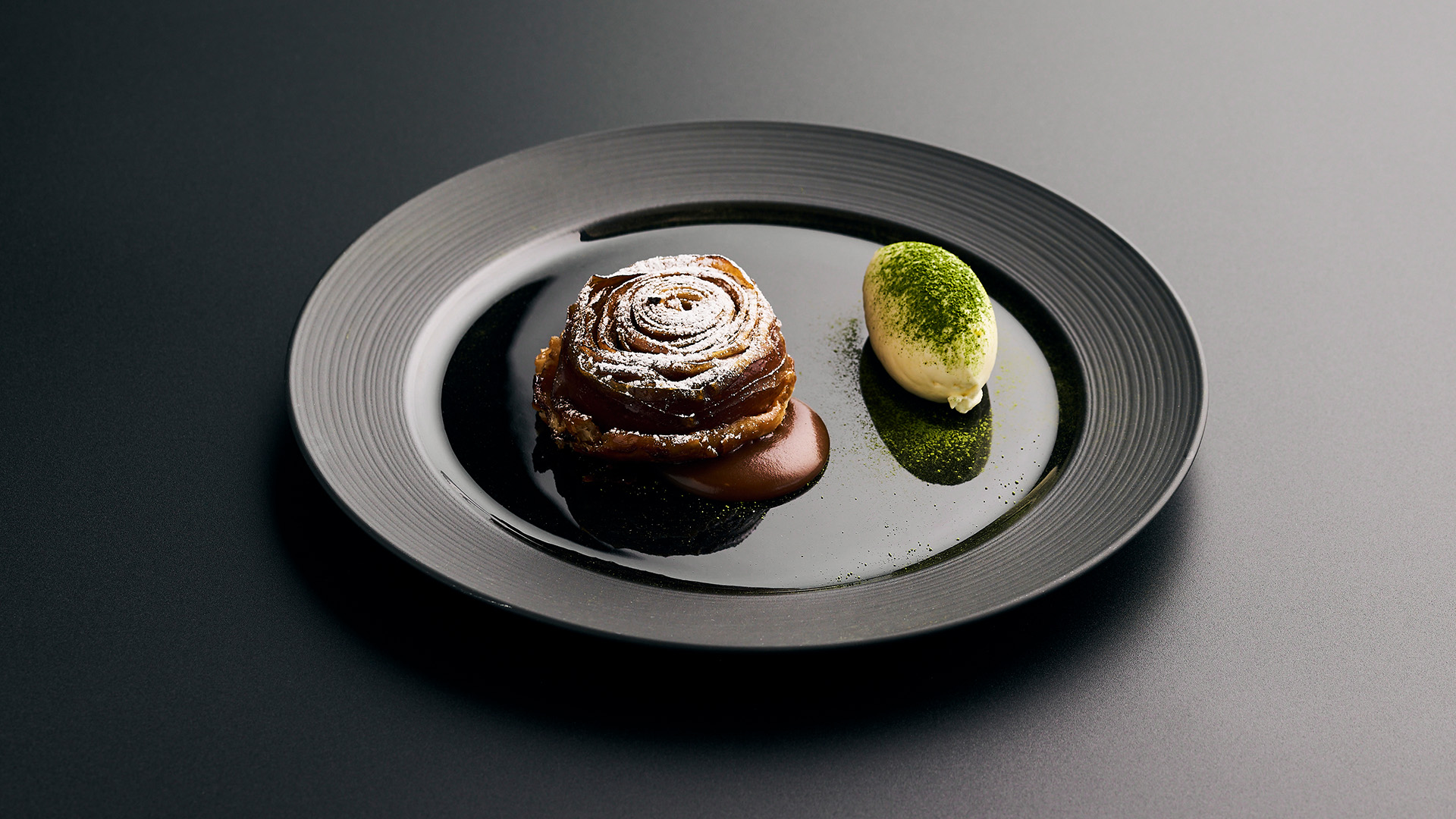
First Class passengers can look forward to tiger prawns with harissa oil, pickled carrot, spice crunch and mint leaves. For the main course, there’s a roasted fish fillet alongside a Woodcut set milk dessert.
But before these dishes fly, the team must adapt them to work in an environment very different from a restaurant.
Three-way partnership between chef, airline and caterer
Lusted says the menu development process starts with his team at Woodcut. Their first step is to shortlist a selection of dishes for Qatar Airways to consider. The team deliberately develops more options than required, giving the airline flexibility when deciding what will work best onboard.
Once the dishes are selected, the process becomes a three-way partnership involving Woodcut, Qatar Airways and its contracted catering providers.
“We need to find our slot,” Lusted said, explaining that catering facilities may be producing tens of thousands of meals each day across different airlines, aircraft types and menu configurations.
The caterers must deliver the food safely and consistently at scale, while preserving the character of the original dishes. That means a recipe that works beautifully in a restaurant may need to be adjusted to suit the galley. After all, the preparation methods and equipment on an aircraft differ significantly.
Lusted says he can arrange for meals to be taken from a flight catering kitchen – and has recently done so in Perth. These are reheated and plated so the team can assess the results in conditions closer to those passengers will experience. He also works closely with cabin crew, including testing how different aircraft ovens perform.
“I can just say I want to see every meal, heat it up, put on the service. Then we can really test in real time,” he reveals. “There’s a lot of engineering on the back end of it that goes into working with the crew.”
This feedback loop helps the team identify what is working and where changes are needed
Choosing the right experiences
Choosing dishes that can withstand the catering process is another important part of the job. For Lusted, that can mean favouring cuts of meat that retain their flavour and texture after preparation and reheating, rather than automatically opting for the most expensive cut of steak.
“If you make a braised lamb shank and you eat it the next day, it generally is a better, juicier, more flavourful product than when you cook it immediately,” he said.
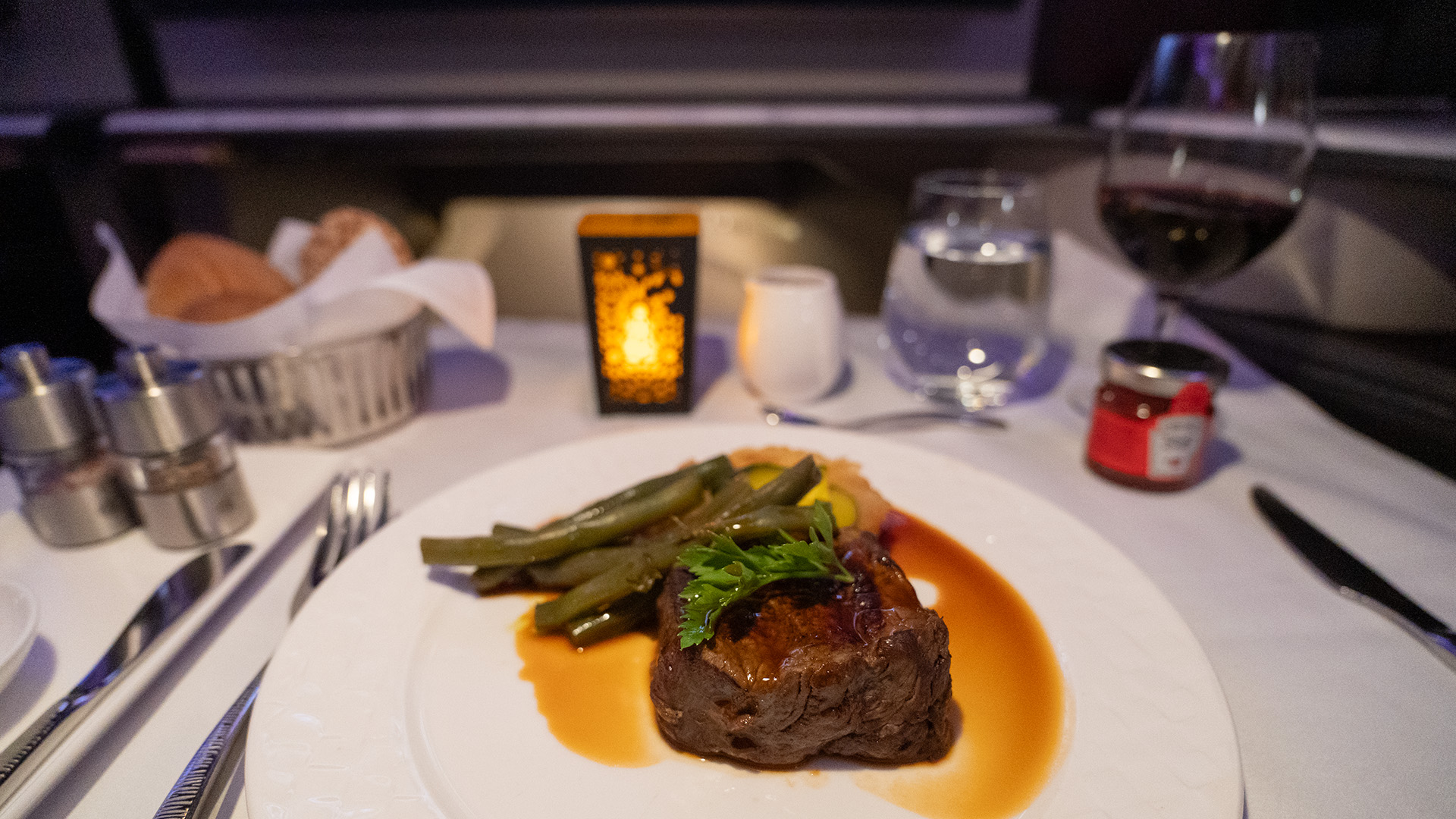
He believes braised short rib can be more forgiving through the various processes involved in preparing an airline meal than tenderloin. Secondary cuts can offer plenty of flavour in their own right. Case in point: lamb shoulder is the protein of choice for the upcoming menu.
Australian produce is also a starting point for the new menus, with Lusted describing the quality of local ingredients as a key opportunity to showcase what Australia has to offer.
Dining around the passenger, not the other way around
Beyond the food itself, Lusted says understanding how passengers travel is essential to designing a successful inflight menu. Drawing on his own experience as a frequent international traveller, he notes that many travellers in Business and First Class are travelling for work and value sleep more than an elaborate meal.
“If you’re leaving on a flight out of Sydney, you might be sitting in your seat at 11pm,” he said. “So you’ve had dinner, you’ve been in the lounge, or you’re ready to go to sleep. And then why would you subject a guest to sit through a five-hour meal service?”
Qatar Airways’ dine-on-demand approach allows meals to be served over a longer period rather than preparing every Business Class meal at once. That gives crew more flexibility to manage orders and service around passengers’ preferences.
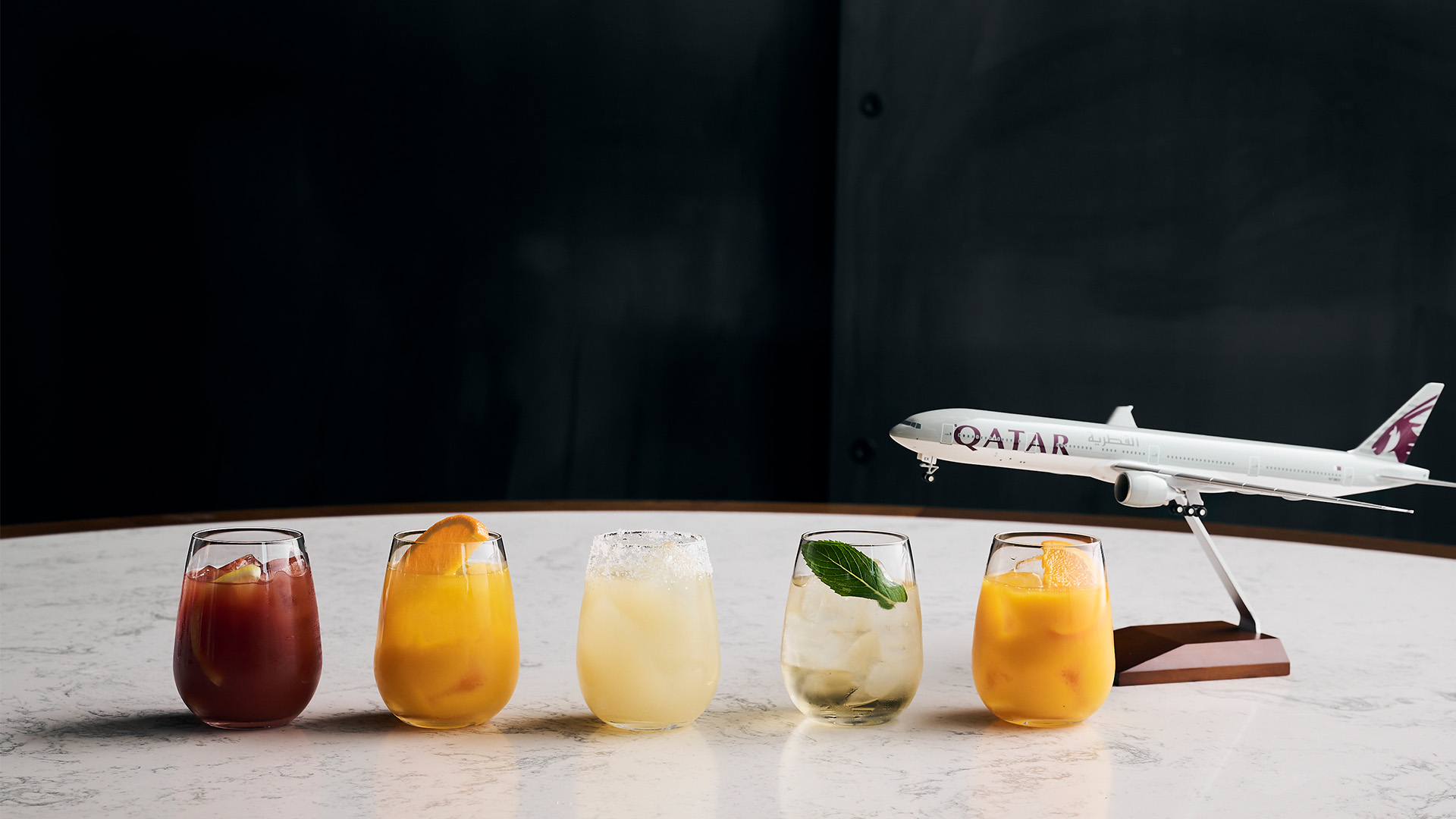
Ultimately, he sees the menu as part of a broader premium travel experience. In a similar vein, Qatar Airways’ signature drinks collection by Lorenzo Antinori is now heavier on the mocktails – great news for those who want to sip on something fancier than a soft drink, but without the associated headache.
As Qatar Airways introduces its new Woodcut menu on flights departing Australia in 2027, the work behind each plate highlights just how much coordination is required to bring restaurant-inspired dining into the aircraft cabin.
Disclaimer: The author travelled to Sydney for the event at Point Hacks’ expense. The inflight meal photo was taken on a flight booked at his own expense. Other featured images courtesy of Qatar Airways.