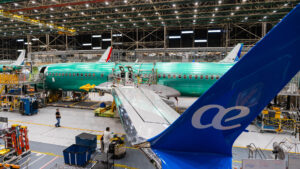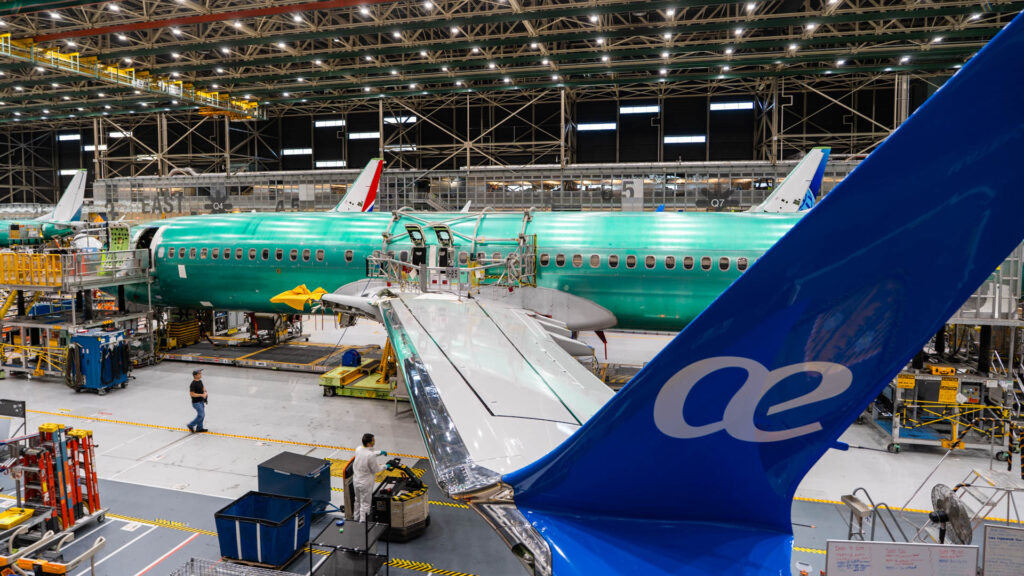
If you have flown domestically in Australia, you’ve almost certainly been on a Boeing 737. The jet forms the backbone of Qantas and Virgin’s domestic fleets and has been built non-stop since 1967. Over in Boeing Renton’s facility in Seattle, production of the fourth generation of 737s – the MAX – is in full swing.
The 737 MAX burns about 20% less fuel than earlier 737s and forms a significant part of Virgin Australia’s fleet renewal plan. The airline recently took delivery of its 26th 737-8 and has 10 larger 737-10s earmarked for delivery from late 2027 onwards. But how are these workhorses put together?
American Express Velocity Platinum

Offer ends: 13 Oct 2026
- Bonus points
- Up to 100,000 bonus Velocity Points¹
- Annual fee
- $440 p.a.
- Earn
- 1.25 Velocity Points earned per $1 on all eligible spend except for government bodies². 2.25 Velocity Points per $1 spent on selected Virgin Australia purchases². 0.5 Velocity Points per $1 on Government spend²
American Express Velocity Platinum
Offer ends: 13 Oct 2026
- Bonus Points
- Up to 100,000 bonus Velocity Points¹
- Annual Fee
- $440 p.a.
- Earn
- 1.25 Velocity Points earned per $1 on all eligible spend except for government bodies². 2.25 Velocity Points per $1 spent on selected Virgin Australia purchases². 0.5 Velocity Points per $1 on Government spend²
Earn 70,000 Velocity Points¹ with the American Express Velocity Platinum when you apply by 13 October 2026, are approved, and spend $5,000 in the first 3 months. Plus, an additional 30,000 bonus Velocity Points when you spend a further $5,000 on eligible purchases within the first 3 months of your second year Card Membership. Offer available to new American Express Members only. T&Cs apply.
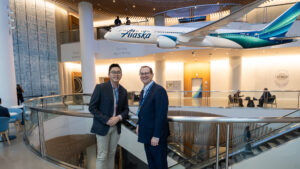
While in Seattle for Alaska Airlines’ media day, another Australian journalist and I were (at the last minute) granted the very rare chance to tour Boeing’s final assembly line in Renton.
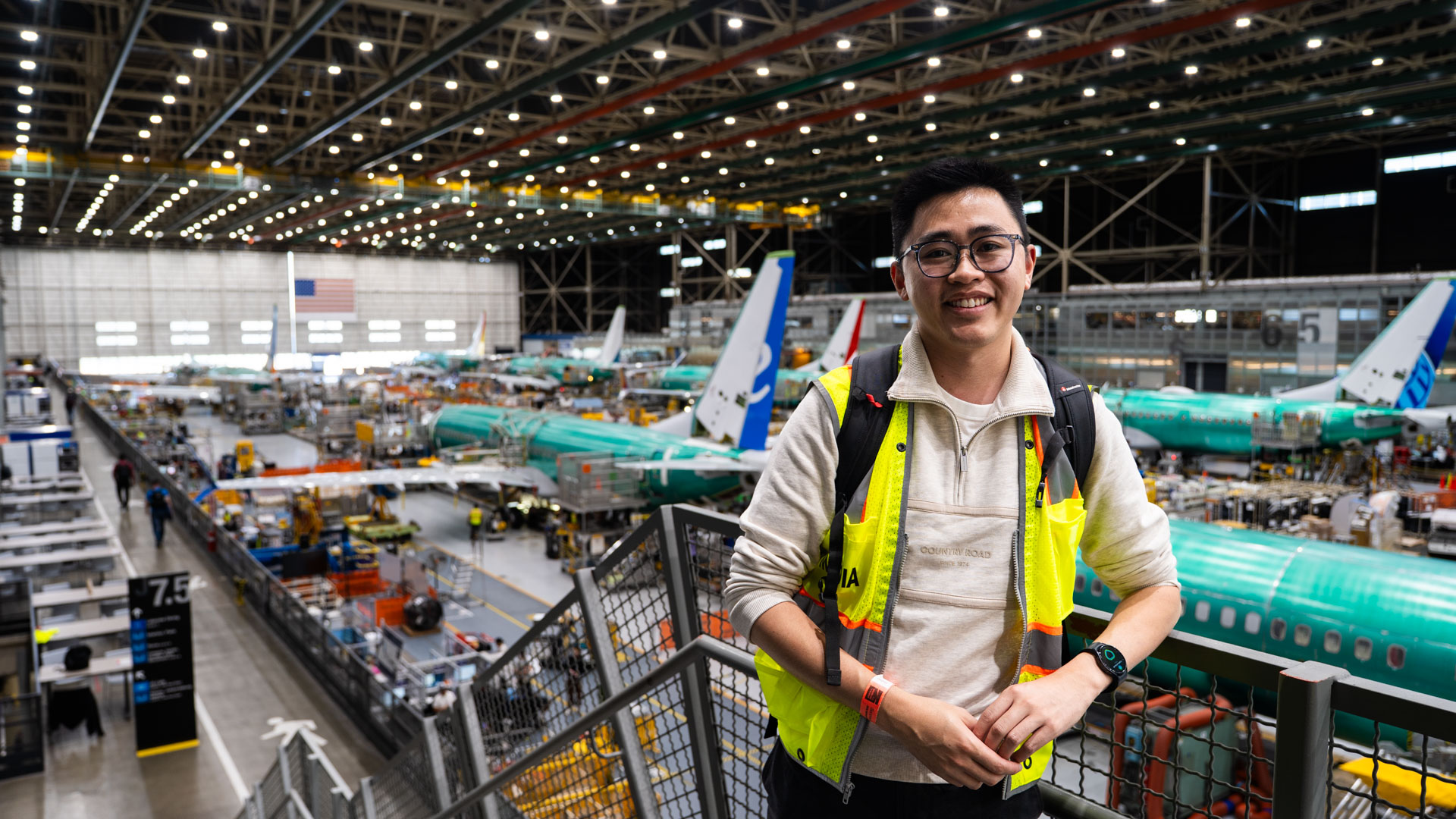
It all starts… by rail
Every Boeing 737 starts as an empty fuselage built in Wichita, Kansas. They come to Renton by freight rail – a journey that lasts around two weeks. They are easy to spot as each one is coated in a bright green protective primer. In fact, while at the nearby Museum of Flight in Seattle, I coincidentally catch a glimpse of a procession in the distance.
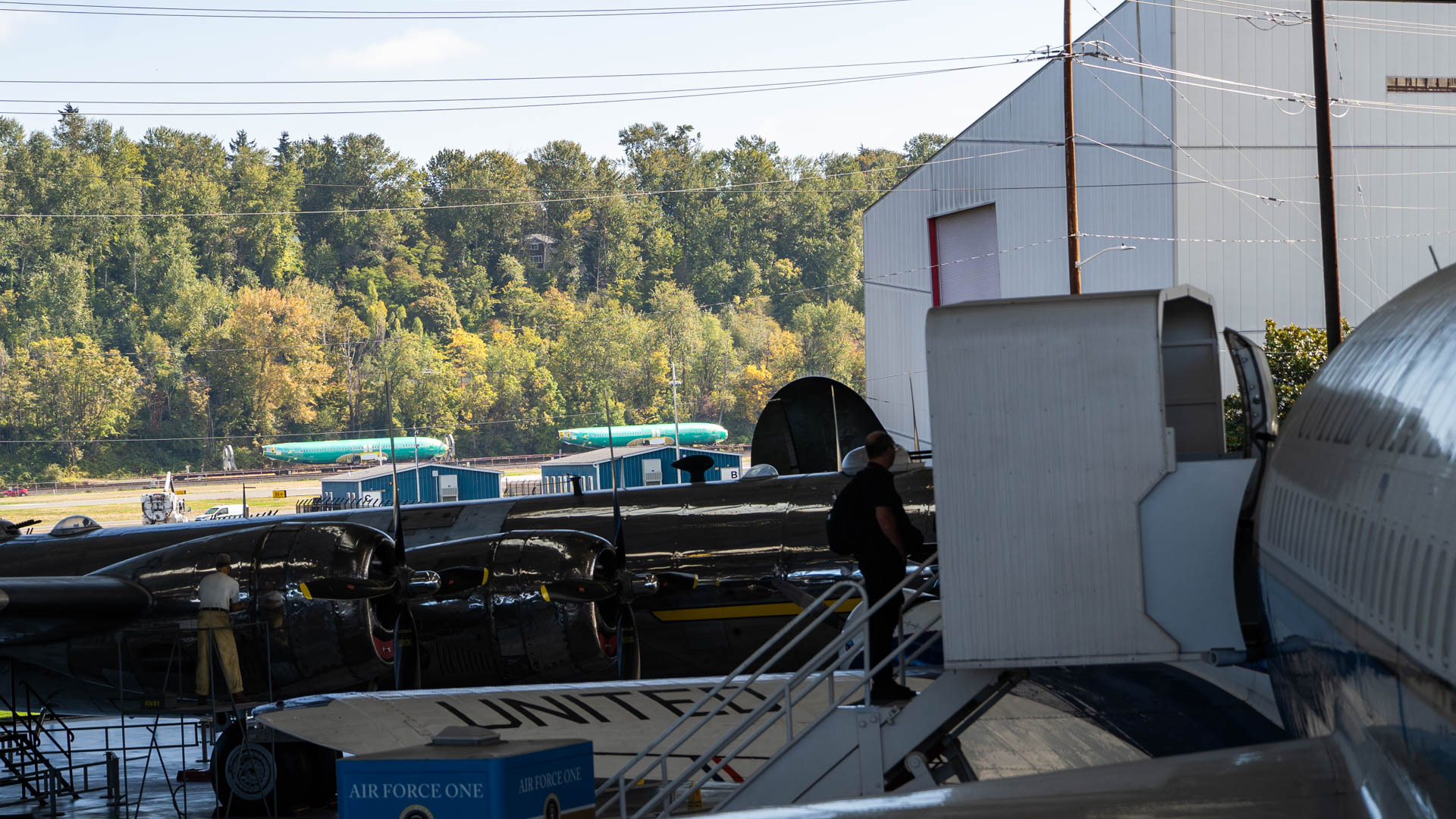
Later that day, as we are driven to Boeing Renton’s facility, I see the same two airframes now parked outside the factory. They are about to undergo Boeing’s 10-step assembly process.
It’s worth highlighting here that most major components of a Boeing 737 are manufactured elsewhere and shipped into Renton for assembly. And yes, some come from down under! Many of the Boeing 737 MAX winglets (the vertical extensions at the end of a wing) are made in Melbourne.
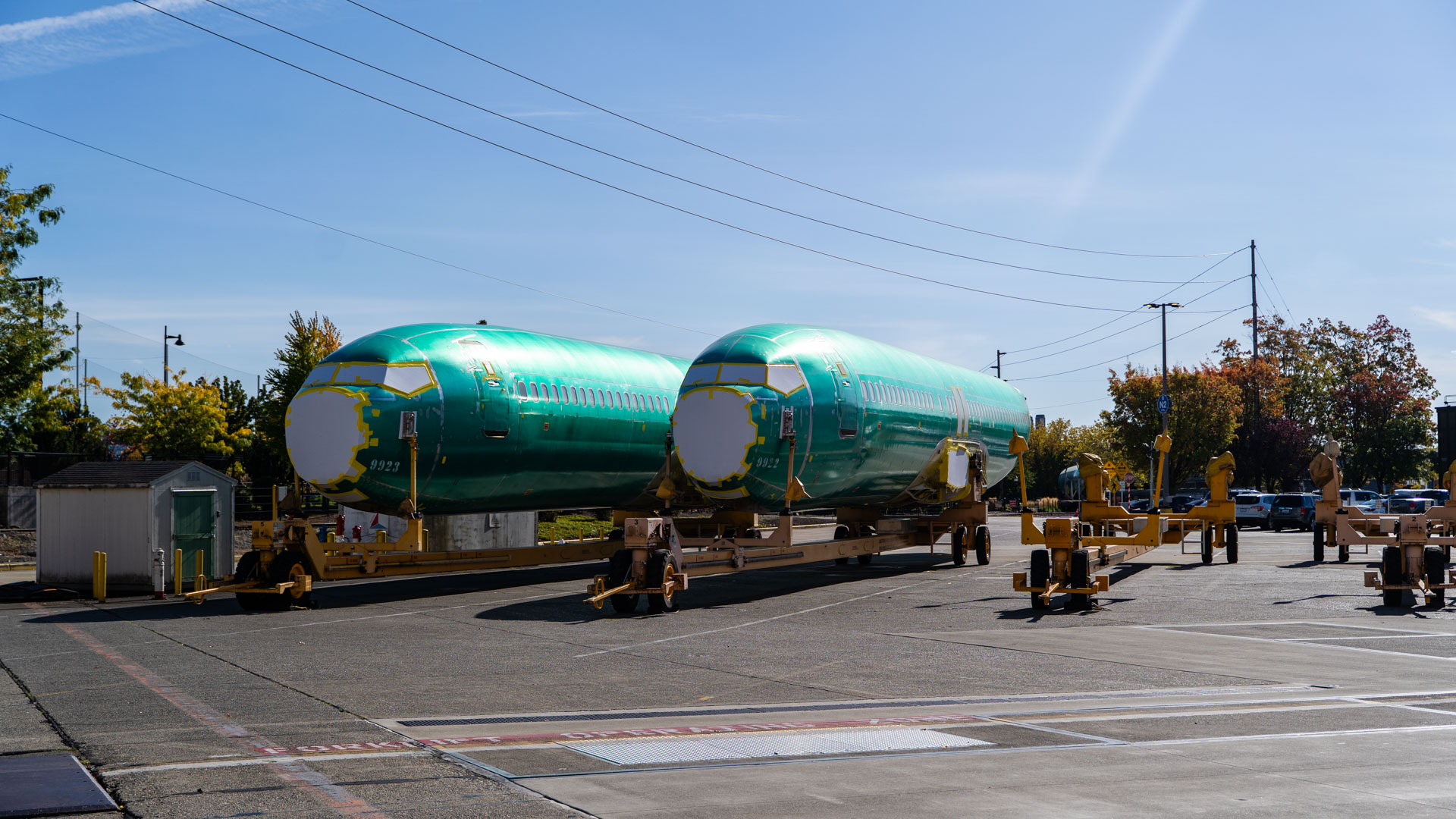
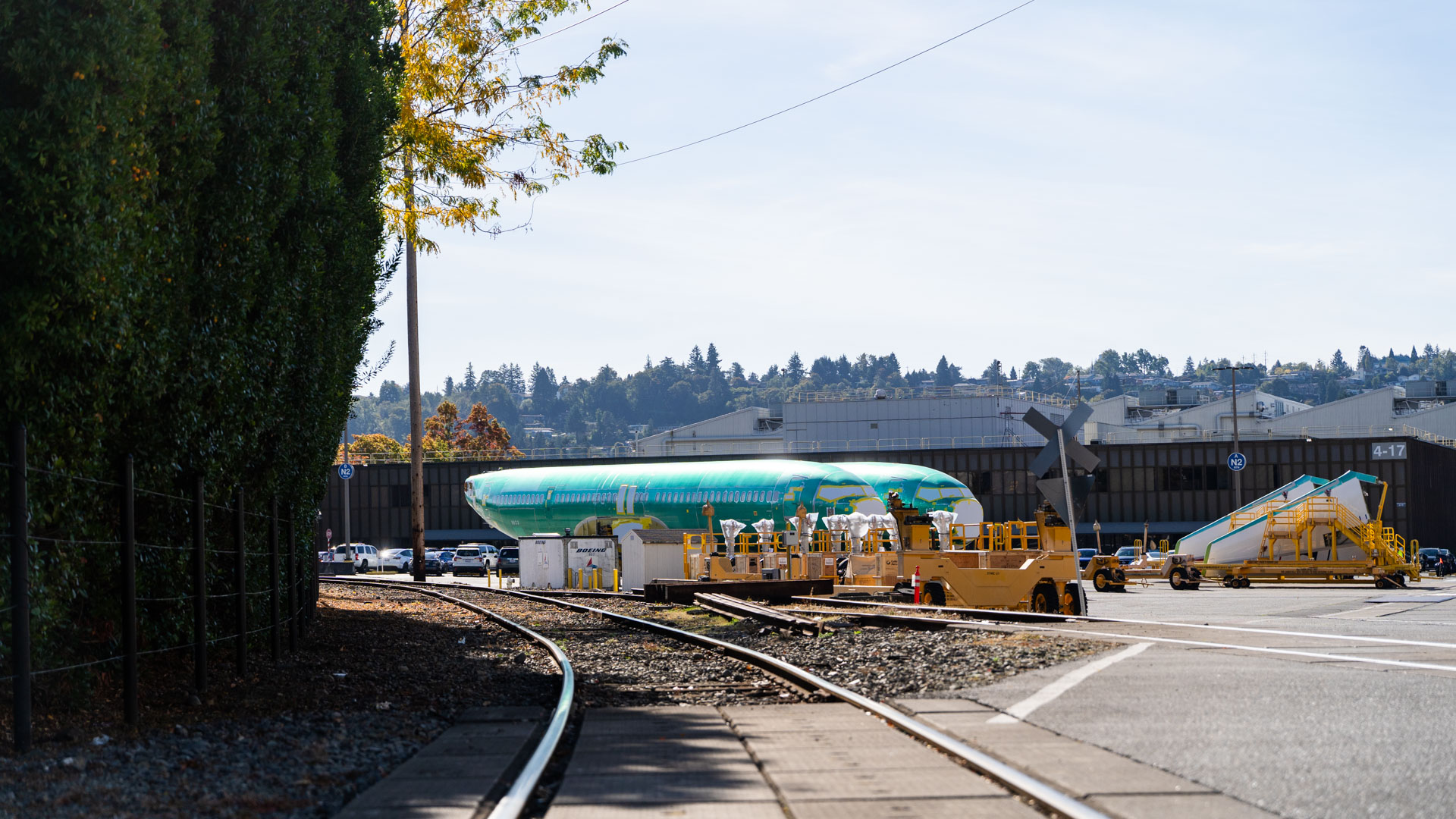
Assembly is split into ten ‘flow days’. Each of these is a fixed spot on the factory floor where a set job is done. The name is a little of a misnomer: a flow day usually runs longer than 24 hours. It’s closer to two days for each step.
There’s some slack built in to soak up small delays and last-minute changes. But in a somewhat surprising revelation to me, each plane can be transformed from a metal husk to a fully functional jet in less than 2 weeks.
Upstairs: days one to three
The first three stations sit on a raised level of the factory. Each fuselage is rolled in, lifted into place, and inspected. At this stage, they don’t have wings (or any other exterior components) fitted, so they can be stacked three abreast. This is where the plane gets its nervous system.
On flow day one, insulation and the first electronic, hydraulic, and mechanical parts go in, and the dorsal fin is fitted on top. These dorsal fins are the small extension under where the main tail (vertical stabiliser) will later go.
Flow day two brings roughly 43 miles (70 kilometres) of wiring to be laid, plus hydraulic tubing and flight control cables. Airlines that have ordered Wi-Fi get the antenna fitted on the roof at this point as well.
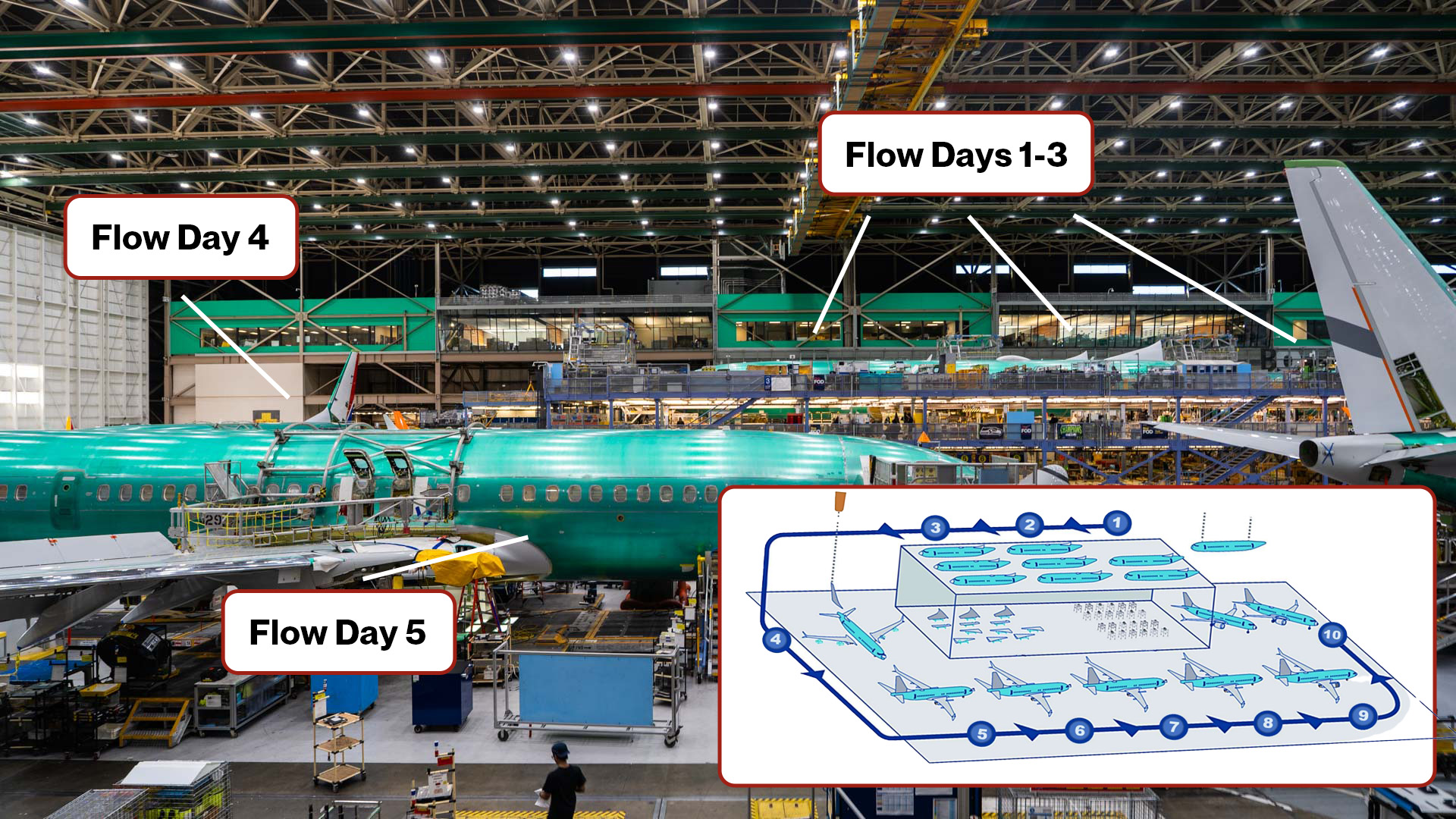
You might say the plane loses its Voldemort-esque appearance on flow day three. The radome – a protective cone over the nose radar – goes on. At this stage, the wires and tubes are hooked up, flight deck panels are installed, and engineers begin hydraulic testing.
Day four: the big transformation
Overnight, a crane running along the ceiling lifts each fuselage off the upper level and swings it down onto the main floor. Here, the assembly line splits into three identical streams. Some jets will simply descend to the bottom of the West Line, near where it had its wiring fitted, to start flow day four.
But two-thirds of fuselages will be lifted up and through a purpose-built gap to join either the Central Line or the East Line, located on the other side of the factory. Boeing says that while the factory usually operates 24/7 with three shifts, the moves are generally done overnight when there are fewer personnel around.
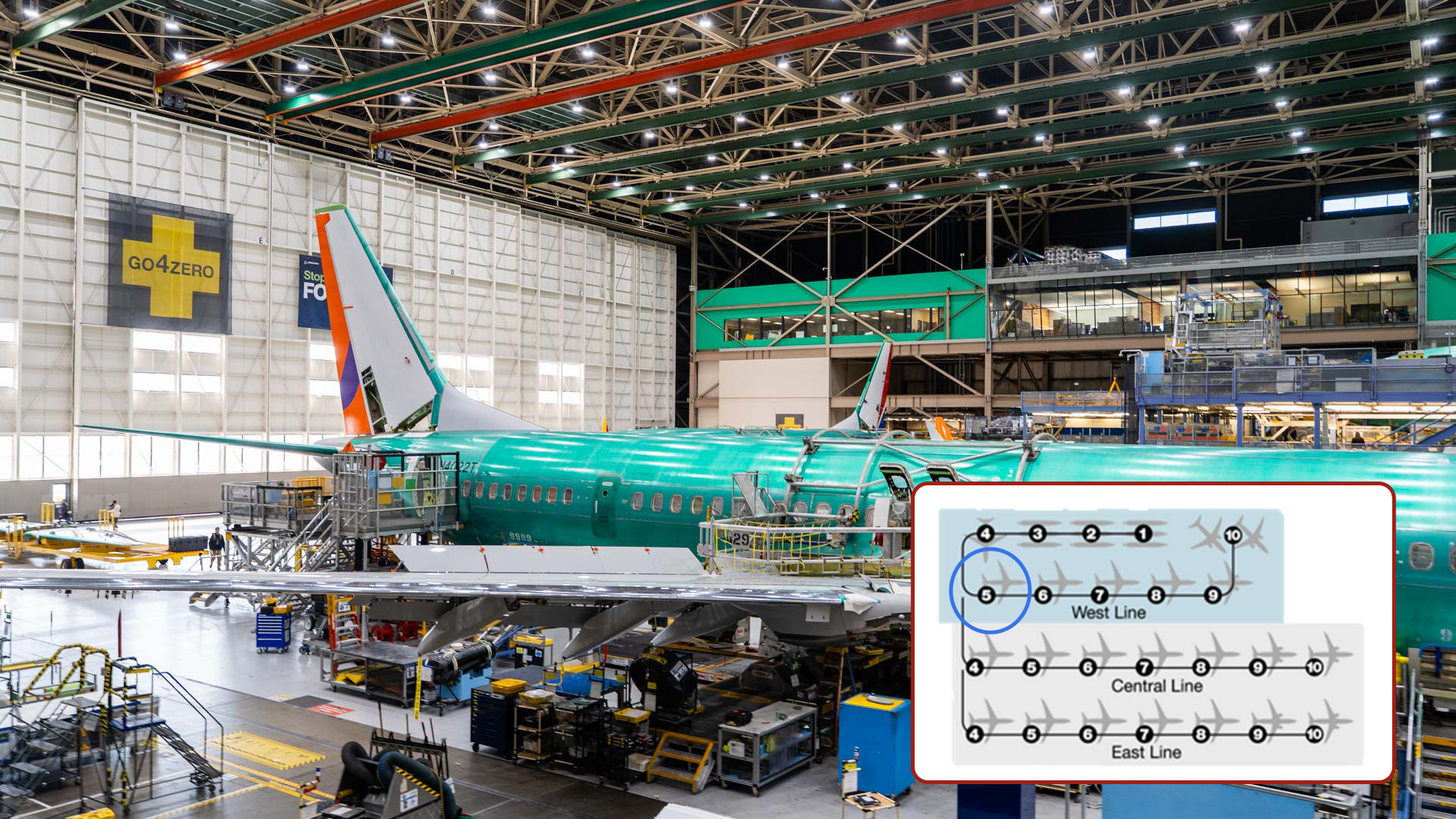
Flow day four is when the tube becomes an aeroplane. The wings, the horizontal and vertical tail surfaces, and the landing gear all go on. By the end of this step, the plane can stand on its own wheels – much like a toddler finding its feet – and can now be towed across to all the remaining stations.
Fitting out the cabin: days five to eight
With the wings on, the attention turns inside. Flow day five starts with the installation of the rear galleys and toilets, which are waiting nearby on pallets. Fresh and waste water tanks are added along with the last of the electronics. The fuel tanks are pressure-tested for leaks.
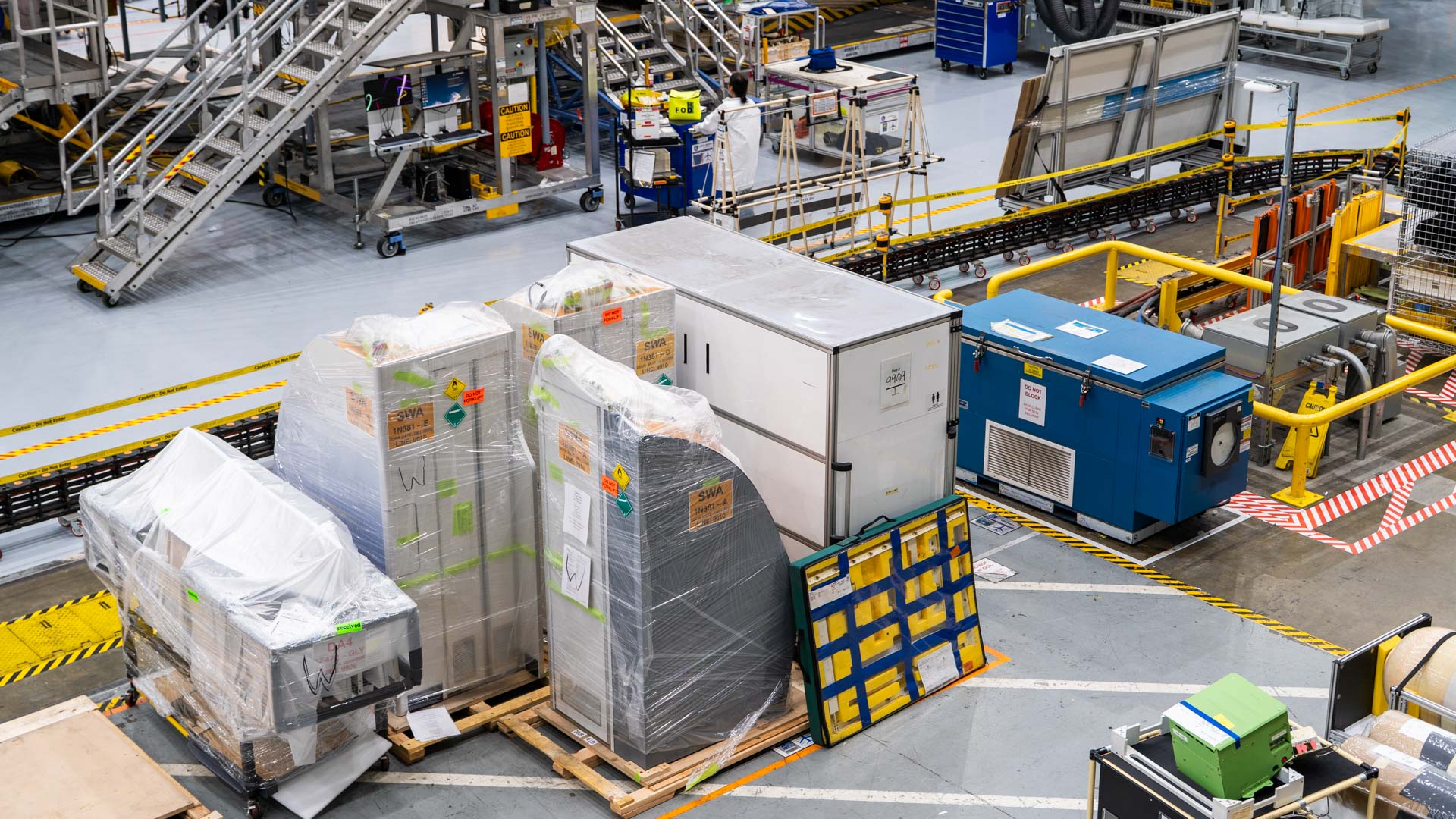
Flow day six is another major milestone – it’s when the plane comes alive for the first time. Oil and electrical power are switched on, while the air distribution system is finalised. The sidewalls, overhead lockers, and forward galleys and toilets go in. On flow day seven, the cabin is pumped full of air to check for leaks, the landing gear is put through its paces, and the flight controls are tested in simulation.
Wondering when the seats go in? That’s on flow day eight, when the carpet is also cut and laid afterwards. Seats are loaded through the door by an angled conveyor, three at a time. The representative for Boeing tells us that the contraption they use for this is based on a hay baler, which came about after a brainstorming session with employees to figure out solutions to various pain points.
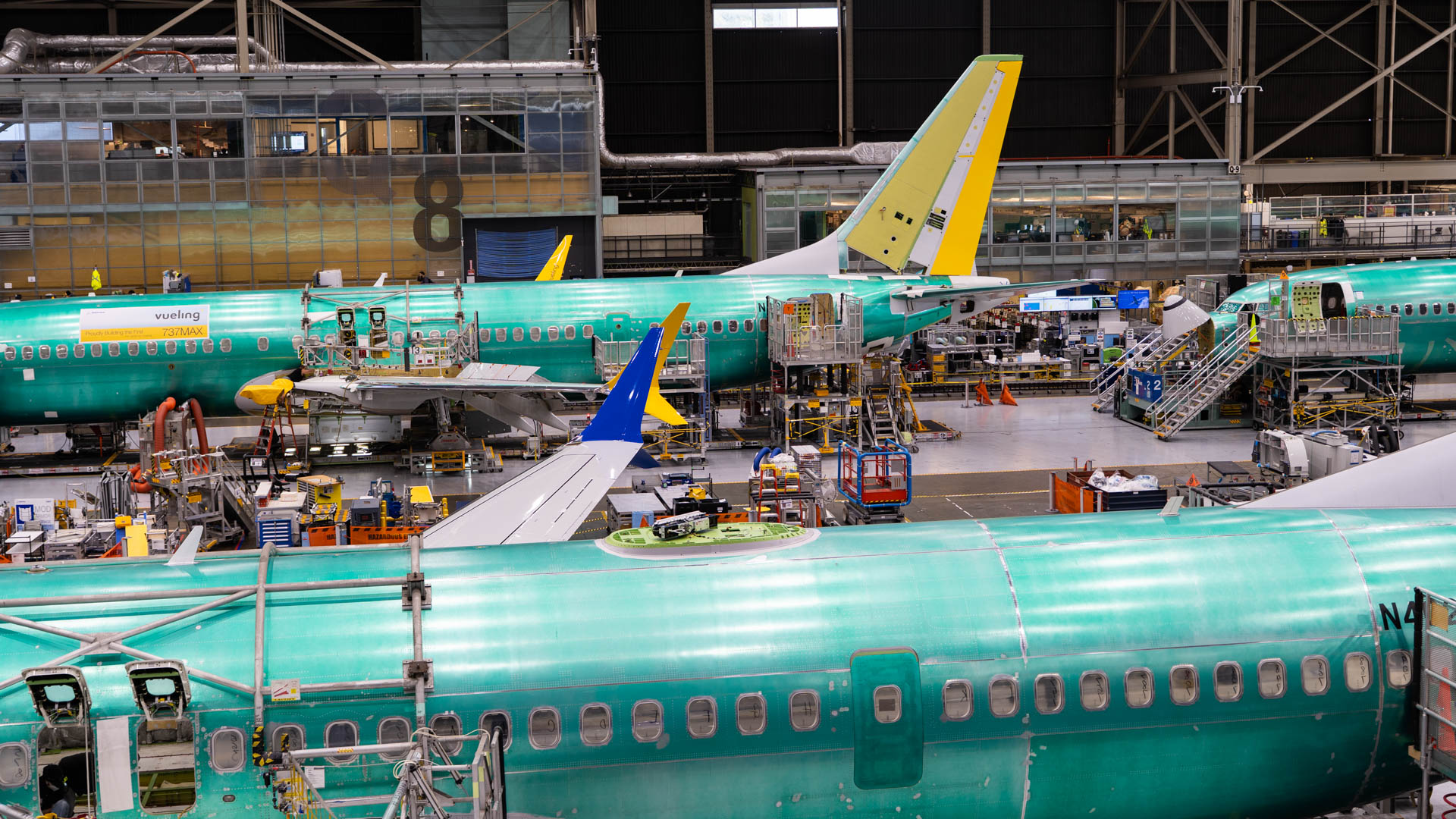
The day ends with a ‘shakedown’, a sweep for defects and stray debris. The internal cabin is more or less finished by this point, so the engineers are ready to move on to final checks. But there is still one major component missing…
Engines and final checks to finish
The engines, CFM International LEAP-1Bs, are among the last things fitted. On flow day nine, they are hung under the wings and wired into the electrical and hydraulic systems. Flow day ten is a buffer. It’s their last chance to catch any unfinished work, testing, or checks before the plane leaves the building.
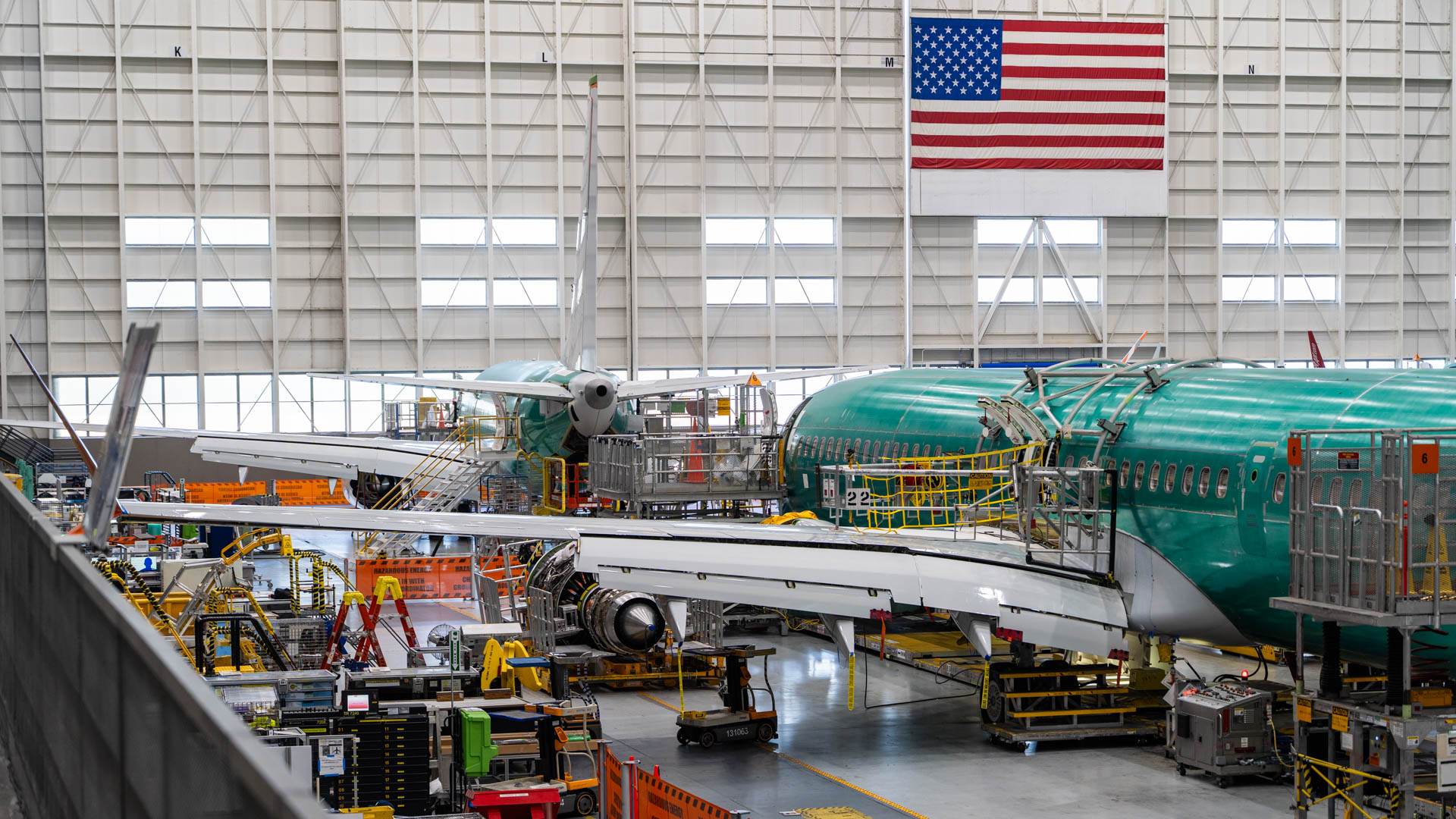
A Boeing 737 MAX spends about 15 days between the fuselage rolling in and the finished aircraft being ready for inspection. In that time, more than 2 million parts are fitted, which is quite an incredible feat. After rolling out onto the apron, the jets undergo flight testing and final painting before being delivered to their new owners.
Renton never really stops. The factory works around the clock all year, closing only for major holidays such as Thanksgiving and Christmas. At the moment, Boeing pushes out around 42 of the single-aisle 737 MAX jets a month. It’s looking to boost that to 47 with the introduction of another assembly line at Everett, and the ultimate goal is to eventually reach an output of 52 airframes a month.
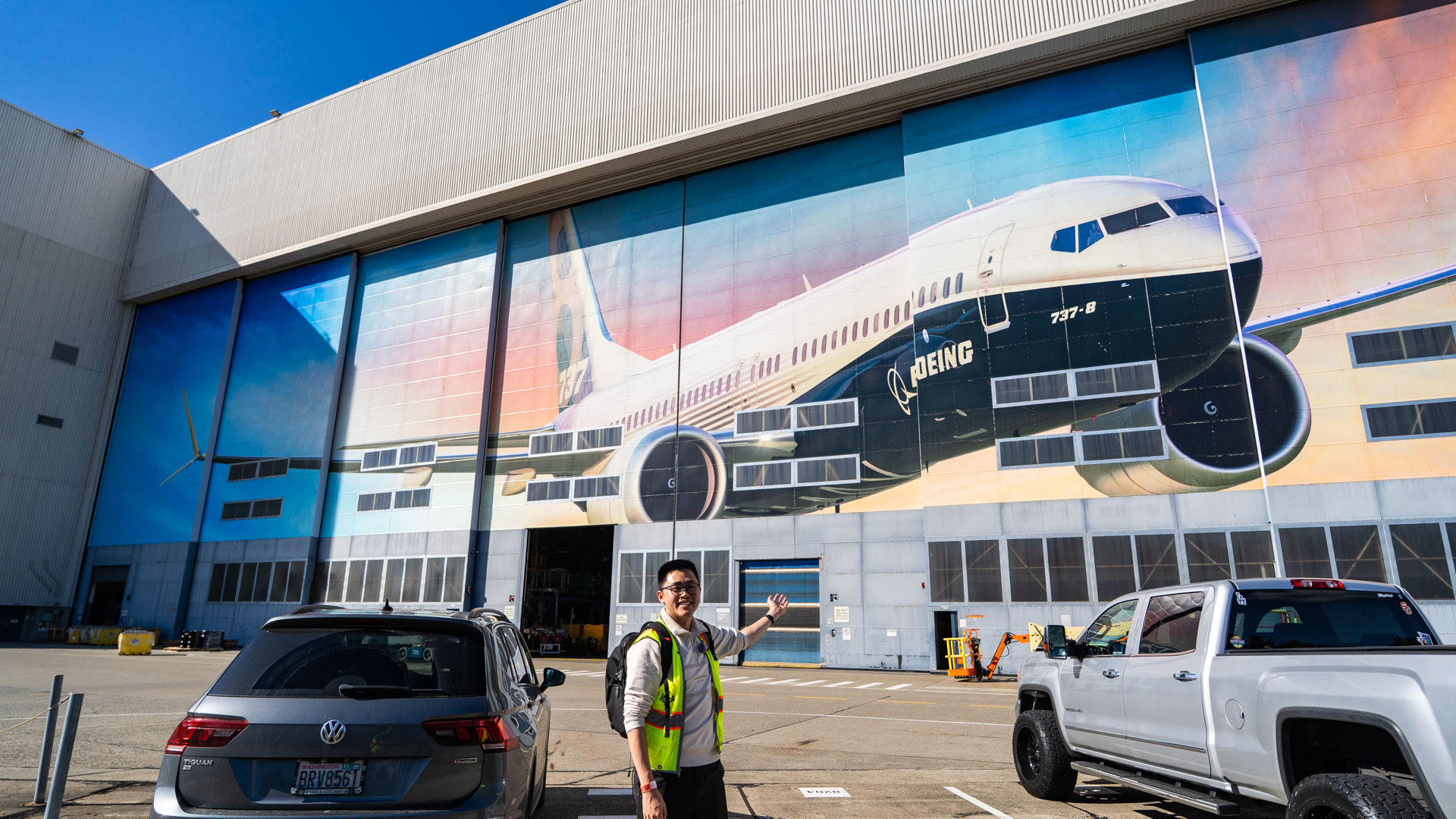
Disclaimer: All photography by Brandon Loo, who travelled to Seattle as a guest of Alaska Airlines.