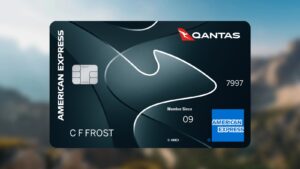
The question of Amex Business cards vs Personal cards rarely turns on the headline earn rate. The closest pairs in the Australian range share the same rate. The personal Platinum and the Platinum Business both earn 2.25 Membership Rewards points per $1. The two Qantas American Express cards both start at 1.25 Qantas Points per $1. What separates them is everything around the rate. That includes caps, transfer partners, employee cards, and where the points land. Here is how the two closest pairs compare. We’ll look at why the business side reaches Qantas when the personal side cannot. We’ll also cover how employee cards affect the arithmetic and which structure wins at different spending volumes.
The two card pairs and what they share
American Express sells its Australian range in mirrored pairs, with its issuer’s comparison page highlighting the key differences. Personal cards suit personal purchases and require no Australian Business Number (ABN), while business cards require an ABN and offer cash flow tools, expense management, and employee cards. The premium pair is the personal Platinum at $1,450 per year and the Platinum Business at $1,750 per year. Both charge cards have flexible spending power. They earn 2.25 Membership Rewards points per $1 on eligible purchases and 1 point per $1 on government spend. The Qantas pair comprises the personal Qantas American Express Ultimate and the American Express Qantas Business Rewards Card. Both are $450 per year and start at 1.25 Qantas Points per $1 on everyday spend as of July 2026.
At that point, the personal cards look like the equal or better choice, with the Platinum $300 cheaper for the same rate. The comparison turns on three structural differences the headline rate does not show. Each becomes more important as spending volume rises.
Caps, and why the business versions run further
The first difference is the ceiling. The personal Qantas Ultimate earns 1.25 Qantas Points per $1 until 100,000 points have been earned in a calendar year, then steps down to 1 point per $1. The Qantas Business Rewards Card applies a 1.25 rate until 500,000 points are earned in a calendar year, then eases to 0.75, as set out in the card’s guide.
- The personal cap binds at $80,000 of annual spend. That is because $80,000 at 1.25 points per $1 equals the 100,000-point ceiling
- Every dollar past that point earns 1 instead of 1.25 on the personal card. The business card holds 1.25 until 500,000 points. That takes $400,000 of spend to reach
- Warning: the roughly $80,000 crossover assumes everyday spend at the headline rate. Category bonuses and the business card’s extra Qantas earn can change the exact figure for any given spending mix
The business card also layers Qantas-specific earn on top, at 2 points per $1 on selected Qantas products and services plus 2 bonus points per $1 on eligible Qantas flights once flown.
The Membership Rewards pair splits differently. Since both the Platinum and the Platinum Business earn uncapped, the cap argument falls away, and the choice moves to the other two differences. The table below compares the pairs as of July 2026.
| Card | Annual fee | Everyday earn | Cap before rate change |
| Platinum (personal) | $1,450 | 2.25 Membership Rewards points per $1 | Uncapped |
| Platinum Business | $1,750 | 2.25 Membership Rewards points per $1 | Uncapped |
| Qantas Amex Ultimate (personal) | $450 | 1.25 Qantas Points per $1 | 100,000 points per calendar year |
| Qantas Amex Business Rewards | $450 | 1.25 Qantas Points per $1 | 500,000 points per calendar year |
Transfer partners and employee cards
The second difference is where the points can go. At the top of the range, that gap has narrowed. Both the Platinum and the Platinum Business earn Membership Rewards Ascent Premium points, the top Membership Rewards tier attached to the Platinum charge cards. These transfer to Qantas Frequent Flyer and Velocity at 2 points to 1. They also transfer to partners such as KrisFlyer and Asia Miles at 3 to 1 as of July 2026. This is mapped in the guide to transferring Membership Rewards points. The gap opens below that tier. No other broadly available consumer Membership Rewards card reaches Qantas, aside from the invite-only Centurion. The business range also adds the Qantas Business Rewards Card, which earns Qantas Points directly and pools them to the business. For a collector whose redemptions are in Classic Flight Rewards, Qantas’s fixed-price reward seats, the business side offers two paths to the same currency. See the Platinum Business guide for the full picture.
The third difference is headcount. Business cards issue employee cards whose spending earns to the business account. The Qantas Business Rewards Card offers up to 99 employee cards at no fee, with points pooled into the business’s Qantas Business Rewards account. Personal cards, meanwhile, cap out at a handful of additional cards for family. A five-person business putting staff spending through employee cards multiplies the earning base in a way no personal card can copy. The business is accountable for employee card spending under the card terms, a detail worth confirming before the cards go out.
Which structure earns more at your volume
At household volumes, personal cards win. A sole operator spending $60,000 a year sits under every cap, pays the lower fee in the premium pair, and loses nothing but the Qantas transfer path. This matters only if Qantas is the target currency. The choice between the pairs at this level is a program choice first, covered in the Qantas card round-up and its Velocity equivalent.
- Warning: the right card follows your twelve-month spend projection, not the headline rate, so run the volume before the application
- Under roughly $80,000 a year of card spend, the personal versions match or beat the business versions on pure earn
- Beyond the personal caps, the business versions hold their rates for up to five times more spend and earn more on each additional dollar
- Staff spending only earns at scale through employee cards, which is a business-card exclusive
- If Qantas Points are the goal, the personal path runs only through the Platinum, while the business range offers both the Business Rewards Card and the Platinum Business
At business volumes, the structure flips. As of July 2026, the welcome offers also sit on the business side. The Platinum Business offers 350,000 points plus an $875 credit, compared to 200,000 points for the personal Platinum. High spend exhausts personal caps. Employee cards concentrate the operation’s expenditure into one earning account. Points pooled to the business support rewards it controls. Within months, the higher earn can outweigh the fee difference. That is the quiet conclusion of the comparison. The pairs are priced for different customers. The expensive mistake is staying on the right card for a year after your spending has outgrown it.
Frequently asked questions
Fees, rates and figures quoted are correct at the time of publication and should be verified directly with each provider before acting on them.
This article is general in nature and does not constitute personal financial advice. Consider your own financial situation before applying for any credit product. Point Hacks may receive a commission from card issuers for applications made through this site.