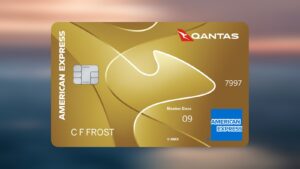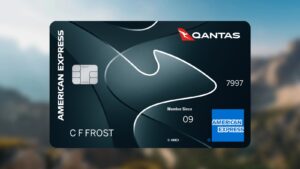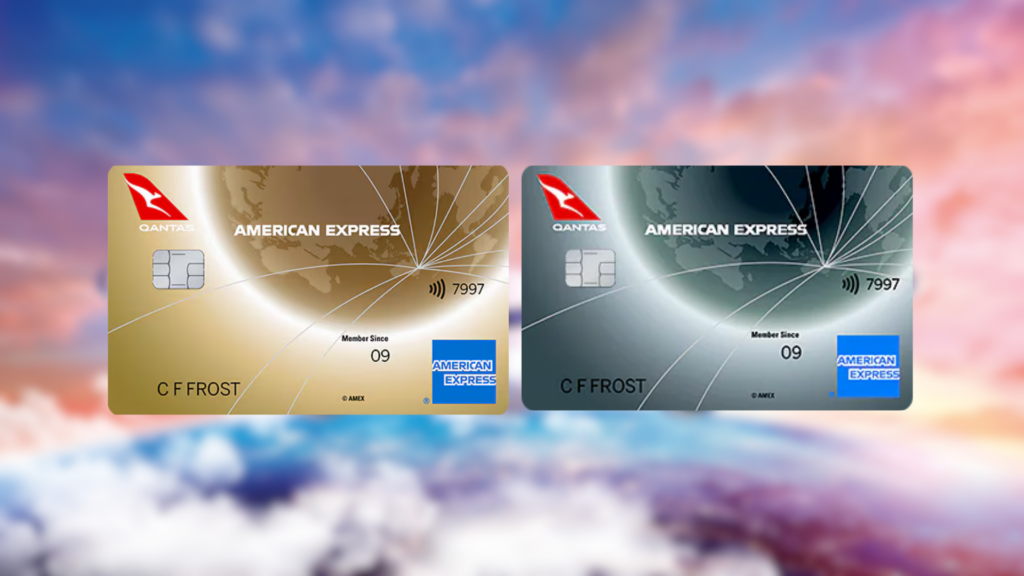
The step-up is worth it for one specific person. That is someone who books at least one Qantas fare of $450 or more each year. This is because the Ultimate’s annual Qantas Travel Credit covers its entire fee. That makes the higher earn rate and extra lounge entries clear gains. For anyone who cannot rely on that booking, the Premium’s $249 fee buys most of the same structure at a $201 saving. The two cards have a similar structure, with the $201 fee gap effectively buying a credit, a higher earn rate and 2 Centurion Lounge entries. Here is the side-by-side comparison. We also break down the fee maths with and without the credit, the value of the earn gap, and which tier each traveller fits into.
What separates the two cards on paper
The two cards share the Qantas Club invitations, the additional card allowance and the insurance. They differ in fee, earn rate, bonus, Travel Credit and Centurion Lounge access. The table compares the Qantas American Express Premium and the Qantas American Express Ultimate as of July 2026. All information is according to the American Express Premium and Ultimate product pages.
| Feature | Qantas Amex Premium | Qantas Amex Ultimate |
| Annual fee | $249 | $450 |
| Everyday earn per $1 | 1 Qantas Point | 1.25 Qantas Points, then 1 after 100,000 Qantas Points in a calendar year |
| Sign-up bonus | 20,000 points at $3,000 in 3 months | 70,000 points at $5,000 in 3 months, apply by 17 November 2026 |
| Qantas Travel Credit each year | None | $450 |
| Centurion Lounge entries each calendar year | None | 2, at Sydney or Melbourne |
Both cards earn 0.5 Qantas Points per $1 with government bodies. They also earn 1 extra point per $1 on selected Qantas products and services. Each card includes 2 complimentary Qantas Club invitations for each anniversary year after the first eligible spend on those Qantas products. Both cards include Qantas Wine Premium membership and up to 4 additional cards at no fee. Travel insurance is included when an eligible return trip is paid on the card. Both sign-up bonuses are restricted to new American Express card members, with an 18-month exclusion covering any Amex issued in Australia. A sign-up bonus is the introductory points offer on a new card. Our credit card minimum spend guide explains what counts towards the required spend.
How the $450 Qantas Travel Credit changes the fee maths
Used in full, the Travel Credit makes the Ultimate cheaper than the Premium. That is the key reason to consider the step-up. The credit’s conditions shape whether that happens. It applies to a single booking of $450 or more on a Qantas flight with a QF flight number, made through American Express Travel. The travel credit is valid for 365 days once the annual fee and minimum payments are up to date. It does not carry forward. Any value above the booking threshold that goes unused within the booking is forfeited, as is the credit itself if the card is cancelled or switched.
- Warning: the fee comparison depends on whether you use the Travel Credit each year
- With the credit used in full, the Ultimate’s effective fee is $0, which is $249 less than the Premium’s $249 fee. The Ultimate is therefore $249 ahead before counting its higher earn rate or lounge entries.
- With the credit unused, the Ultimate simply costs $201 more than the Premium, and the earn gap has to justify the difference on its own
- The test is a calendar check: a person who booked a Qantas fare of $450 or more in each of the past 2 years is likely to use the credit. A person who did not should price the Ultimate at its full $450
What the earn rate gap is worth at different spending levels
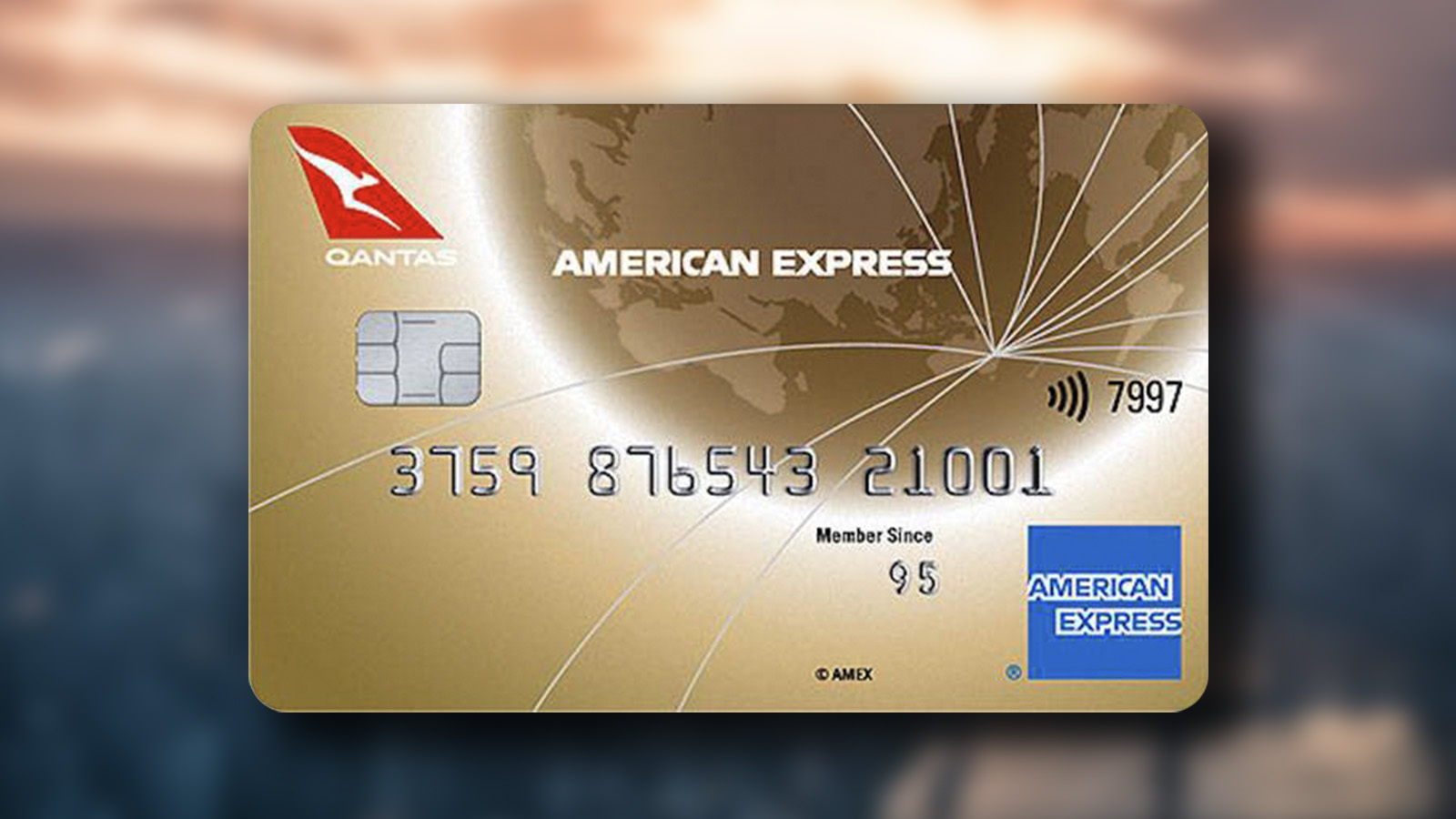
The Ultimate’s extra 0.25 Qantas Points per $1 is worth between about $60 and $240 a year across common spending levels, using the 1.6 cents per Qantas Point tracked in our rewards points valuations guide as of its December 2025 update. With $15,000 in eligible everyday spending, the gap is 3,750 points, about $60. At $30,000, it is 7,500 points, worth about $120. At $60,000, it is 15,000 points, worth about $240. The Ultimate’s everyday rate drops from 1.25 to 1 point per $1 once 100,000 Qantas Points have been earned in a calendar year. The threshold applies across all card members on the account and excludes bonus points. This means the higher earn rate applies to roughly the first $80,000 of everyday eligible spending each year. Spending above that earns 1 point per $1 on both cards for the rest of the year.
The earnings gap alone rarely covers the $201 step-up at typical spending levels, which is why the Travel Credit carries the decision. A household putting $30,000 a year on the card earns about $120 in extra points value from the higher rate. The travel credit or Centurion entries must make up the remaining distance. The sign-up bonuses as of July 2026. The Ultimate offers 50,000 points, compared with 20,000 for the Premium. That is a 30,000-point difference, worth about $480 at the December 2025 valuation. This alone more than covers the first-year fee gap for an applicant who meets the $5,000 spend requirement. Cards are one earning route among several in our guide to the best ways to earn Qantas Points.
Which traveller each tier fits
The Ultimate suits a Qantas flyer with one reliable paid fare a year. The Premium fits a points collector who wants the Qantas Amex structure at the lowest cost. The Ultimate’s case stacks three items that all assume Qantas travel. The credit needs a QF fare of $450 or more. The Centurion entries need departures through Sydney or Melbourne International. The Qantas Club invitations on both cards need Qantas spend to unlock. For someone who meets all three conditions, the $450 annual fee can provide $450 of annual value.
The Premium’s case is subtraction. It has the same earning structure on Qantas spend, the same 2 Qantas Club invitations, the same additional card allowance and the same insurance. It costs $249 with a $3,000 bonus threshold instead of $5,000. A collector whose Qantas flying is occasional, or whose paid fares sit under $450, keeps most of the machine and drops the parts they would not use. Two shared benefits carry conditions worth reading before choosing either tier.
The Qantas Club invitations on both cards must be linked to an eligible Qantas booking at least 24 hours before departure. This must be done through the Qantas Frequent Flyer account or app. The invitations cannot be carried into a later year. They can also be revoked if the qualifying Qantas purchase is refunded in full. The Qantas Wine Premium membership on both cards covers a membership Qantas values at $99 a year as of July 2026, and it lapses with the card. Neither card suits a person who wants points that can move between programs, because both earn Qantas Points directly rather than a transferable bank currency. The flexible alternatives across several banks are in our round-up of the top Qantas points-earning credit cards.
Frequently asked questions
Fees, rates and figures quoted are correct at the time of publication and should be verified directly with each provider before acting on them.
This article is general in nature and does not constitute personal financial advice. Consider your own financial situation before applying for any credit product. Point Hacks may receive a commission from card issuers for applications made through this site.