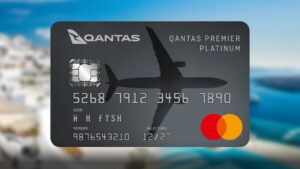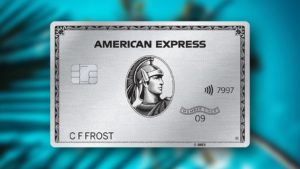
Holding both cards is a strategy about coverage. The Qantas Premier Platinum earns Qantas Points directly on the Mastercard network. The Amex Platinum earns a flexible currency at a higher rate wherever American Express is accepted. The two cards overlap on travel insurance and little else. The combined annual fees total $1,849 as of July 2026. So the pairing has to be earned by the spending pattern behind it. Here is what each card does, how the two divide a month’s spending, where the fees stack, and who the combination fits.
What each card is and what it earns
The Qantas Premier Platinum is a Mastercard that earns Qantas Points directly. The Amex Platinum is a charge card that earns Membership Rewards points at a higher rate on a narrower acceptance network. The Premier Platinum now sells under the name Qantas Money Platinum, with National Australia Bank (NAB) as the issuer behind the Qantas Money brand. Our Qantas Premier Platinum guide tracks the card under both names. As of July 2026, it earns one Qantas Point per $1 on domestic spending up to $10,000 per statement period. The rate drops to 0.5 beyond that. International spending earns 1.5 Qantas Points per $1. Selected Qantas spending earns one additional point per $1. The first-year fee is $349 and then reverts to $399.
The Amex Platinum is a charge card with no pre-set spending limit. You must repay the balance in full each month. It earns 2.25 Membership Rewards points per $1 on eligible purchases. Spending with government bodies earns one point per $1, with no cap. The annual fee is $1,450, per the American Express product page. Membership Rewards points are a bank currency rather than airline points. They transfer to more than 10 partner programs, including Qantas Frequent Flyer. The ratios are set out in each program’s transfer table. How bank points move to airlines is covered across our transfer guides, including moving Membership Rewards points to airlines.
How the two cards divide everyday spending between them
The pairing works as a simple division at the checkout. The Amex earns 2.25 flexible points per $1 wherever it is accepted. The Mastercard earns Qantas Points at merchants that do not take American Express or surcharge it heavily. That division plays to each card’s design. American Express acceptance in Australia is wide but not universal. Some merchants apply a higher surcharge to Amex transactions than to Mastercard, so a Mastercard backstop keeps every dollar earning something. The Premier Platinum’s international rate of 1.5 Qantas Points per $1 also gives the pair a second option overseas. However, the card’s 3 per cent international transaction fee has to be weighed against those points.
The two currencies serve different jobs once earned. Qantas Points from the Premier Platinum land in a Qantas Frequent Flyer account each month and are ready to book against the Classic Reward tables. These are the fixed prices Qantas publishes for reward seats on its own and partner flights. Membership Rewards points hold their flexibility until a seat is confirmed, then transfer to the program that has the seat. This is the pattern our guide to the best ways to earn Qantas Points describes for bank currencies generally. A person holding both is effectively running a direct earning engine and a flexible reserve at the same time.
Where the two cards overlap and where the fees stack
The clearest overlap between the two cards is travel insurance, and the fee stack is the price of everything else. Both cards include complimentary travel insurance when an eligible return trip is paid on the card. So a household will only ever activate one policy per trip, the one attached to the card that paid. The lounge benefits do not overlap. The Premier Platinum carries 2 single-entry invitations per anniversary year for Qantas Club or Qantas-operated international Business lounges. The Amex Platinum carries the Global Lounge Collection of more than 1,550 lounges across 140 countries as of July 2026. These are different networks used on different itineraries.
- Warning: the fee arithmetic on this pairing is a multi-step calculation, and the headline number is the place to start
- The combined cost as of July 2026 is $399 plus $1,450, which is $1,849 a year once the Premier Platinum’s first-year discount has passed
- The Amex side carries a $450 Travel Credit each year for a single eligible booking through American Express Travel. It also offers up to $400 in dining credits per calendar year for enrolled members. That benefit ends on 31 December 2026. So a cardholder who uses both in full reduces the effective stack to $999
- A cardholder who uses neither credit pays the full stack, which is why the pairing is a spending-pattern decision rather than a default
The value side of that equation depends on what the points are worth. Our rewards points valuation guide tracks programs and was most recently updated in December 2025.
Who benefits from holding both cards
In our eyes, the pairing suits a person who spends enough across both networks to clear each card’s earning purpose, uses the Amex credits as routine rather than as an exception, and flies often enough to draw on both lounge systems. The clearest version of that profile puts most of the spending on the Amex at 2.25 points per $1. Route spending at Amex-refusing merchants through the Mastercard, book at least one eligible trip a year through American Express Travel to absorb the Travel Credit, and treat the Premier Platinum’s Qantas Club invitations as the domestic lounge plan.
Two eligibility mechanics shape the order of applications. The Amex Platinum’s sign-up bonus, the introductory points offer on a new card, stands at 200,000 points. This applies as of July 2026. This comes with a $5,000 spend requirement within 3 months, with applications due by 25 August 2026. It is restricted to new American Express card members who have not held any Amex-issued card in Australia in the past 18 months. The Premier Platinum’s 80,000-point bonus of $5,000 in 90 days cannot be combined with other Qantas-branded card offers. Its 40,000-point top-up requires no Qantas Points earned with a credit card in the previous 24 months. What counts toward each minimum spend is mapped in our credit card minimum spend guide.
Each application places its own enquiry on the applicant’s credit file for 5 years. The sequence deserves as much thought as the selection. Timing the exits matters as much as the entries. Bonus points are forfeited if the account is closed before they appear in the Qantas Frequent Flyer account. The Amex Travel Credit is forfeited if the card is cancelled or switched before it is used. A person running both cards makes changes at renewal rather than mid-cycle. The application at each renewal is the same as the one used when the card was chosen. The coming year’s fees are charged against the points and perks the pair returned over the previous 12 months. A pairing that cleared that test in year one on the strength of two sign-up bonuses can fail it in year two once the bonuses have washed through. The wider field of alternatives on each side sits in our round-ups of the top Qantas points-earning credit cards from several banks.
Frequently asked questions
Fees, rates and figures quoted are correct at the time of publication and should be verified directly with each provider before acting on them.
This article is general in nature and does not constitute personal financial advice. Consider your own financial situation before applying for any credit product. Point Hacks may receive a commission from card issuers for applications made through this site.