


There are points. And then there are flexible points. The ones you keep safely tucked away for a rainy day. Or to satisfy a sudden urge to fly First Class around the world. Whatever your reasons, flexible points programs give you options and control when it comes to rewards.
Have you ever wondered why programs like American Express Membership Rewards are so incredibly useful? As part of our beginner’s guide, today we revisit the value of flexible points programs in more detail. You’ll learn why flexible points programs are king when levelling up your points-collecting game.
What is a flexible rewards program?
Put simply, it’s a scheme where you earn points in a central account. Later, you can transfer your accumulated points to a range of partner programs, such as frequent flyer programs. You can redeem points for non-flight rewards such as statement credits and gift cards.
Most flexible programs in Australia are run by financial institutions, such as American Express Membership Rewards, ANZ Rewards and Citi Rewards. But supermarket loyalty schemes such as Everyday Rewards and Flybuys also count as flexible points programs.
Each flexible program has a transfer rate between its own points and its partners’ points or miles. This allows you to send your points over to partner programs at fixed rates, whenever you want to. For example, two Amex MR points transfer to one Velocity point (called a 2:1 ratio).
Most frequent flyer programs themselves don’t offer flexible points. Once you earn points in that program, you can’t move your balance to other programs. That’s why flexible rewards programs are important – you can choose which partner to move your points across to.
People often ask us if it’s possible to transfer frequent flyer points across different programs, such as from Qantas to Emirates. 99% of the time, the answer is no. However, there are at least two notable exceptions:
- between Virgin Australia Velocity and Singapore Airlines KrisFlyer
- between British Airways, Iberia, Finnair and Qatar Airways

What flexible points programs are in Australia?
Here are the main flexible rewards programs you can access and easily use in Australia.
Bank reward programs
The biggest providers of flexible points programs are the big banks. As such, most credit card reward programs offer flexible points. If you want to get into the details of each of them, you can read our full guides to these here:
- American Express Membership Rewards
- Amplify Rewards
- ANZ Rewards
- Citi Rewards
- CommBank Rewards
- NAB Rewards
- Westpac Altitude Rewards
The opposite of flexible points credit cards are co-branded cards, such as the Qantas Premier Platinum or the American Express Velocity Platinum. That’s because these cards are tied to the respective airline programs, and you earn Qantas or Velocity Points directly for each dollar spent.
American Express Platinum Card

- Sign-up Bonus:
- 200,000 bonus Membership Rewards Points¹
- Rewards Earn Rate:
- Earn 2.25 Membership Rewards points per $1 on all eligible purchases, except for spend with government bodies, for which you will earn 1 point per $1 spent
- Annual Fee:
- $1,450 p.a.
- Offer expires
- 25 August 2026
- Enjoy 200,000 bonus Membership Rewards Points¹ when you spend $5,000 on eligible purchases in the first 3 months. (Offer available to new American Express Card Members only. Offer ends 25 August 2026. T&Cs apply.) Unlock premium perks including unlimited airport lounge access, international travel insurance, Amex Hotels and Resorts benefits, up to $400 in Global Dining Credit¹⁰, and a $450 Travel Credit⁵ each year. Earn up to 2.25 Membership Rewards Points per $1 on eligible spend. The annual fee is $1,450.
Hotel reward programs
Most hotel loyalty programs are also flexible. Accor Live Limitless, Marriott Bonvoy, Hilton Honors, IHG One Rewards and World of Hyatt all allow you to earn hotel points and later transfer them to airline points. Whether this is a good deal depends on a number of factors – often it’s not. But it’s still good to have more options.
Supermarket reward programs
The two big supermarket loyalty programs in Australia are also both flexible points programs in a way. You collect points and then can use them for discounts at the checkout, or frequent flyer points.
- Flybuys (can auto-transfer to Velocity Frequent Flyer)
- Everyday Rewards (can auto-transfer to Qantas Frequent Flyer)
Third-party flexible rewards programs
Pay.com.au is the largest flexible rewards program in the B2B payment market currently. It’s designed for businesses or anyone holding a valid ABN, and boasts its own PayRewards flexible points program.
It currently has 12 airline and hotel partners as part of its program, including Qantas Business Rewards and Singapore Airlines KrisFlyer, Virgin Business Flyer and Air Canada Aeroplan. Transfer rates start at 2:1.
Note that Point Hacks is affiliated with Pay.com.au.
What are the advantages of flexible points programs?
The answer is ‘flexibility.’ No, seriously! Here’s why:
- Hold onto your points now, and decide how and where to use them based on your needs later.
- Research the best points program price and actual reward seat availability for your intended route and dates. Transfer them to the program that best fits your needs.

- Protect yourself from frequent flyer program devaluations or shutdowns. You have the option to move your points to a different rewards program when the mood strikes you.
- Take advantage of transfer bonuses from one program to another. Both Virgin Australia and Qantas have occasional transfer bonuses from American Express Membership Rewards.
- If travel isn’t on the cards, you could cash out your points for other kinds of rewards, such as card statement credits. Just don’t use your points to buy a blender!
What are the downsides of flexible points programs?
Honestly? There aren’t too many. Though you could say that flexible points programs add complexity to your strategy.
- You might spend more time and mental overhead figuring out where to transfer your points. (But hopefully, you find this enjoyable and ultimately, rewarding).
- Although you can transfer your points to partner programs on demand, it may take a day or three for the converted points to appear. Sometimes, it’s instant, but that depends on the partner.
Flexible points programs often involve more thinking to work out which transfer partner will get you the best-value reward seats and best availability. But the flexibility itself makes this absolutely worth it.
Another consideration: the chance that someone snatches your coveted reward seats while you’re waiting for the points to transfer over. Unfortunately, this can happen sometimes when transferring to a slow partner.
 | Point Hacks pro tip: If you are waiting on points to transfer over to Qantas or Asia Miles for travel on a oneworld partner, try placing a free hold on the reward seat through AAdvantage. You can hold seats for up to five days, depending on ticketing conditions. |
Which are the best flexible points credit card programs?
Ah, the million-dollar question. Unfortunately, the only answer is: ‘for what?’ Ultimately, it depends on the credit card you pick from the bank’s range and what you intend to use the points for.
Here are some of the facts:
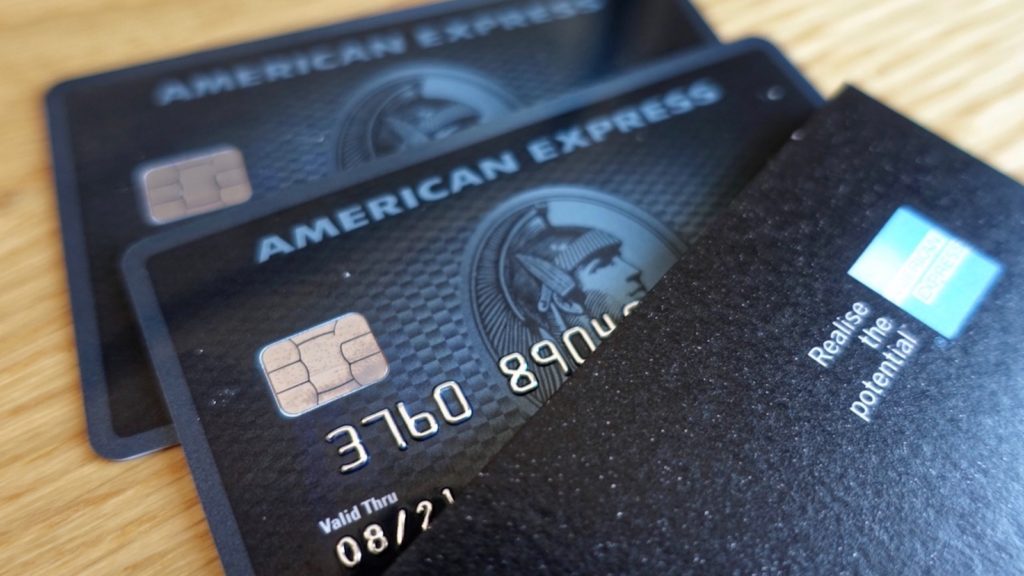
Many flexible points programs offer similar earning rates to airline-branded credit cards (with some exceptions you need to look out for, including caps). For example, both the ANZ Rewards Black and the American Express Explorer Card offer two points per dollar, which converts to one Velocity Point per dollar, as an example partner.
American Express Membership Rewards has the broadest range of airline transfer partners across the full card range. But most of the big banks have the ‘big two’ of value for our region: Velocity and KrisFlyer.
Fewer programs are partners with Cathay Pacific’s Asia Miles program. For example, Citi Rewards only does this for its most expensive card, the Citi Prestige.
Card Members enrolled in the Ascent Premium program (e.g. holders of the American Express Platinum Card) also have Qantas as a rare transfer partner.
- Citi Rewards partners with a huge number of foreign airline partners with their Citi Prestige card. These include more programs such as Air France and KLM Flying Blue.
- Many banks also offer business cards tied to their loyalty programs. Business spending is one of the best ways to earn the most points from credit card use.
Why isn’t Qantas included in more flexible points programs?
In 2009, Qantas Frequent Flyer decided to pull out of most flexible points programs. This is why you see banks only offering direct-earn Qantas Points credit cards. The banks can still maintain their own separate rewards programs for other customers while giving a separate Qantas Points-earning option.
If you want to earn Qantas Points in bulk, then a Qantas co-branded card is the most popular way to do it. But that leaves you tied to the Qantas ecosystem, which isn’t great if you can’t find reward seats on Qantas partners.

Qantas Points are undeniably the most popular ‘frequent flyer currency’ in Australia. But you should be aware that locking yourself into Qantas Points means you don’t have as much room to move.
The number of Qantas Points needed for flights is already very high compared to other programs. The extra carrier charges you pay on a ticket can be pretty steep, too. Plus, there is very little premium reward seat availability on popular routes.
Confused? Here’s whether you should choose a credit card that earns flexible points or Qantas Points.
Summing up
Flexible points programs are mainly associated with credit card and hotel programs. You gain more freedom in how you choose to redeem those points down the track. For example, if Singapore Airlines KrisFlyer has more reward seats to London than Velocity Frequent Flyer, then you can just send your points to KrisFlyer.
Of course, this introduces an extra layer of complexity when it comes to managing your points. Qantas doesn’t partner with flexible points programs, except those enrolled in American Express’ Ascent Premium rewards program, ANZ Business Rewards and Westpac Altitude Business Rewards.
There’s no right or wrong approach, though. If you prefer earning points directly into frequent flyer programs from your credit card for simplicity (and often, maximising points in that program from your spending), then go for it. For Qantas Points, this is your main option.
Ultimately, the choice lies with you.


What is the purpose of a flexible rewards scheme like Amex Membership Rewards? I get the flexibility to transfer to multiple programs but you typically lose half the value when you make the transfer?
In Australia, wouldn’t you just be better off to use a frequent flyer linked credit card where $1 typically earns 1 point (if not more)?
Not sure what I am missing here.
Hi Asanga, good question. The thing you’re missing is that these cards typically earn around 2 flexible points per dollar, so you still get the same 1 point per dollar effective earn rate when you transfer. Then it’s the best of best worlds with the flexibility. For example, the Amex Explorer card earns 2 MR points per dollar spent, while Citi Premier also earns 2 Citi points per dollar spent online. Both have some transfer partners that are 2:1 (some are higher like 3:1) to get around 1 airline point per dollar.
Thanks for the reply Brandon.
In my case my Amex only earns 1 MR point per dollar. I’m actually looking to get rid of the card. I have accrued a stack of points but im not sure what the best value way is to use them.
Any suggestions?
Flexible awards are really paying off with the low USD/AUD-NZD rate at present. transferring AMEX points to marriot with the recent 50% bonus makes overseas hotels so much cheaper than cash since getting 3 points on the platinum edge have become more valuable as hotels points given current exchange rates and the lack of reward flights on airlines
I’ve got some CBA Awards points to spend and my calculations of the conversions are that 500,000 points converts to:
$2,500 Flight Centre dollars (which would appear to buy maybe one return flight to LA)
230,000 Velocity Points
200,000 Qantas Points
Based on that, am I right in thinking it’s much more valuable to convert to points, rather than Flight Centre dollars? Or am I missing something here? It seems you’d get a lot more flights out of the Velocity Points, for example.
G
Hey Graeme – I’d agree you are likely to get more value out of frequent flyer points, but it’s totally up to personal preference. If you want to book hotels, for example, frequent flyer points would be useless – same if there are is no points flight availability for your chosen dates. There’s also the 15% bonus to Velocity this month to factor in too.
I don’t understand how this makes sense for the Amex Ascent Premium program. Let’s say I sign up for the Platinum Charge Card and get the 100,000 points offer. I then want to transfer those points to my Velocity membership. According to the Ascent Premium terms and conditions I can purchase Velocity points with Membership Rewards Points subject to a fee of $25 per 1,000 points transferred. So to transfer 100,000 points it will cost me $2,500! 100,000 Membership Rewards Points are worth about $830 in travel aren’t they?
When will transferring points ever be a good idea?
In all of the articles I’ve read here the $25 per 1,000 points transfer fee has never mentioned – please tell me I’ve got this wrong!
Hey Greg – glad you asked! That fee is to buy points outright for transfer to a frequent flyer program when using the Platinum Charge (a somewhat hidden benefit), outside of the points you earn from day to day spend.
All points earned from spend in all credit card points programs transfer over to partner airline programs free of (monetary) charge – otherwise, as you say, this would be a really bad idea! So thankfully that’s the case, no charge for transfers for points you accrue every day.
Great, thanks for clearing that up Keith. You’re right, a nice little hidden benefit if you’re close to accruing the points you need for a flight.