Pre-existing medical conditions and credit card travel insurance interact in three ways across the Australian market. Some policies exclude them outright. Others automatically cover a published list of conditions when criteria are met. Some offer a formal assessment that can confirm cover in writing.
Which model applies depends on the card’s underwriter (the insurer that issues the policy and pays claims, rather than the bank on the card), not the card’s prestige. Chubb-underwritten American Express policies at one end, while Allianz-underwritten bank policies sit at the other.
We’ll cover what counts as pre-existing, the three treatment models with named examples, how the assessment pathway works, and the checklist before relying on any card cover.
What counts as a pre-existing condition under card policies
A pre-existing condition is whatever the policy document says it is. The definitions turn on timing and treatment history rather than on how serious a condition feels. Policies typically define the term by reference to conditions that existed, showed symptoms or received treatment within a lookback window before cover began.
American Express’s own guidance notes that different exclusions can apply based on how recently the condition occurred, with the policy PDS controlling the exact wording. The definition can also usually apply to other people travelling with you. Exclusions commonly extend to a travel companion or relative where their health is what triggers the claim. This wording appears in the ANZ complimentary insurance booklet, among others.
The practical consequence is that the same person can be covered under one card’s policy and excluded under another for the same trip. This is why the model behind the card matters more than the tier.
The three ways card policies treat pre-existing conditions
The market splits into three documented models, and the underwriter is the tell. The table below summarises them as of September 2026.
| Model | How it works | Documented example |
| Near blanket exclusion | Losses arising from a pre-existing condition are not covered under any section, bar one. No assessment pathway is published | American Express policies underwritten by Chubb, including the Platinum Card |
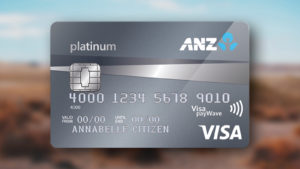
| Listed conditions plus assessment | A published list of conditions is covered automatically when the criteria are met. Anything else can be assessed, with cover confirmed in writing | ANZ Platinum and Black, underwritten by Allianz |
| Assessment with administration fee | Cardholders apply online or by phone before travel. A $75 administration fee applies where cover is confirmed in writing | NAB eligible cards, underwritten by Allianz |
The Chubb model is close to absolute. The American Express Platinum policy excludes costs arising from any pre-existing medical condition under every section of the policy bar one.
The exception is Section F, Resumption of a Long International Trip Cover. There is no assessment pathway to change that outcome, which is what separates it from the Allianz model. The Allianz model, used across banks including ANZ and NAB, excludes pre-existing conditions unless Allianz Global Assistance has confirmed cover, which converts the exclusion into a process.
A third variation sits at the edges. Commonwealth Bank’s own policy documents set out an upgrade pathway where travellers over the standard age limits or with pre-existing conditions can apply for cover by paying an additional premium.
How the assessment pathway works at the Allianz-underwritten banks
The pathway is a pre-travel process with paperwork at the end. At NAB, a cardholder applies online or over the phone for an assessment of whether a pre-existing condition is covered by the group policy. If Allianz Global Assistance confirms cover, you will receive written confirmation after paying a $75 administration fee.
At ANZ, the policy booklet lists conditions that are covered automatically when the standard criteria are met. You can have a condition outside the list assessed through the same process. The outcome is recorded in a medical terms letter that governs the claim. Both policies also have separate eligibility requirements. ANZ requires at least $250 of prepaid travel costs on the card. NAB requires at least $500, a return ticket, and an age of under 81.
- Warning: relying on assessed cover is a multi-step process. Skipping a step recreates the exclusion
- Meet the card’s activation rules first, since the assessment sits on top of eligibility, not instead of it
- Check the policy booklet’s list of automatically covered conditions and their criteria before assuming an assessment is needed
- Apply for assessment before travelling. Allow time for the outcome, and budget for the administration fee when confirmation is issued
- Keep the written confirmation or medical terms letter, as the document provides evidence of your assessed cover
The checklist before relying on card cover
The checklist is short and unforgiving:
- Identify the underwriter and model behind the card
- Read the pre-existing definition against every traveller’s history, including companions
- Complete any assessment before departure
- Confirm the age limits, which sit at under 80 on the American Express policies and under 81 on the NAB and ANZ policies
If the condition is excluded, the card provides no cover for that specific risk. A standalone policy that assesses medical conditions provides the relevant cover, regardless of which card the traveller holds.
Card insurance quality varies across the market, along with earnings and fees. The wider comparisons appear in the round-ups of the top Qantas Points-earning credit cards and top Velocity Points-earning credit cards. The flagship policies are covered in the American Express Platinum guide and Platinum Business guide. The activation spend often overlaps with a new card’s requirements in the credit card minimum spend guide.
Frequently asked questions
No. The American Express policies underwritten by Chubb exclude losses arising from a pre-existing condition under every section but one, with no way to apply for cover. The Allianz-underwritten bank policies at ANZ and NAB run a listed conditions and assessment model that can confirm cover in writing. The underwriter, not the bank’s brand tier, predicts the model.
No. The fee at NAB is an administration charge that applies where cover is confirmed in writing after assessment. The assessment itself can decline the condition, and processes differ between banks, so the outcome document is what matters, not the payment.
They can. Policy exclusions commonly apply to pre-existing conditions of anyone whose health triggers the claim, including a travel companion or relative, as stated in the ANZ booklet. A cancellation caused by a companion’s known condition can be excluded even when the cardholder is in perfect health.
Then the card cover is absent for that risk and the decision moves outside the card entirely, to standalone travel insurance products that assess medical conditions for a premium. Travelling on complimentary cover known not to respond to your main medical risk is the worst of both worlds.
This article is not medical or insurance advice. Read the relevant Product Disclosure Statement or policy booklet before relying on any cover.
Fees, rates and figures quoted are correct at the time of publication and should be verified directly with each provider before acting on them.
This article is general in nature and does not constitute personal financial advice. Consider your own financial situation before applying for any credit product. Point Hacks may receive a commission from card issuers for applications made through this site.