When first starting out in the frequent flyer space, it can be tempting to go straight for a card that earns Qantas or Velocity Points directly. And while there’s certainly nothing wrong with that approach, it’s also worth considering picking a card that links to a bank reward program.
There are benefits and drawbacks, but overall, these flexible bank reward programs can be a handy tool for those with a little more time up their sleeves to plan and book their travels. You’ll find out why soon!
What are the main bank rewards programs in Australia?
Most major banks in Australia offer an in-house rewards program with various airline partners. You earn points in the bank reward program first, before later transferring them to various airline partners as you desire. The transfer rate from bank points into airline points or miles can differ from bank to bank, between airlines, and may also change over time.
But to give an example, a transfer at a ‘3 to 1’ rate means three bank points transfer to one airline point or mile. In other words, 60,000 bank points equals 20,000 airline points/miles.
Let’s start with the main programs and partnerships to be aware of:
| Rewards Program | Virgin Australia Velocity | Singapore Airlines Krisflyer | Cathay Asia Miles | Emirates Skywards | Air New Zealand Airpoints |
|---|---|---|---|---|---|
| American Express Membership Rewards | 2 to 1 | 3 to 1 | 2 to 1 (3 to 1 from 15 December 2025) | 3 to 1 (4 to 1 from 15 December 2025) | 200 to 1 |
| Westpac Altitude | 3 to 1 | 3 to 1 | 3 to 1 | 3 to 1 | 180 to 1 |
| HSBC Rewards | 2 to 1 | 2 to 1 Premier cards only | 2 to 1 Premier cards only | - | - |
| Amplify St.George, Bank of Melbourne, Bank SA | 2 to 1 | 3 to 1 | - | - | - |
| Citi Rewards Card | 2.5 to 1 | 3 to 1 | - | - | - |
| Citi Premier Card | 2 to 1 | 2.5 to 1 | - | - | - |
| Citi Prestige Card | 2 to 1 | 2.5 to 1 | 2.5 to 1 | - | - |
| ANZ Rewards | 2 to 1 | 3 to 1 | 3 to 1 | - | 200 to 1 |
| NAB Rewards | 2 to 1 | 3 to 1 | 3 to 1 | - | 200 to 1 |
It’s important to know that these are the transfer rates. The rates at which you earn points will differ wildly between banks and even on different cards within the same bank, so you need to do your research on those.
The main benefit of bank reward programs is you are not locked into a specific airline. You can transfer your points over to various airline partners at your leisure, depending on which airline offers the best reward seats for your next trip. There’s nothing worse in the points world than being stuck with hundreds of thousands of points you can’t use!
Know your earn rates with bank rewards programs
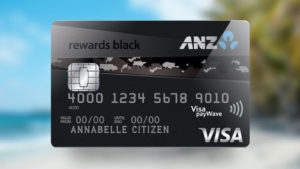
The best way to compare different bank reward program cards is to work out the ‘effective earn rate’ for your target airline. Let’s say you want to maximise your Singapore Airlines KrisFlyer balance. You have three cards in mind – the American Express Explorer, the ANZ Rewards Black and the St.George Amplify Signature.
The standard earn rate of each card is:
- American Express Explorer: 2 Membership Rewards point per dollar
- ANZ Rewards Black: 2 ANZ Rewards points per dollar (halves after $5,000/month)
- St.George Amplify Signature: 1 Amplify point per dollar on most purchases in Australia (halves after $10,000 per month)
Next, we look at the transfer rates from each bank rewards program to KrisFlyer:
- American Express Explorer: 3 Membership Rewards points to 1 KrisFlyer mile
- ANZ Rewards Black: 3 ANZ Rewards points to 1 KrisFlyer mile
- St.George Amplify Signature: 3 Amplify points to 1 KrisFlyer mile
With those figures, we can now work out how many KrisFlyer miles you are earning per dollar (the ‘effective earn rate’):
- American Express Explorer: 0.66 KrisFlyer miles per dollar
- ANZ Rewards Black: 0.66 KrisFlyer miles per dollar (halves after $5,000/month)
- St.George Amplify Signature: 0.33 KrisFlyer miles per dollar
So if you were purely after a card that earned the most KrisFlyer miles on an ongoing basis, then the American Express Explorer or ANZ Rewards Black could a good pick.
But you’ll also need to factor in annual fees and sign-up bonuses. For example, the American Express Explorer Card standard annual fee is $395/year (offset by a $400 travel credit), while the St.George Amplify Signature standard annual fee is $295 a year.
American Express Explorer Credit Card

- Sign-up Bonus:
- 75,000 Bonus Membership Rewards Points¹
- Rewards Earn Rate:
- Earn 2 Membership Rewards points per $1 on all purchases except government bodies where you will earn 1 point per $1 spent⁶
- Annual Fee:
- $395 p.a.
- Offer expires
- 19 May 2026
- Earn 75,000 Bonus Membership Rewards Points¹ when you apply by 19 May 2026, are approved and spend $4,000 on eligible purchases on your new American Express Explorer® Credit Card within the first 3 months (T&Cs apply. New American Express Card Members only). Enjoy a $400 Annual Travel Credit², complimentary access to The Centurion® Lounges³ in Sydney and Melbourne, Card, Smartphone and International Travel Insurance⁴, for a $395 p.a. annual fee.
Summing up
Plenty of your own research is required if you’re planning on joining a bank’s reward program. But it’s fairly easy to do the maths – just find out the card’s earn rate and transfer rate to your favourite airline. Take into account sign-up bonuses, annual fees and other perks that might interest you (such as lounge passes).