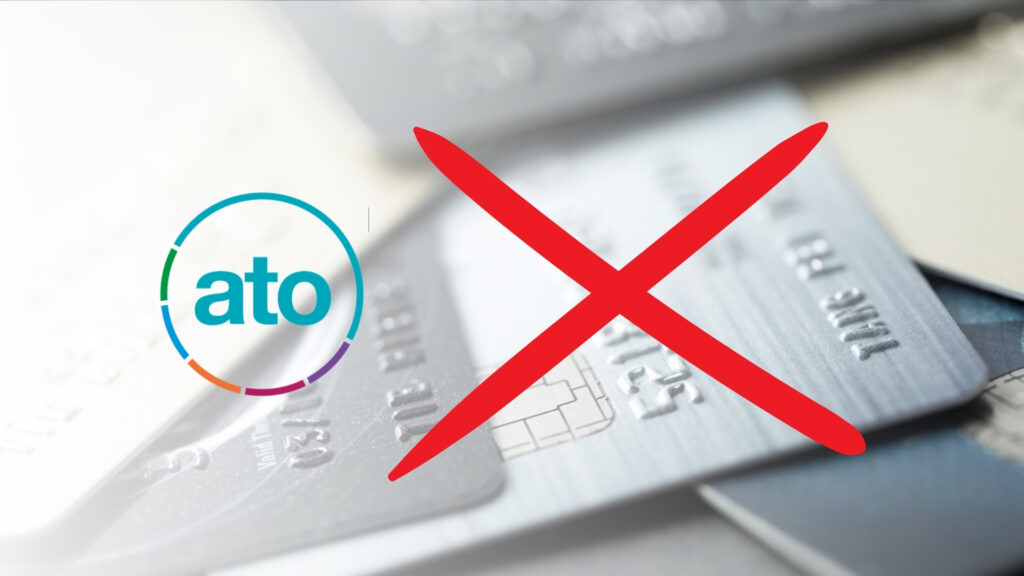
Australian taxpayers will soon lose the ability to pay the Australian Taxation Office (ATO) by credit card, with the tax office confirming it will stop accepting credit card payments from 1 December 2026.
The decision comes just two months after the Reserve Bank of Australia’s ban on card payment surcharges takes effect. From 1 October, Mastercard, Visa and EFTPOS payments will no longer be able to attract a card surcharge under the new rules, while American Express and UnionPay have also announced they will remove surcharging.
The tax office says its decision to stop accepting credit cards follows the removal of surcharging and changes to merchant payment costs. Credit card payments will no longer be available from 1 December, although other payment methods will remain available.
“The ATO has decided it would not be appropriate for the cost of credit card merchant fees to be transferred to the community,” a notice on the ATO website said.
Could other businesses stop accepting credit cards?
The ATO’s decision raises an interesting question for us: will other businesses decide that accepting credit cards is no longer worth the cost? While scrolling through Facebook (or your social media of choice), you might come across posts from small businesses decrying that they simply can’t take on the added costs of cards.
The RBA’s reforms don’t require businesses to keep accepting cards. However, businesses will still incur costs when accepting cards. The RBA says these costs can instead be incorporated into a business’s overall pricing rather than appearing as a separate surcharge. Businesses could also offer a cash discount, if they wish.
That potentially creates a new point of competition between retailers. Let’s say one business accepts credit cards while another doesn’t. Would the payment options available at checkout become another factor in where you choose to shop?
For frequent flyer enthusiasts in particular, the ability to pay by card can be valuable because everyday purchases can contribute towards rewards points.
The end of surcharges won’t always mean lower prices
There’s another wrinkle to the changes. The RBA expects businesses that currently surcharge will incorporate those costs into their advertised prices instead. In effect, the price on the shelf might rise indiscriminately, regardless of whether the customer uses cash, debit or credit.
That creates an interesting dynamic for rewards-focused consumers. If the price of a product is the same regardless of how you pay, there’s little reason to voluntarily give up the rewards on an eligible card transaction.
If there was a small 1-2% discount for paying cash, would you really go to that effort to withdraw money, manage change, and forego your points? Maybe for large transactions, where there’s noticeable savings. But what about your regular daily shop or lunch run?
Summing up
The ATO’s decision is a reminder that the end of surcharging isn’t simply ‘no more card fees, yay.’ It could change the way businesses think about accepting cards and, in turn, how consumers decide where to spend their money.
If you’re keen to keep earning points, keep an eye on which businesses continue accepting cards and make the most of those opportunities where the price is the same regardless of payment method.
As for the ATO change itself, you’ve got until 30 November to pay via credit card without any fees. Most cards don’t actually award points on ATO direct payments anyway, but Amex does (albeit at a lower rate of 1 Membership Rewards or 0.5 Qantas/Velocity Points per dollar). After that date, you’ll need to turn to a third-party service to earn points on eligible bill payments.