Putting business expenses on a personal credit card can lift your points earnings. Personal cards often carry stronger earn rates and richer sign-up offers than their business equivalents. The switch only makes sense when the issuer’s terms allow it. The earn caps can absorb the volume, and your bookkeeping can carry the mixed statements. Each of those three conditions can fail, so check them before the first invoice hits the card. Here is what issuer terms say about business spending on personal products. We’ll cover where earn caps bite and what the switch means for your records and protections. We’ll also look at which operator it suits.
What issuer terms say about business spend on personal cards
Personal and business cards are separate product lines with separate terms, and the issuers draw the line themselves. American Express, for one, positions its personal range for personal purchases and for operators without an Australian Business Number. Its business range is designed for established small- to mid-sized operations, and the distinction is set out on the issuer’s own comparison page. Other issuers draw the line in their rewards terms instead. They may define spending that earns points as eligible or retail purchases and reserve the right to exclude business transactions. This leaves the earn on commercial spending at the program’s discretion rather than in a promise.
The consequence is that the first stop is your own card’s points terms, not a general rule. A sole trader whose business purchases look like ordinary retail spending may earn without friction for years. A cardholder pushing high volumes of obviously commercial expenditure through a personal product is relying on terms that may not support the earnings. An issuer that decides the account is being used commercially can withhold points or ask the spender to move. The strategy starts from the document, and it survives by staying inside it.
Where the earn caps bite
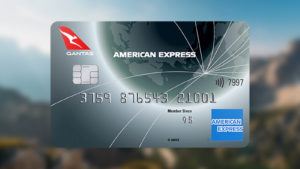
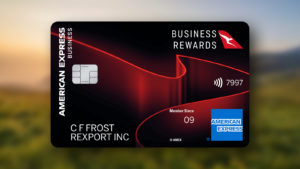
Personal cards are built for household volumes, and the caps show it. The clearest illustration in the Australian market is the pair of Qantas-earning American Express cards as of July 2026. The personal Qantas American Express Ultimate earns 1.25 Qantas Points per $1 on everyday spend. This applies until 100,000 points have been earned in a calendar year. The rate then drops to 1 point per $1. The American Express Qantas Business Rewards Card earns the same 1.25 points per $1 until 500,000 points are earned in a calendar year. That is five times the personal card’s cap, before easing to 0.75.
- A business putting $200,000 a year through the personal card exhausts the 100,000-point cap within five months. The cap is reached at $80,000 of spending at the 1.25 rate
- The remaining $120,000 of the year’s spend earns at the reduced rate of 1 point per $1. That brings the year to 220,000 points, against the 250,000 the headline rate suggested
- Warning: the headline comparison reverses at this volume. The business card holds its full rate to 500,000 points, so the cap decides the outcome
The pattern generalises. Business products assume business volumes, so their caps, where they exist, sit far higher. Uncapped business charge cards, such as the American Express Platinum Business, remove the ceiling entirely at 2.25 points per $1 in Membership Rewards, American Express’s transferable points currency. The Platinum Business guide covers this. Before moving business spend to a personal card, compare your actual annual volume with the personal card’s cap. A cap that never binds for a household can bind quickly for a small business.
What the switch does to records and protections
Mixing business and personal spending on a single statement creates the apportionment problem that every accountant warns about. The ATO’s deduction rules require business claims to be separated from private costs and supported by records. A blended personal card means line-by-line classification at tax time. You may also need to defend a business-use percentage for any card costs you claim, and there is a higher risk of error in both directions. This is general information rather than tax advice. The treatment of your own structure is a question for a registered tax agent. The bookkeeping cost of blending is real, even when every entry is classified correctly.
- Warning: the points gained from a personal card can be smaller than the administrative cost of separating mixed statements every quarter
- Keep business and private spending on separate cards wherever the volumes justify it, even if both cards are personal products
- If spend must blend, code transactions promptly each month rather than reconstructing the year at tax time
- Check how your accounting software handles the card feed. A clean feed into the books recovers some of the separation
- Revisit the issuer’s points terms annually, because rewards terms change and an earn that worked last year may be excluded this year
The protections point cuts both ways. Personal cards fall under the consumer credit framework, with its dispute and hardship machinery. Some operators see this as an advantage over business products. Business cards offer expense tools, employee cards, and integrations that personal products lack. A sole trader loses little by forgoing employee cards, but a business with staff spending has no personal card answer at all.
The operator profile the strategy suits
The switch works best under roughly $80,000 a year of card spend, the level where the Ultimate’s 100,000-point cap never binds. A sole trader or side business with that kind of annual card volume may suit the strategy. Spending should look like retail purchasing, with no employees, and a points goal that personal cards can support. This can deliver earn rates and richer welcome offers without hitting caps or terms. The discipline of a second personal card reserved for business purchases keeps the books clean. For that operator, the strategy is close to free value. Pairing it with a plan for meeting a minimum spend on a new card can turn predictable business costs into points.
The switch fails as the business grows. Volume breaches caps, spending patterns start to read as commercial, and employees need cards that the personal product cannot issue. The accounting cost of blended statements rises with transaction count. At that point, the business card range earns back its fees through structure. Points pool to the business, caps are higher, and the statements are easier for an accountant to work with. The comparison between the two structures is drawn in full in the companion piece on Amex business cards versus personal cards.
Frequently asked questions
Fees, rates and figures quoted are correct at the time of publication and should be verified directly with each provider before acting on them.
This article is general in nature and does not constitute personal financial advice. Consider your own financial situation before applying for any credit product. Point Hacks may receive a commission from card issuers for applications made through this site.