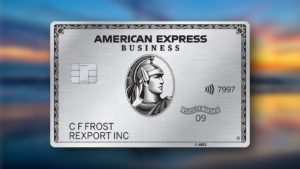
An annual fee for a business credit card is generally tax-deductible when the card is used to run the business. This is because account-keeping costs incurred in earning assessable income can fall within the ordinary deduction rules. These rules apply to every business expense. Assessable income is the income the business is taxed on before deductions. Similar rules apply to personal cards and mixed-use cards. The deductible amount is therefore rarely all-or-nothing. This article sets out the general position and is general information, not tax advice. Confirm how the rules apply to your own circumstances with a registered tax agent or the ATO before claiming. This article sets out a three-rule framework. It explains how apportionment works for mixed-use cards, which other card costs follow the same logic, and what records support the claim.
The three rules that decide any business deduction
The ATO’s framework for business deductions rests on three requirements. A card fee is tested against these requirements like any other business cost. The expense must be for the business rather than for private use. An expense serving both purposes can be claimed only to the extent of the business portion, and the taxpayer must maintain records to substantiate the claim. The framework is set out in the deductions guidance for businesses and organisations on the ATO website. It explains how the rules apply to different card fees.
At one end is a card used solely for business expenditure. The annual fee may be a cost of maintaining a facility used to earn assessable income. It may therefore be claimable in full. At the other end, a personal card is used for household spending. If the fee has no connection to earning income, it is not deductible. Everything in between is an apportionment question. Sole traders and small operators often have card spending that serves both business and personal purposes.
How apportionment works on a mixed-use card
Where one card carries both business and private spending, the deduction follows the business share.
- A sole trader whose card statements show $30,000 of business purchases and $10,000 of private purchases has used the card 75 per cent for business. $30,000 is three-quarters of the $40,000 total
- On that pattern, 75 per cent of the annual fee reflects the business use of the facility. That is $337.50 on a $450 fee, or $146.25 on a $195 fee. The same approach can apply to other card costs that need to be apportioned
- Warning: the claim should be supported by records showing the business and private spending. A percentage claimed without the statement split to support it is the weak point in any mixed-use claim
The percentage is not a number to assert once and reuse forever. It should reflect the mix for the year claimed. It is one reason the cleanest structure is a dedicated card for business spending and a separate card for everything private. A dedicated card can turn the apportionment exercise into a full claim supported by statements. It also reduces the risk of private costs being included in business claims. This can simplify discussions with an accountant or the ATO. The card choice itself is a separate value question. This includes the points and features you receive for the annual fee. See our guide to the Amex Platinum Business Card.
Other card costs that follow the same logic
The annual fee is the headline claim, but the same business-purpose test applies to the costs incurred by the card. Interest charged on amounts drawn for business purchases is determined by the purpose of the underlying spending. So interest on a balance built from business expenditure is therefore claimable. Interest on private spending is not, and a mixed balance is apportioned. Foreign currency conversion fees on business transactions fall under the same test. So do cash advance fees when the advance funds the business. Card facility charges on a business account follow the same test.
- Warning: the purpose of the underlying transaction determines whether a cost is deductible. A business card does not make private spending deductible
- An annual fee on a card used wholly for business is claimable in full. A mixed-use fee is claimable to the business percentage
- Interest deductibility follows what the borrowed money bought, not which card it sits on
- Government-imposed penalties are not deductible. Treat fines and penalty amounts as outside the claim, regardless of the card that paid them
- When a cost does not clearly pass the business purpose test, check the claim with a registered tax agent before lodging your tax return
Two adjacent points round out the picture. Merchant service fees, which a business pays to accept card payments from customers, are a cost of sale and deductible under the same ordinary rules. Rewards points earned on business spending raise their own tax questions. These are covered separately in the companion piece on tax and GST considerations for points on business spend.
The records that support the claim
Substantiation is the third rule, and for card costs it is mercifully mechanical. Keep card statements showing the fee and any interest or charges. Keep the invoices and receipts for business transactions that establish the business use percentage. Where a card is mixed-use, keep the work that produced the percentage claimed. The ATO’s record-keeping expectations for business expenses extend to 5 years. Keep statements somewhere other than the card issuer’s online portal. Its history may be shorter than the required retention period.
An accountant will also want the fee characterised correctly in the accounts, as a bank or account-keeping charge rather than buried in general expenses. This is because clean characterisation is what makes the claim legible at review time. None of this is onerous for a business already keeping proper books, which is the quiet point of the exercise. The deduction is a byproduct of ordinary good record-keeping rather than a scheme. The value of the card should stand on its features and earn rate first. The Qantas Business Rewards guide provides a framework for assessing those factors.
Frequently asked questions
This article is general information and not tax advice. Confirm how the rules apply to your circumstances with a registered tax agent or the ATO before acting.
Fees, rates and figures quoted are correct at the time of publication and should be verified directly with each provider before acting on them.
This article is general in nature and does not constitute personal financial advice. Consider your own financial situation before applying for any credit product. Point Hacks may receive a commission from card issuers for applications made through this site.