


POINT HACKS EXCLUSIVE | Ask any seasoned Economy flyer which type of plane they’d rather take, and there’s usually a resounding answer: Airbus. That’s because, more often than not, Economy seats are just that little bit wider on Airbus planes, compared to their Boeing counterparts. It’s a feature that Airbus will leverage when it makes the world’s longest flights even longer.
Airbus already holds the reins on today’s longest and second-longest routes. That’s Singapore to New York JFK, and Singapore to Newark, respectively. Both are operated by an ultra-long-range version of the Airbus A350-900, by Singapore Airlines. But non-stop flights from Australia’s east coast to places like London and New York will nudge those routes from the top of the leaderboard. That’s what’s coming, when Qantas kicks off Project Sunrise.
But why is Airbus often more comfortable for Economy flyers? It all comes down to the aircraft’s design. The cabin width of Airbus planes hits something of a sweet spot. They’re wide enough for a little extra shoulder room, but not so wide that airlines are tempted to cram an extra seat into each row. That’s what happened with the Boeing 787, which was designed with eight-across seating in mind.
When airlines discovered they could jam an extra seat into each row if they made every chair a tiny bit narrower, the 3-3-3 layout took off. Only Japan Airlines and All Nippon Airways (ANA) still fly with the original design. All other airlines – Qantas, included – traded that extra seat for a reduction in passenger comfort. But when it comes to the ultra-long flights of Project Sunrise, passenger comfort – fortunately – is trumping a squishier cabin.
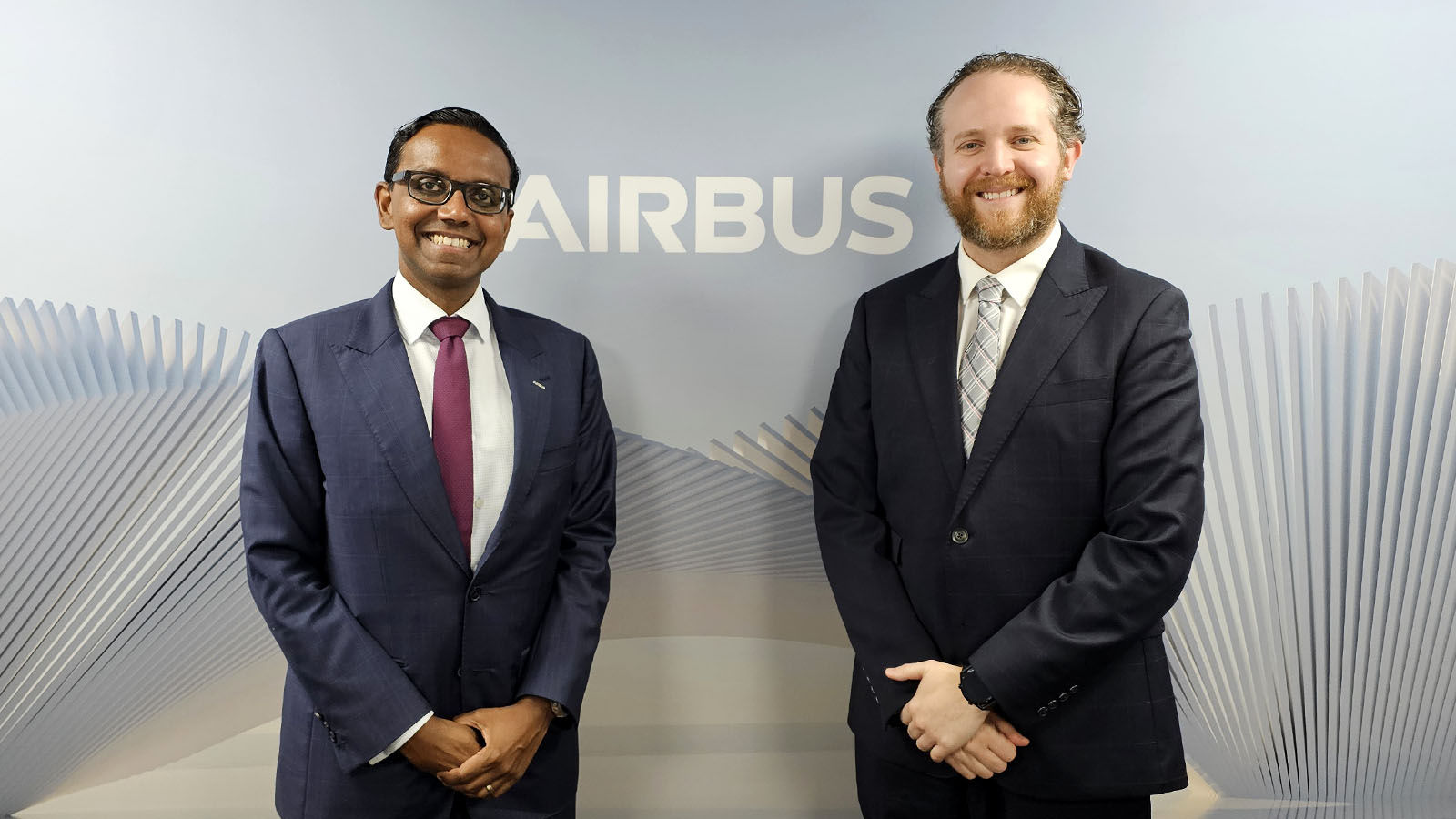
To chat more about the future of the world’s longest flights, I catch up with Anand Stanley, President of Airbus Asia-Pacific. We’re both at the IATA AGM in Delhi: an invitation-only gathering of the world’s airline and aviation leaders.
Bringing extra comfort to the cabin
Airbus already cemented its place in the ‘passenger comfort’ stakes for long flights with the Airbus A380. It’s the only commercial aircraft offering passengers an inflight shower – on the airlines that chose to have them (Emirates and Etihad Airways). It’s also the only plane with such sizeable onboard lounges and bars. For that matter, it’s the only jet where you’ll find The Residence by Etihad: a private three-room suite.
But let’s step back to Economy for a moment. Sure, it’s up to each airline to configure their planes, including which seats they order – and how many. The Airbus A380 is certified to carry a staggering 853 passengers in an all-Economy layout. But airlines aren’t doing that. Even Qantas, which went for that extra seat in every row of its Boeing 787s, carries a more modest 485 passengers on its own superjumbos. At some point, it’s less about squeezing people in, and more about helping them to enjoy the flight – for which, they might even pay more.
“Well, first of all, thank you, Chris, for having me on Point Hacks. I’m really pleased to be here, excited to be here, and I’m also excited to talk about our products.” Welcome, Anand!
“I think comfort is core to how we design our aircraft. It’s not just about when you’re seated, it’s when you enter … the lighting … the mood. (It’s about) the cabin space with Airspace (and) the bins for your bags when you are seated.” But it’s also about “the seat width.”
NAB Qantas Rewards Signature

- Bonus points
- Up to 60,000 bonus Qantas Points + $200 cashback
- Annual fee
- $449 p.a.
- Earn
- 0.75 Qantas Points earned per $1 spent up to $3,000, then 0.25 points per $1 thereafter, capped at $15,000 per statement period, plus 0.5 additional Qantas Points earned per $1 on eligible International Spend, uncapped.²
NAB Qantas Rewards Signature
- Bonus Points
- Up to 60,000 bonus Qantas Points + $200 cashback
- Annual Fee
- $449 p.a.
- Earn
- 0.75 Qantas Points earned per $1 spent up to $3,000, then 0.25 points per $1 thereafter, capped at $15,000 per statement period, plus 0.5 additional Qantas Points earned per $1 on eligible International Spend, uncapped.²
NAB is offering up to 60,000 bonus Qantas Points for new cardholders of the NAB Qantas Rewards Signature Card¹, plus 0% p.a. on balance transfers for 12 months with a 3% balance transfer fee⁴. The card also includes complimentary insurances, such as International Travel Insurance, Purchase Protection and Extended Warranty Insurance³, and earns 0.75 Qantas Point per $1 spent on the first $3,000 per statement period, then 0.25 Qantas Points per $1 on spend up to $15,000.
More room for wide shoulders…
“We want to make sure it’s the widest possible,” Stanley continues. “Not just (on) the A350 – even the A330neos or right down to our smallest number, the A220 with an extremely wide seat.” It’s a subtle nod that in general, Economy seats are wider on Airbus planes than on competing jets, on flights long and short.
Take Qantas, as an example. On its Boeing 787s, which currently operate very long routes like Perth to London and Sydney to Dallas, Economy measures up at 17.2 inches wide. (In aviation, globally, all seat measurements are given in inches). But take an Airbus A330 to Asia and you’d find a 17.5-inch-wide seat. Or the A380 on routes like Sydney-Los Angeles or Singapore-London, and it’s a shoulder-pleasing 18 inches.
On smaller planes, Economy seat width on Qantas’ Boeing 737 workhorses clocks in at 17 inches. But on the Airbus A220, which pops up on many of the same routes, it’s 18 inches. It might not sound like a lot. But for broad-shouldered passengers, it can make a big difference.
I ask Stanley whether seat comfort for Economy passengers has played a big role in Airbus’ recent negotiations, and aircraft sales more broadly. “Absolutely, Chris,” is his reply. It seems, airlines are recognising that some passengers prioritise comfort over cost, even if they’re still booking Economy.
“We are also looking at how big the windows are, how bright the aircraft is, humidity, (and we have) the lowest noise level in industry, which make a huge impact on your recovery when you land. All of these above provide you with a user experience that says you’re on an Airbus.” This helps flyers to “reduce jet lag and arrive refreshed.”
Airbus plans for the world’s longest flights to be even longer
Speaking of a 22-odd-hour journey from Australia to London, which would nudge above the world’s current longest flights, Stanley reflects on how things have changed. In fact, how even today’s ‘longest flights’ on Airbus are realistically shorter than the journeys that people used to take.
“It used to take four days or three days from London to (east coast) Australia,” Stanley observes. But once Project Sunrise flights kick off using the A350-1000, “you can just do it in one shot in an aircraft that’s 25% more fuel efficient than anything we’ve seen before.”
“Imagine being connected from Australia to any point in the world. Or, let me put it another way: any point in the world to Australia. This is an airline aircraft that can focus on passenger comfort. Whether it’s lighting, whether it’s humidity … the seats or wellness areas that will be created. It’s about comfort, but it’s also about connectivity and state of the art innovation with comfort.” For Australians, “the ultra-long-haul will be the Tyranny of Distance. (But) Airbus is always thinking about innovation, the next generation, and we want to stay ahead of what our customers need.”
Looking to Airbus’ older suite of aircraft like the A380, “yes, there have been times when airlines have put showers, or even now we see some of our corporate jets looking at some extravagant things. But the real focus we see is (that) airlines and passengers want to do things more sustainably.” For instance, “looking at aircraft that are … more fuel efficient or (have) the lowest carbon footprint out there, because that really is meaningful.”
For Stanley, there’s joy in being a company that brings people together. “We also look at the excitement of being able to go to a really small island in Papua New Guinea on a beautiful A220 with superior comfort and connectivity. Or being able to see beautiful parts of the world and turn around on aircraft like the A220 or A330. Or connect any two points of the planet with the A350. We are seeing more joy and connectivity, and people being brought together with products such as those.”
As for Australia – the end point of Project Sunrise flights – the country “is absolutely gorgeous,” Stanley continues. “I know that because I’ve been there, and it’ll be amazing if the rest of the world can get to see how beautiful it is. And that’s the beauty of what we do. We come up with clean sheet design aircraft, state-of-the-art aircraft that connect people to beautiful places like Australia. That’s what we really want to be doing.”
Also read:
- Experience Business Class luxury to New York on the world’s longest flight
- Comfort test: Qantas’ Project Sunrise Economy seat
- Keen to avoid detours, Qantas begins charting Project Sunrise flight paths
- Qantas unveils new Business and First Class seat for the Airbus A350
- Adding the sunrise to Qantas’ Project Sunrise
Featured image courtesy of Lana Kravchenko/Pexels.
Stay up to date with the latest news, reviews and guides by subscribing to Point Hacks’ email newsletter.

Narrow seats, you make no mention of the airlines that have now started fitting 10 abreast wide in the AB350, they are by far the narrowest in the industry
I agree – very good article.
That being said – I am still not convinced that a nonstop flight to London or NY will be all that attractive to most people. Granted- there will always be those willing to pay a premium to shave a couple of hours of the flight time, but for most of us, a leg stretch and a stroll in Changi, Dubai or Doha airport are quite nice. A proper coffee, a shower or a cooked mean at a civilised lounge make the trip a lot more pleasant.
Terrific article, Chris. I enjoy reading about technical aspects, alongside the usual onboard customer experience. I’ve enjoyed flying Airbus aircraft ever since my first Airbus in 1984 (an a300 flown by PX from Port Moresby to Brisbane). Since then, I’ve flown the Airbus family all over the globe, including a310, a330, a340, a380, and a350. All were comfortable rides, and certainly beat out the rivals I was most familiar with: 777 and 767 in terms of noise levels and spaciousness. I also flew the 707 several times in the early 80s!! But my memories are dim, and I would never dare criticize the 707 or indeed the ‘Queen of the Skies’, the 747 (a real sentimental favourite of mine). Overall though, it’s Airbus that has solidified itself in my experience as the better aircraft for comfort.