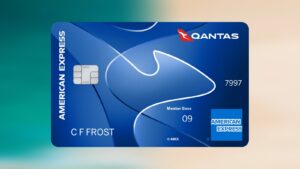
The best no annual fee credit cards that earn points in Australia let you accumulate Qantas Points, Velocity Points, or flexible rewards on everyday spending without paying a yearly card fee.
Of course, there will be trade-offs. Earn rates on no-fee cards are lower than on premium cards, and your options are more limited. But for the right kind of spender, such as beginners looking to earn a moderate balance with no fee, they’re a legitimate part of a points strategy.
This guide covers what’s actually available, what to expect from the earn rates, and when it makes more financial sense to pay a fee instead. For the full $0 annual fee card landscape, the Point Hacks no annual fee credit card guide is the most detailed resource available.
Do no annual fee credit cards actually earn useful points?
The short answer is yes, but with realistic expectations.
The Reserve Bank of Australia’s January 2025 bulletin on bank fees confirmed that fee income from credit cards increased by 11% in the year to June 2024, driven partly by higher overseas transaction activity. That context matters here: the banks are earning more in fees elsewhere, which means there’s less incentive to offer premium rewards on cards that already waive the annual fee.
No-fee cards typically earn 0.5 to 0.75 points per $1 on everyday spending, compared to 1 to 1.25 points per $1 on mid-tier cards with annual fees. That’s not useless (across $30,000 of annual card spend, you’d accumulate 15,000 to 22,500 points), but it’s quite a bit less than what a fee-paying card produces. The question is whether that difference in points earn justifies the fee.
What to expect from a no-fee card in terms of earn rates
Actual $0 annual fee cards that earn points in Australia are quite limited. There are only two options at present – one earns Qantas Points, and the other earns Flybuys points.
The more accessible category is $0 first-year annual fee cards. These are premium rewards cards that waive their annual fee for the first 12 months, often alongside a sign-on bonus of tens of thousands of points. If you’re willing to cancel before the second-year fee is charged – or to keep the card if the fee is justified – these options represent substantially better value than permanent no-fee cards.
No annual fee cards that earn Qantas Points
The Qantas American Express Discovery Card is the only fee-free-for-life option here. It earns 0.75 Qantas Points per $1 on general spend and 1.75 points per $1 on selected Qantas purchases, with no annual fee and no cap on points. It’s a solid foundation for someone building Qantas Points who isn’t ready to commit to a fee-paying card.
For $0 first-year cards earning Qantas Points, more options might open up in the future. Several mid-tier Qantas co-branded cards from major banks have previously offered first-year fee waivers and sign-on bonuses of 50,000 to 100,000 Qantas Points. However, these offers are rarer now.
Qantas American Express Discovery

- Bonus points
- This card doesn't offer a signup bonus.
- Annual fee
- $0 p.a.
- Earn
- 0.75 Qantas Points per $1 spent on eligible purchases. 1 additional Qantas Point per $1 spent on selected Qantas products and services in Australia. 0.5 Qantas Points per $1 spent at government bodies in Australia. No cap on earn rate
Qantas American Express Discovery
- Bonus Points
- This card doesn't offer a signup bonus.
- Annual Fee
- $0 p.a.
- Earn
- 0.75 Qantas Points per $1 spent on eligible purchases. 1 additional Qantas Point per $1 spent on selected Qantas products and services in Australia. 0.5 Qantas Points per $1 spent at government bodies in Australia. No cap on earn rate
The Qantas American Express Discovery is a great value entry-level Qantas card, with $0 Annual Fee, and offers an earn rate of up to 1.75 Qantas Points per $1 on spend.
For context, 70,000 Qantas Points is enough for a one-way Business Class flight to various short-haul Asian destinations from Australia’s east coast. The Point Hacks guide to earning Qantas Points covers the current bonus offer landscape in detail.
No annual fee cards that earn Velocity Points
Permanent $0 annual fee direct-earn Velocity Points cards are non-existent in the current Australian market. While there used to be an Amex version of this card, as of 2026, the direct-earn no-fee Velocity card category is effectively empty.
For $0 first-year Velocity options, several bank rewards cards have previously offered first-year fee waivers. Cards earning ANZ Rewards, NAB Rewards, or Westpac Altitude Points can all convert to Velocity when you’re ready to redeem. While there are no waived first-year fee offers at present, our Point Hacks Velocity credit card guide will cover these options if any reappear.
No annual fee cards with transferable points
Transferable bank points cards with no annual fee are similarly scarce in Australia. The American Express Essential Rewards Card earns Membership Rewards points and previously had no annual fee. But for new applications, there is now a $9/month fee.
One option that is permanently fee-free is the Coles No Annual Fee Mastercard, which awards Flybuys points on spend. It earns at a relatively low rate of 1 Flybuys point per $2 spent, up to $5,000 a month.
Flybuys points can be transferred to Velocity Frequent Flyer at a rate of 2 Flybuys points to 1 Velocity Point. It’s an indirect path to Velocity Points with a $0 fee card, along with a relatively poor effective earning rate of 0.25 Velocity Points per dollar, but it works.

You could also consider the CommBank Smart Awards credit card, which has a monthly fee of $19, but this is waived if you spend more than $2,000 per month. For someone with regular expenses, it could ‘effectively’ be fee-free if you meet the monthly waiver.
Transferable points are more valuable than direct-earn points in many situations because they can be redirected to whichever program has the best availability or transfer bonus at the time of redemption. If you can earn transferable points without paying a fee, even at a lower earn rate, the flexibility adds real value.
When a no annual fee card makes sense for a frequent flyer
There aren’t many situations where a no-fee card makes sense as part of a broader strategy. The earn rates are low, and often there are no sign-up bonuses. By taking out one of these cards, you will likely lock yourself out of more lucrative sign-up bonuses from the same bank/card issuers for the next 12-24 months.
A no-annual fee credit card is primarily useful as a starter card. If you’re new to frequent flyer points and want to understand how credit card earning works before committing to a higher-fee product, a no-fee card is a lower-stakes starting point. It could also be better than not earning any points, particularly if your income isn’t currently sufficient to go for a higher-tier card.
When paying an annual fee is the better financial decision
For most active frequent flyers, a mid-tier or premium credit card with an annual fee produces much more value overall than a no-fee card.
Let’s say you put $40,000 of annual spend through Amex, earning Qantas Points. On its no-fee card earning 0.75 points per $1, that’s 30,000 points. On its premium card earning 1.25 points per $1 with a $450 annual fee, that’s 50,000 points.
For that $450 a year, you’re getting 20,000 more Qantas Points on your regular spend, plus the regular card inclusions of a $450 Qantas travel credit (effectively offsetting the annual fee), lounge passes, travel insurance and more. You could also have earned up to 100,000 points as a sign-up bonus.
The calculation changes at lower spend levels. At $10,000 in annual card spend, the difference between Amex’s no-fee card and the $450/year card is around 5,000 points, which may not justify the premium card’s annual fee. Moral of the story: do your own calculations and see if you can make the most of the benefits from the higher-tier card.