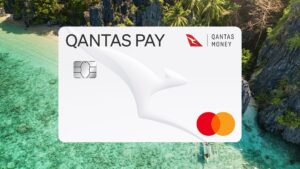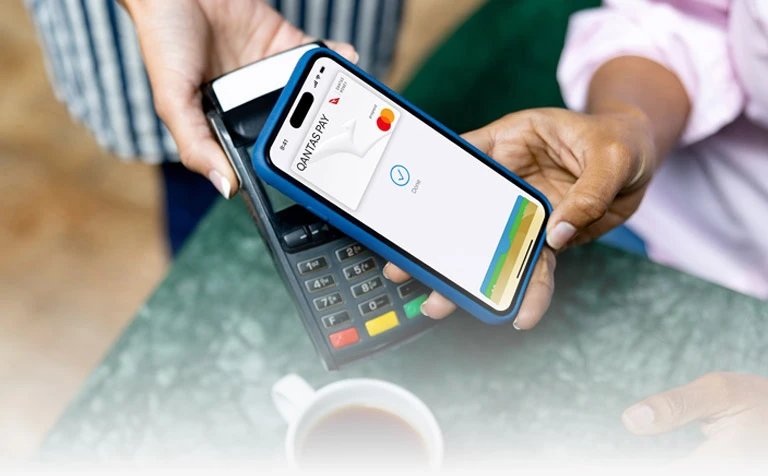
Qantas Pay is a prepaid Mastercard that holds up to 16 foreign currencies alongside an Australian dollar balance. It is free and available to Qantas Frequent Flyer members aged 16 and over. Its pitch, per Qantas’ own pages, is that there are no foreign transaction fees and no account-keeping fees. As well as unloading currencies from your Australian dollar balance and converting on the spot with no separate conversion fee. None of that makes it free money.
For most overseas spending, the answer is to carry both Qantas Pay and a credit card and split the jobs. Qantas Pay for everyday foreign purchases and the credit card for holds, big tickets and disputes. Which product wins any single purchase comes down to one comparison. This is the margin between Qantas Pay’s exchange rate against the roughly 3 per cent fee most Australian credit cards add to foreign transactions. The rate is as of July 2026. The two products charge and reward in opposite ways, and each wins in different situations. This guide covers only that comparative decision. For the full product rundown, start with our guide to Qantas Pay.
How each option charges you overseas
The cost lives inside the exchange rate you accept when you load or convert, which Qantas itself notes will be different to the market rate. The margin is real, just invisible on your statement. Qantas does not publish its size, and it moves with the card’s retail rates day to day, so no single figure can be quoted fairly. What follows pins down the costs that can be.
A points credit card charges the opposite way. The scheme converts your purchase at close to a wholesale rate, then the bank adds a visible foreign transaction fee. This is commonly around 3 per cent, with published schedules across the majors typically running 2-3.5 per cent, as of July 2026. On $5,000 of holiday spending, that is roughly $150 in fees before a single point is counted. A small group of cards charge no foreign transaction fee at all, and holding one changes the contest entirely. The scheme rate with no fee on top beats Qantas Pay’s unpublished margin in most cases.
How each option earns points
The earn contest is effectively 2 Qantas Points per dollar on Qantas Pay’s foreign currency round trip. A typical rewards credit card earns roughly 1 point per dollar, as of July 2026. Under the earn rates on Qantas’ own pages, Qantas Pay earns like this:
- Foreign currency loads and conversions earn 1 Qantas Point per Australian dollar equivalent
- Spending that foreign currency earns another Qantas Point per dollar equivalent. That makes it an effective 2 Qantas Points per dollar on money that makes the round trip, with no fee eroding it
- Australian dollar spending earns 1 Qantas Point per $4
- Loading Australian dollars, moving money between currency balances and ATM withdrawals earn nothing
Qantas Money also runs periodic bonus point promotions on foreign currency loads.
The credit card earns at its usual rate, often around 1 point per dollar as of July 2026, but the foreign transaction fee typically eats away at the value. Points are worth one to two cents each in most redemptions, according to the valuations tracked in our rewards points valuations guide. So the roughly 5,000 points that $5,000 of overseas card spending might generate are worth perhaps $50 to $100, against roughly $150 in fees. Paying a 3 per cent fee to earn points is a losing trade on the arithmetic alone. That tilts everyday foreign spending toward Qantas Pay unless your card belongs to the fee-free minority.
Where Qantas Pay wins
Beyond the fee-free earn, Qantas Pay’s structural advantage is rate certainty. Load or convert when the Australian dollar is strong, and that rate is locked, whatever markets do before or during the trip. For a budgeted holiday, that is the point. The money set aside for Japan stays worth the same number of yen. The flip side deserves equal billing. A locked rate cuts both ways. If the dollar strengthens after you load, you have paid more than you needed to, and converting unspent currency back to Australian dollars after the trip crosses the spread a second time. The discipline is to load close to what you expect to spend, not the maximum you can imagine.
It also suits travellers who like spending money quarantined from their everyday accounts. Topped up from home when needed, earning points on money that was always going to be exchanged. When the points are ready to be spent, our walkthrough of booking a Classic Flight Reward seat shows what they buy. And our overview of Qantas and Velocity partners maps out how far a Qantas balance stretches.
Where the credit card stays in the wallet
Keep the credit card in the wallet for three reasons:
- Holds: hotels and car hire desks routinely place security holds. A hold on a prepaid card freezes your travel money, sometimes for days. A credit card hold merely occupies part of your limit
- Protection: a credit account carries chargeback rights. This is the card scheme process for reversing a disputed transaction. It matters most for large, remote or advance travel purchases
- The fee-free exception: if your card charges no foreign transaction fee, the scheme rate plus zero fee is hard to beat. You also earn points without a fee consuming their value.
One credit card habit to avoid abroad is withdrawing cash. Banks treat overseas ATM withdrawals on a credit card as cash advances. Typically, they attract an upfront fee and interest from the day of withdrawal, with no interest-free period. The interest-free period is the window during which purchases typically accrue no interest and usually no points. Cash jobs are a debit or prepaid product, and the standing rule applies to every card. A rewards card only stays profitable while its closing balance is paid in full.
The traps that decide close cases
Two traps cost travellers more than any fee schedule. The first is dynamic currency conversion. When an overseas terminal offers to charge you in Australian dollars, it applies the merchant provider’s own exchange rate. This is usually a worse deal, and with many cards the foreign transaction fee applies either way. Choose the local currency every time. The second is assuming the products behave the same at home. In Australia, Qantas Pay’s 1 point per $4 is out earned by most points-earning credit cards, and the surcharge backdrop is shifting too. Merchants may currently surcharge card payments up to their cost of acceptance, commonly around 1-1.5 per cent as of July 2026. This is until the Reserve Bank’s reforms ban surcharging on eftpos, Visa and Mastercard payments from 1 October 2026.
The table below sums up the contest, as of July 2026.
| Measure | Qantas Pay | Points credit card |
| Overseas cost | Margin inside the load or convert rate, not published | Foreign transaction fee, typically 2 to 3.5 per cent, with a fee free minority |
| Overseas earn | Effective 2 Qantas Points per dollar on the foreign currency round trip | Around 1 point per dollar, before the fee erodes it |
| Where it wins | Everyday foreign spending and locked-in budgeting | Holds, big tickets, disputes, and everything if the card is fee free |
The verdict is to load Qantas Pay when the day’s rate beats your card’s foreign fee and let it carry the everyday spending abroad. Keep the credit card for holds, big tickets and anything you may need to dispute, and remember the ranking flips at home. Where a decent points card out earns Qantas Pay’s 1 point per $4. A no foreign fee points card, if you hold one, narrows Qantas Pay’s case to rate certainty alone. Our comparison of Qantas points-earning credit cards covers the cards themselves. While our Qantas Frequent Flyer guides covers the earning strategies behind both.
Frequently asked questions
Fees, rates and figures quoted are correct at the time of publication and should be verified directly with each provider before acting on them.
This article is general in nature and does not constitute personal financial advice. Consider your own financial situation before applying for any credit product. Point Hacks may receive a commission from card issuers for applications made through this site.