

During my round-the-world adventure in Business Class earlier in 2025, Japan Airlines was one of the new experiences that I was most looking forward to.
I’d only ever flown them once – in First Class to London, no less – which was an exquisite flight. Naturally, I had similarly high expectations for Business Class this time around.
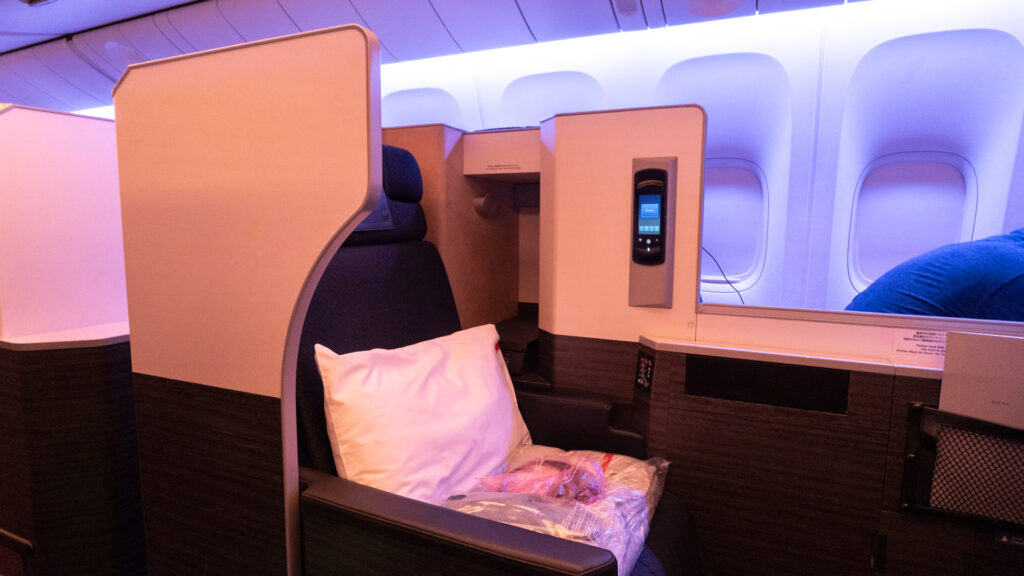
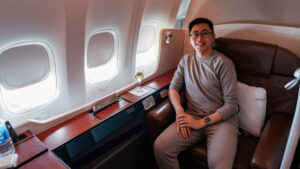
This Narita-Chicago route is operated by a Boeing 777 featuring Apex Suites in a 2-3-2 layout. Despite being an older configuration, the design still offers direct aisle access from every seat and transforms into a fully flat bed. For a 12-hour transpacific flight, that’s a strong foundation.
Check-in, lounge and boarding
After hopping off the efficient Keisei Skyliner from Ueno Station, it’s a short walk to Narita Terminal 2. I’m delighted to see the basement 7-Eleven has plenty of their edamame chips in stock – a popular (and cheap) treat for my friends and family at home that’s exceedingly hard to find in the city.
With my suitcase repacked, it doesn’t take long to find Japan Airlines’ Business Class check-in counters. There’s hardly any line, so I’m through immigration and security in minutes.
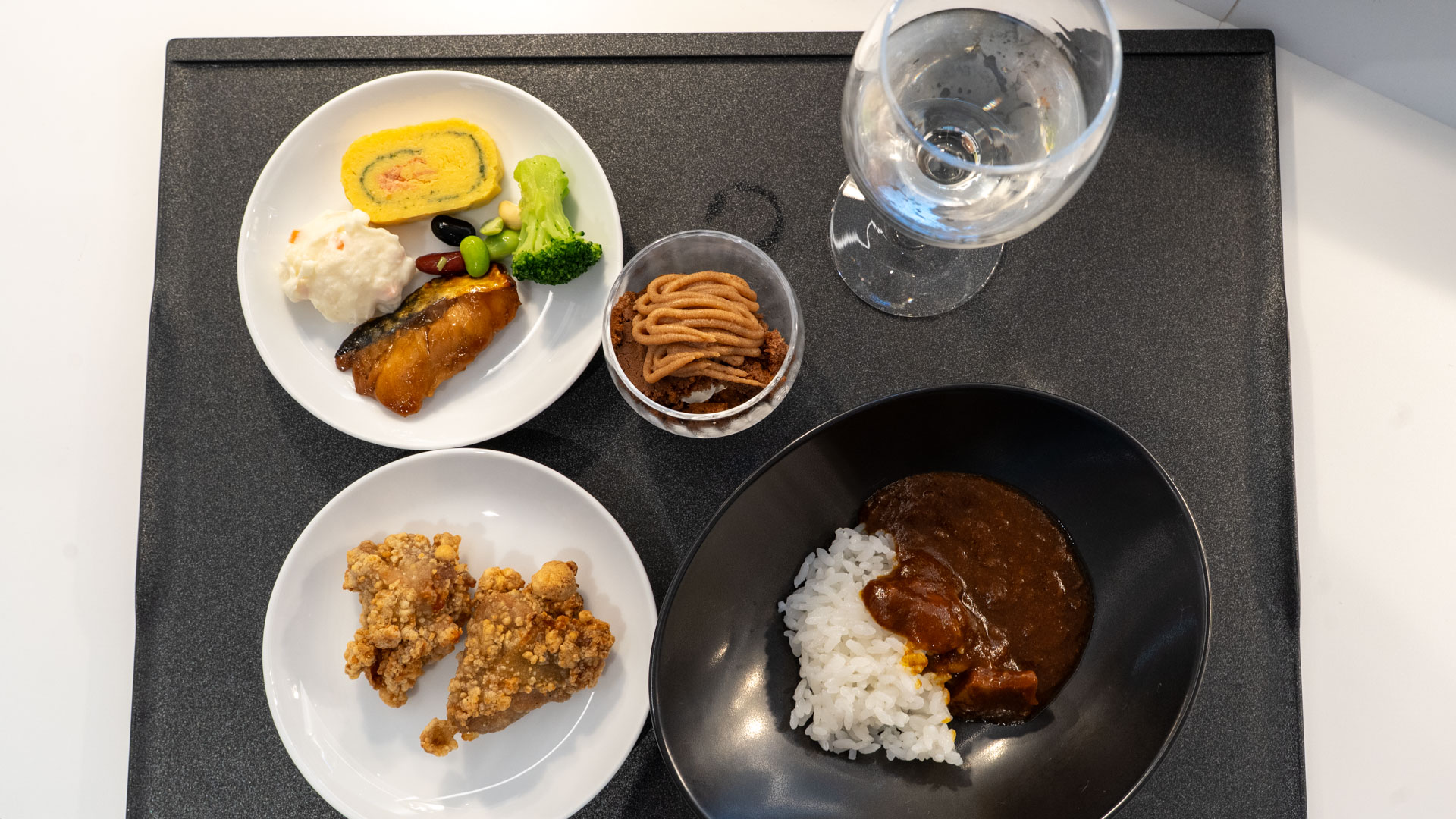
Over at the nearby Sakura Lounge, the lunch buffet tempts with dishes such as karaage chicken, JAL original beef curry with rice, and plenty of other tidbits washed down with a refreshing sake.
I try to register for a shower through the online queue. Unfortunately, there’s a 2-hour wait, and I have to abandon my spot when it’s close to boarding.
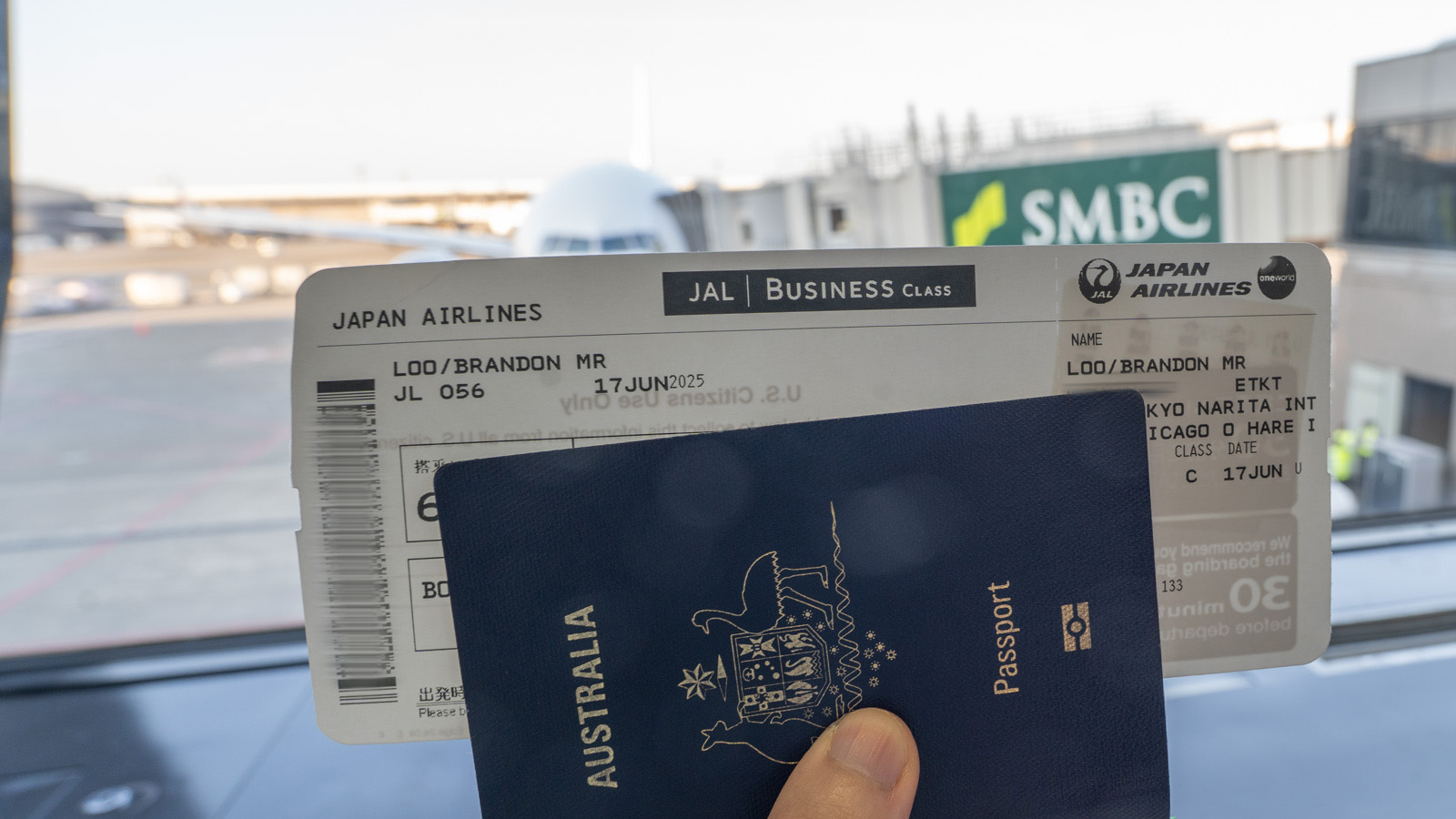
As part of USA pre-flight security checks, a friendly Japan Airlines ground agent roams the gate area, quizzing passengers about the purpose of their travel to the USA. I’m singled out as a solo traveller, but after answering a few brief questions, I get a stamp on the back of my boarding pass and am cleared to board.
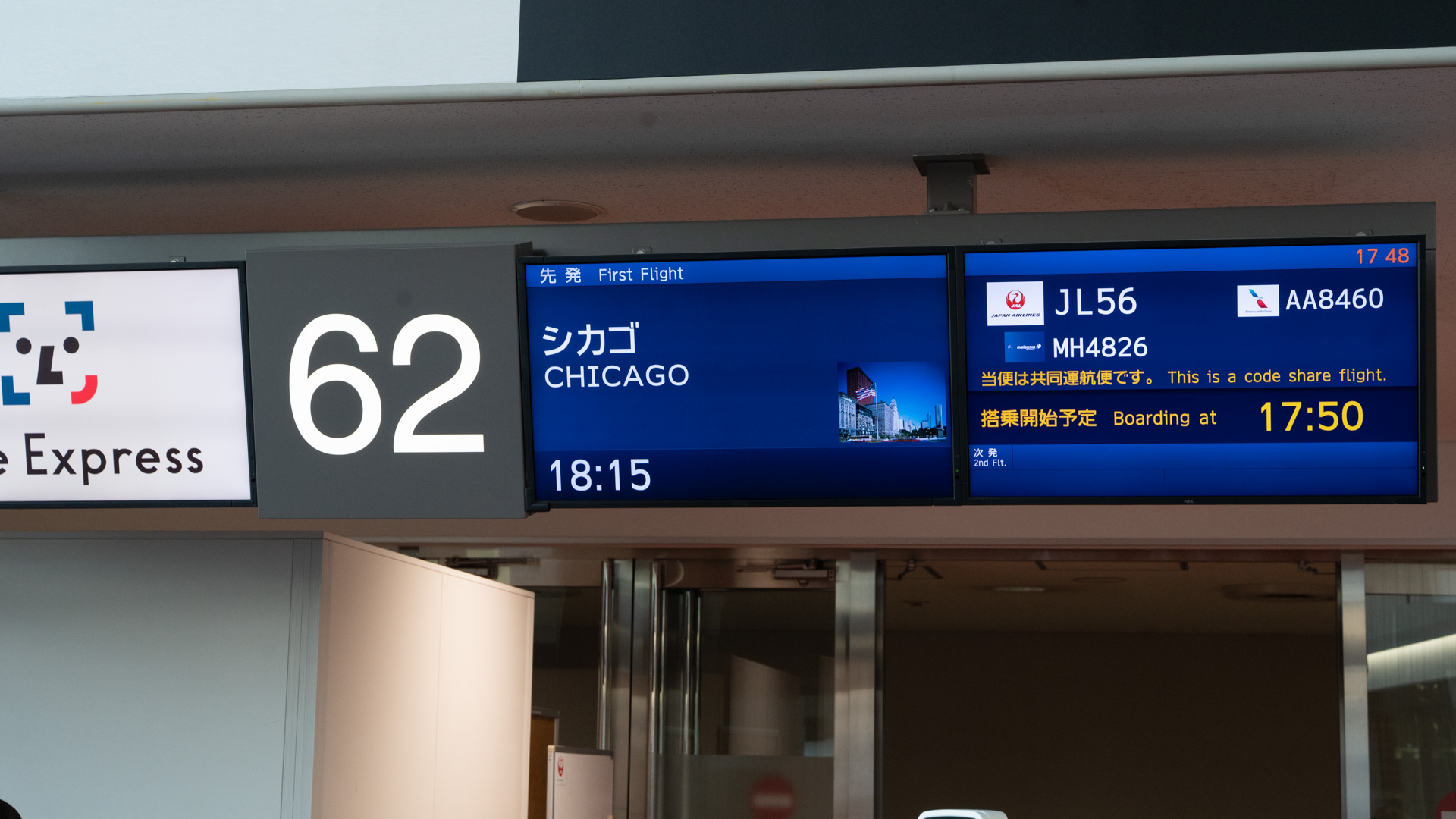
I know that Japanese airlines have a reputation for punctuality and tradition. Right on the dot at 5:50pm, the gate agents bow to the passengers and open up priority boarding, starting with First Class and oneworld Emerald-equivalent passengers. Soon, it’s time to hop on board in the second group.
Japan Airlines Boeing 777 Business Class seats and layout
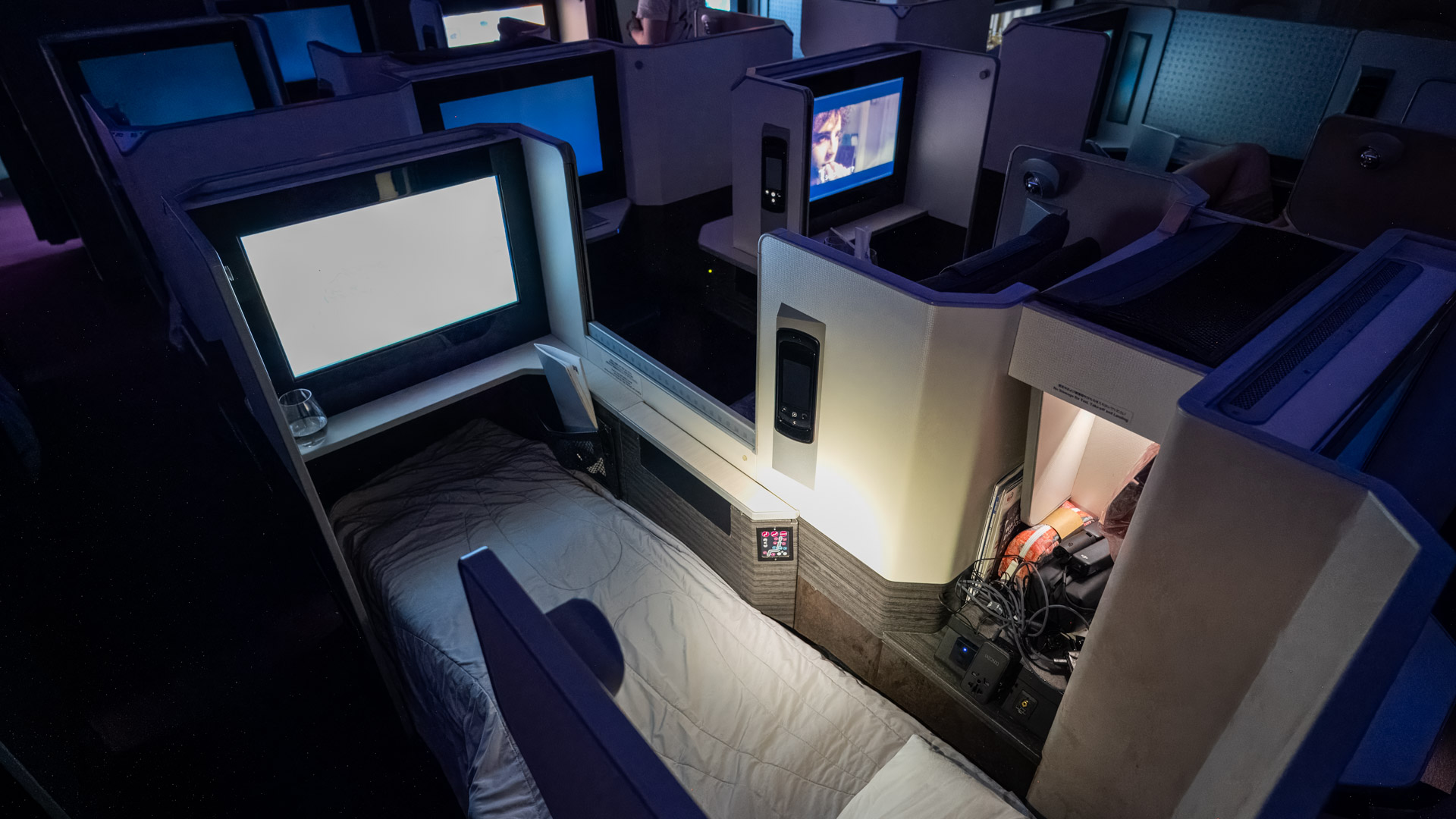
Japan Airlines’ Boeing 777s have 49 Business Class ‘Sky Suites’ in a dense 2-3-2 layout. If you see this arrangement on many other airlines (Emirates’ older Boeing 777s come to mind), you’d be rightly concerned about the middle seat.
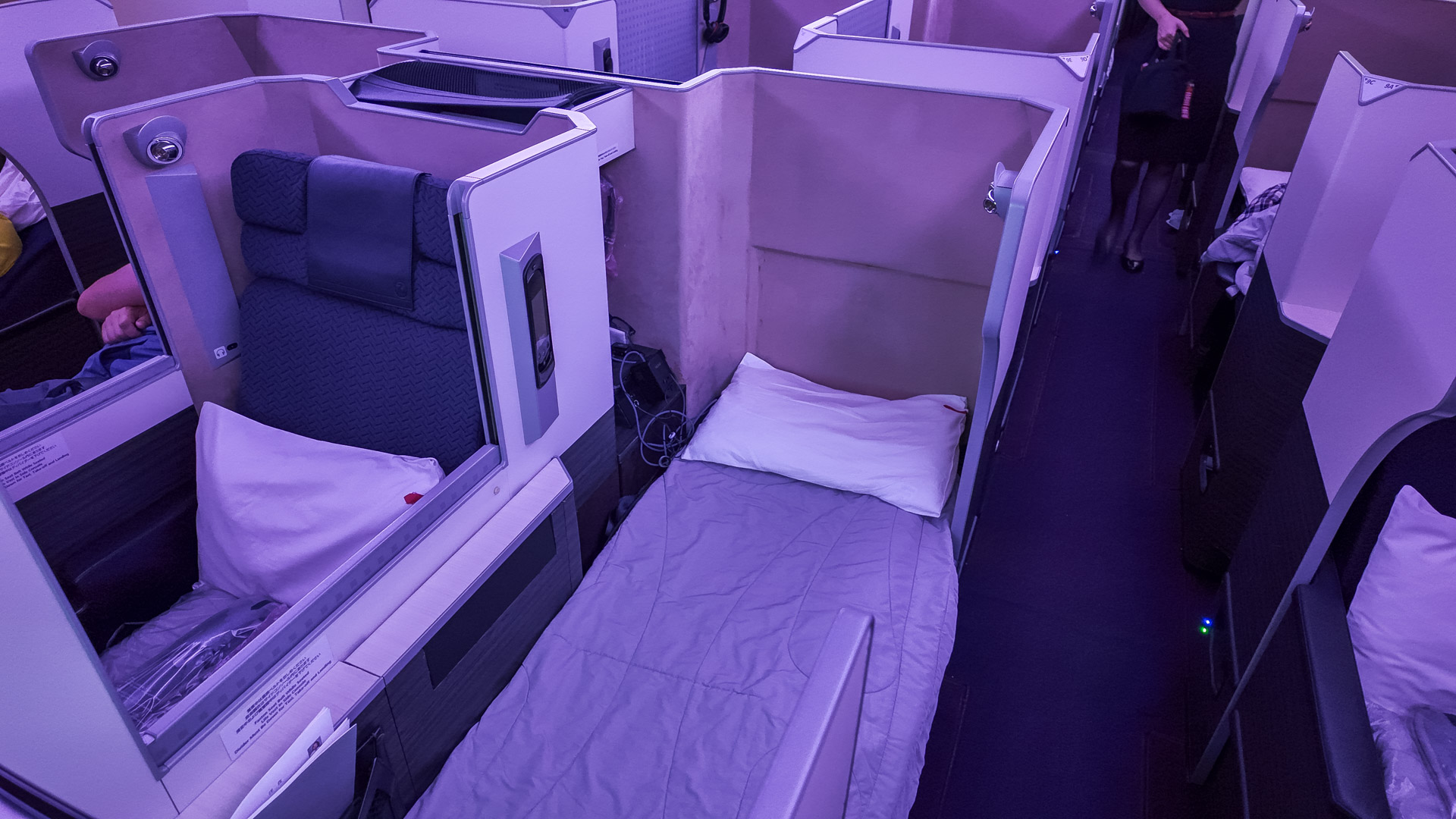
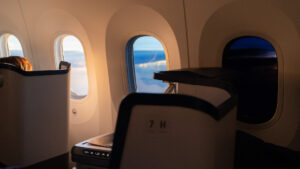
But the beauty of these Apex Suites is that every seat is slightly offset from its neighbours, so every passenger has direct aisle access. In this layout, the middle seat has two narrow pathways leading to either aisle. Window seat passengers also have access via a passage near the entertainment screen.
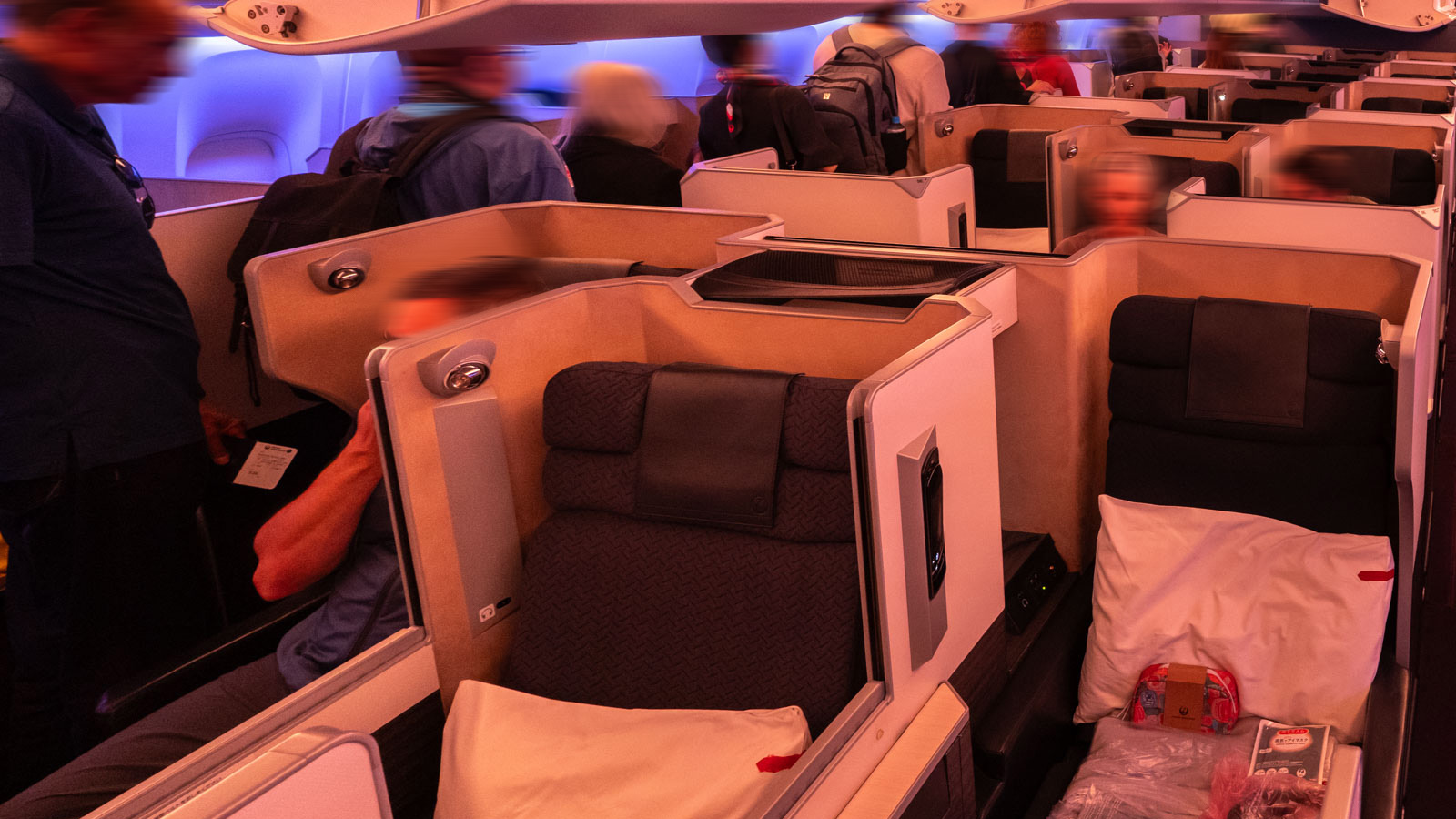
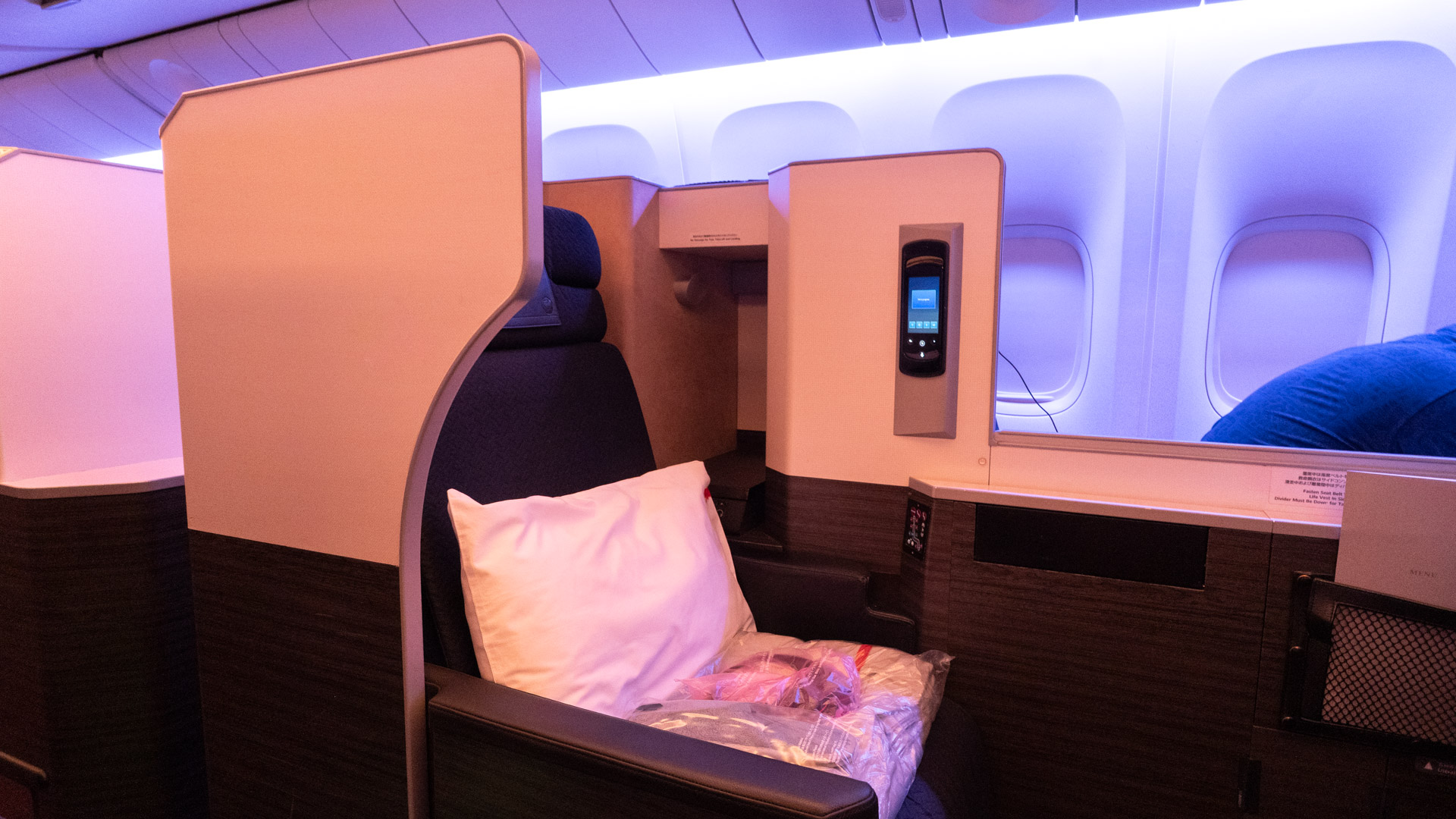
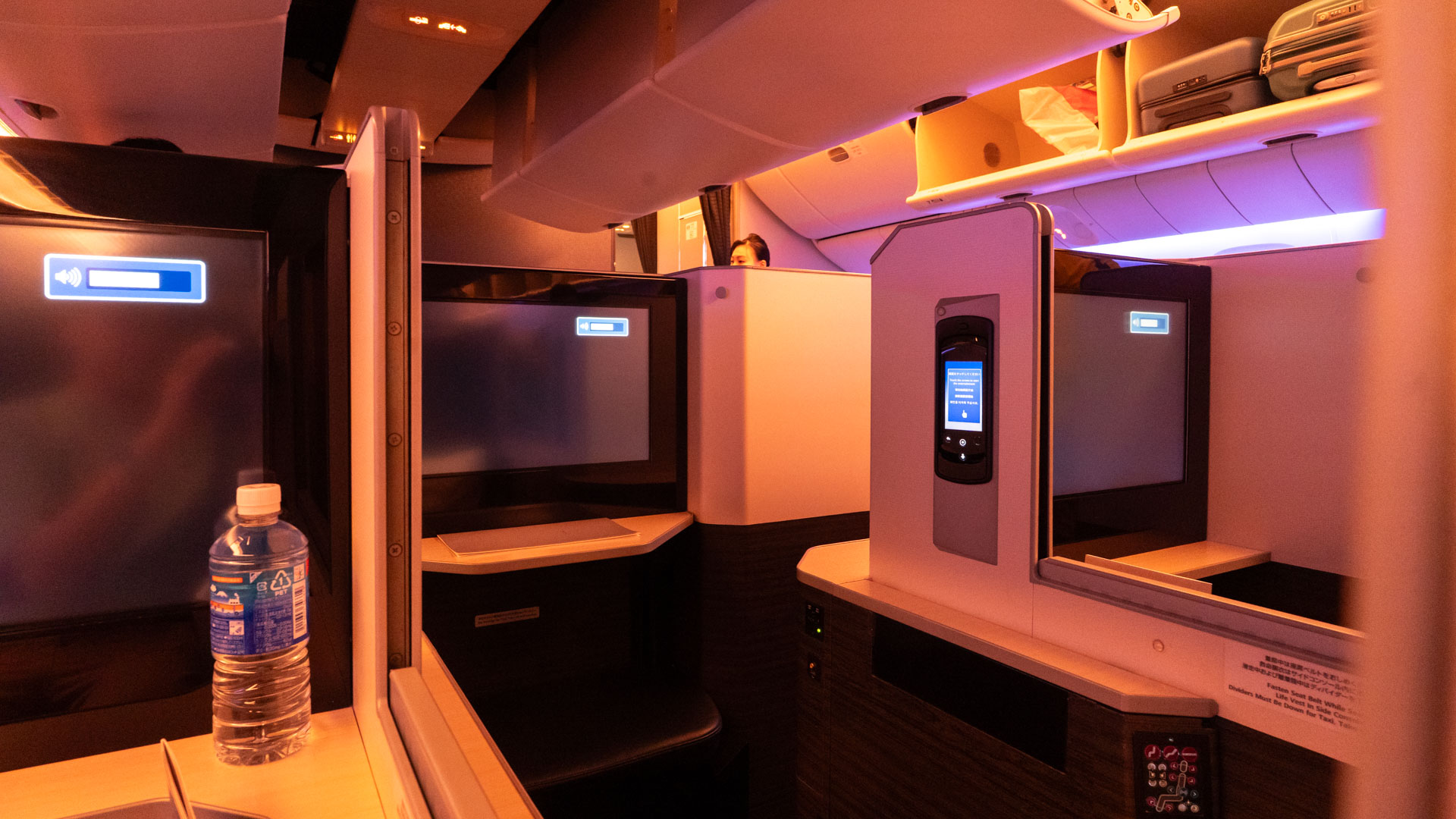
There are pros and cons to this configuration. The good: each seat offers plenty of space. Without the ‘dovetailing’ arrangement of typical Business Class seats, there are no cramped footwells and everyone has a full-length bed that almost feels like a First Class suite.
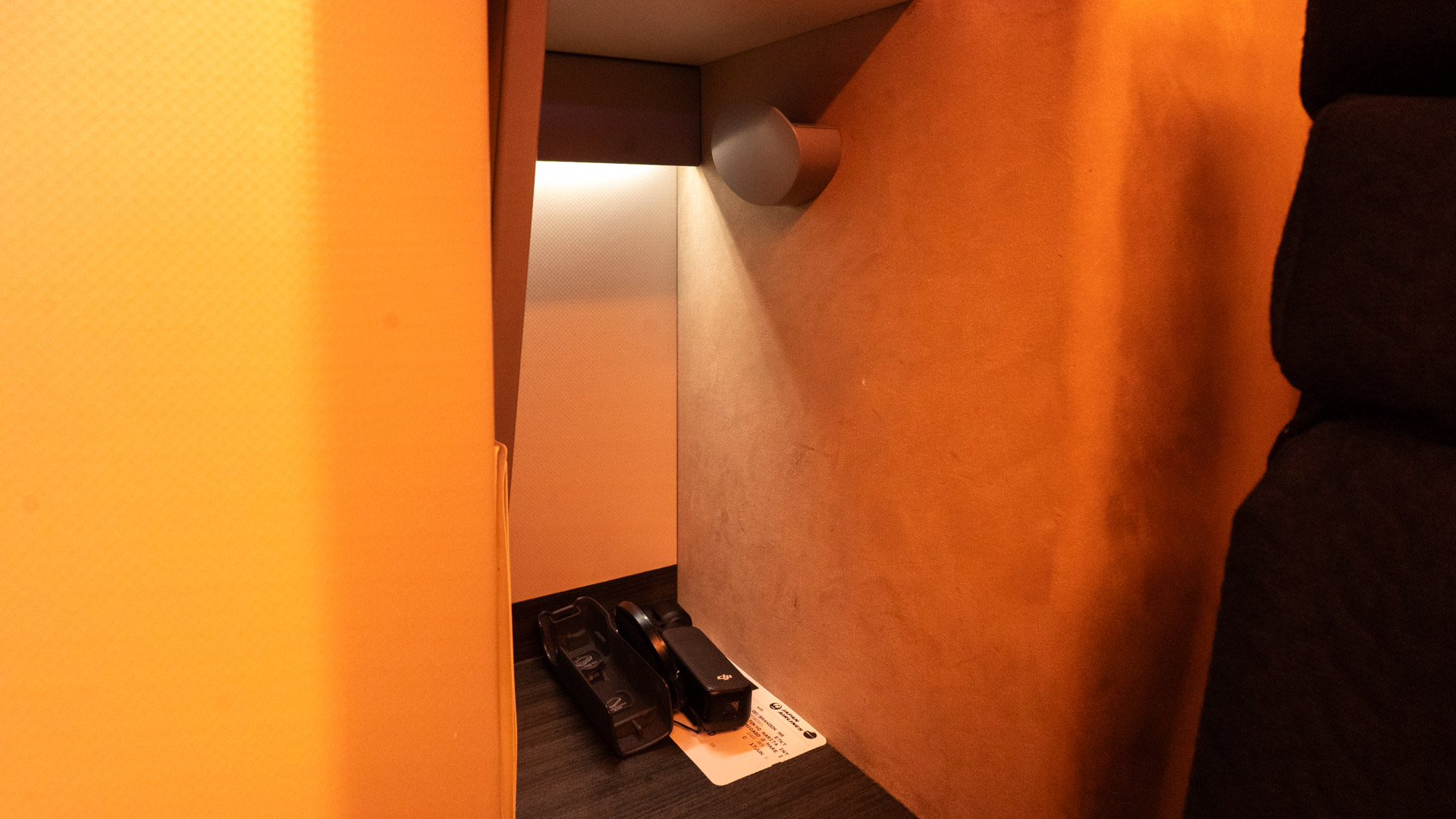
The not-so-good? With a denser layout like this, storage areas are limited. Aisle seats aren’t too bad, as there’s a little nook and cupboard that’s accessible. But the window seats don’t have the nook, so it’s harder to stash your gear within easy reach. Middle seats have a netted storage area above the headrest, which is a creative use of space, but not very practical. But all seats have ample storage under the ottoman – it could fit a carry-on bag!
The 23″ entertainment screens are touch-enabled, but they’re positioned too far away to be useful. Instead, a touch-screen remote is the main way to navigate the system, along with an array of buttons to fine-tune seat positioning.
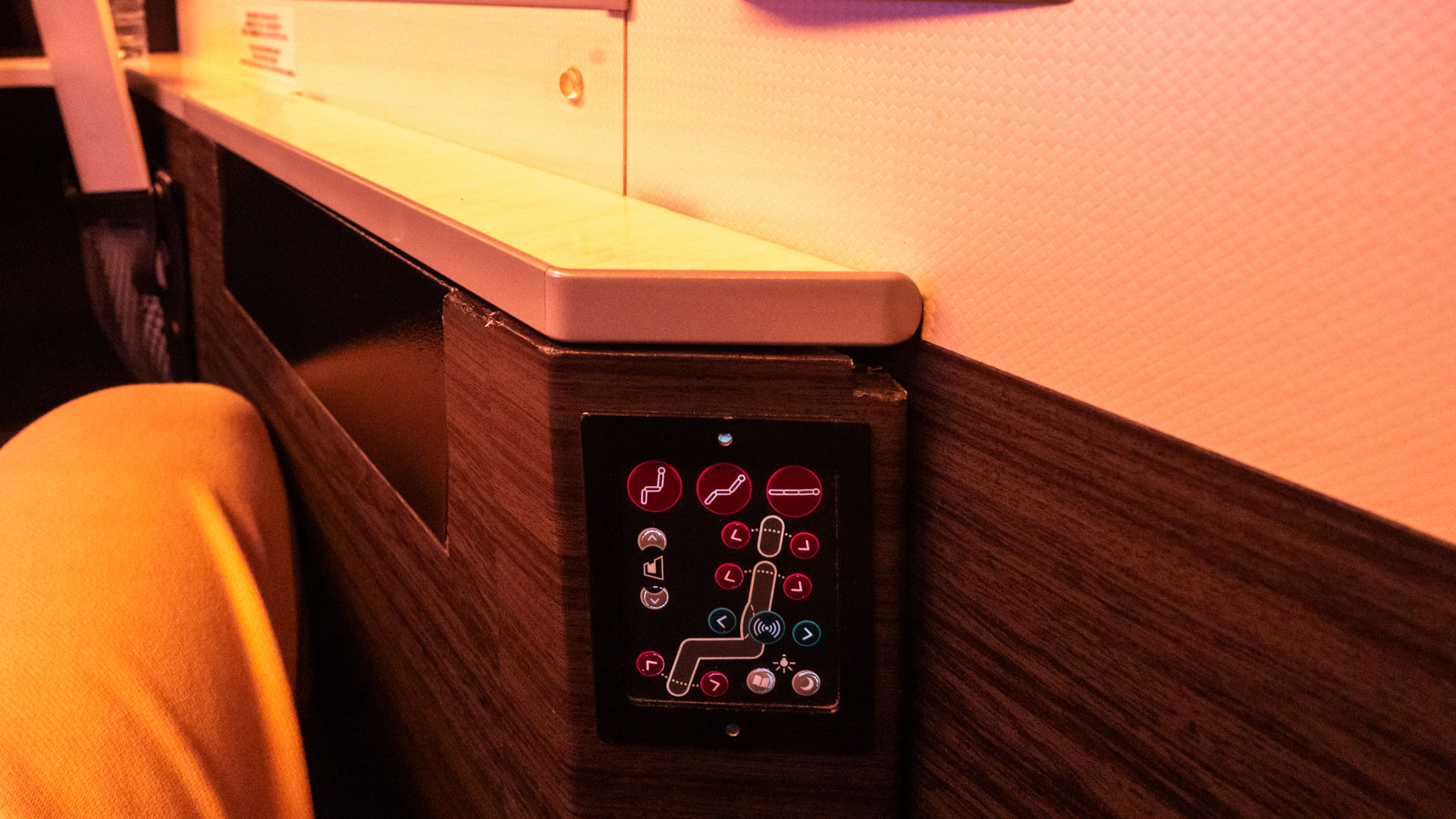
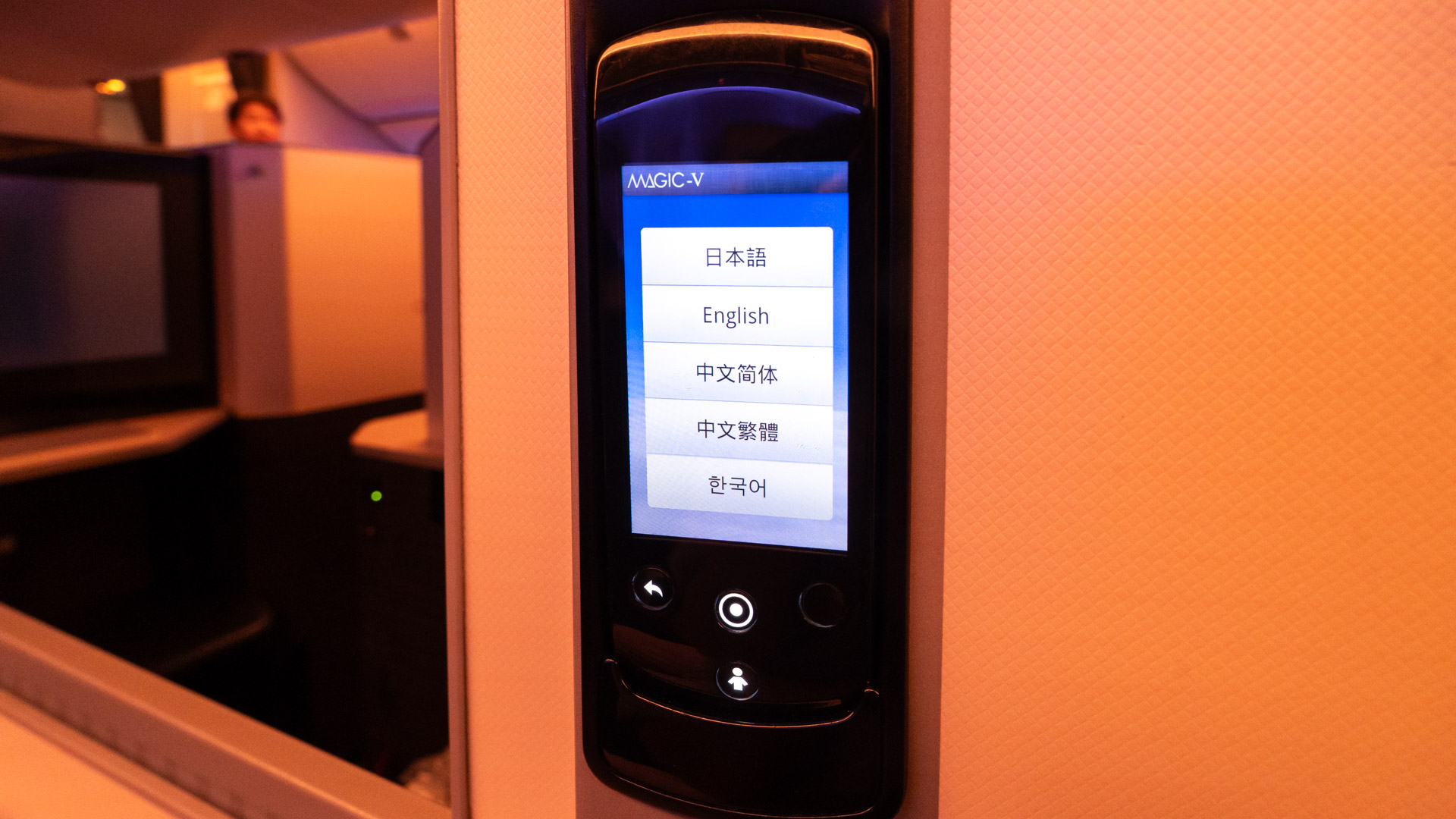
Want to head straight to bed mode? There are also shortcut buttons for popular presets – including one for a light massage. When it’s time to snooze, the Apex Suites reveal their true potential. The 74″ (188 cm) beds aren’t the longest in the industry, but it does feel great to stretch out without being confined to a tight foot cubby.
While not the most private seat, the comfort and bed quality are excellent, especially with JAL’s airweave mattress topper and soft bedding. It’s more than adequate for this 12-hour flight.
Japan Airlines Business Class food and beverage
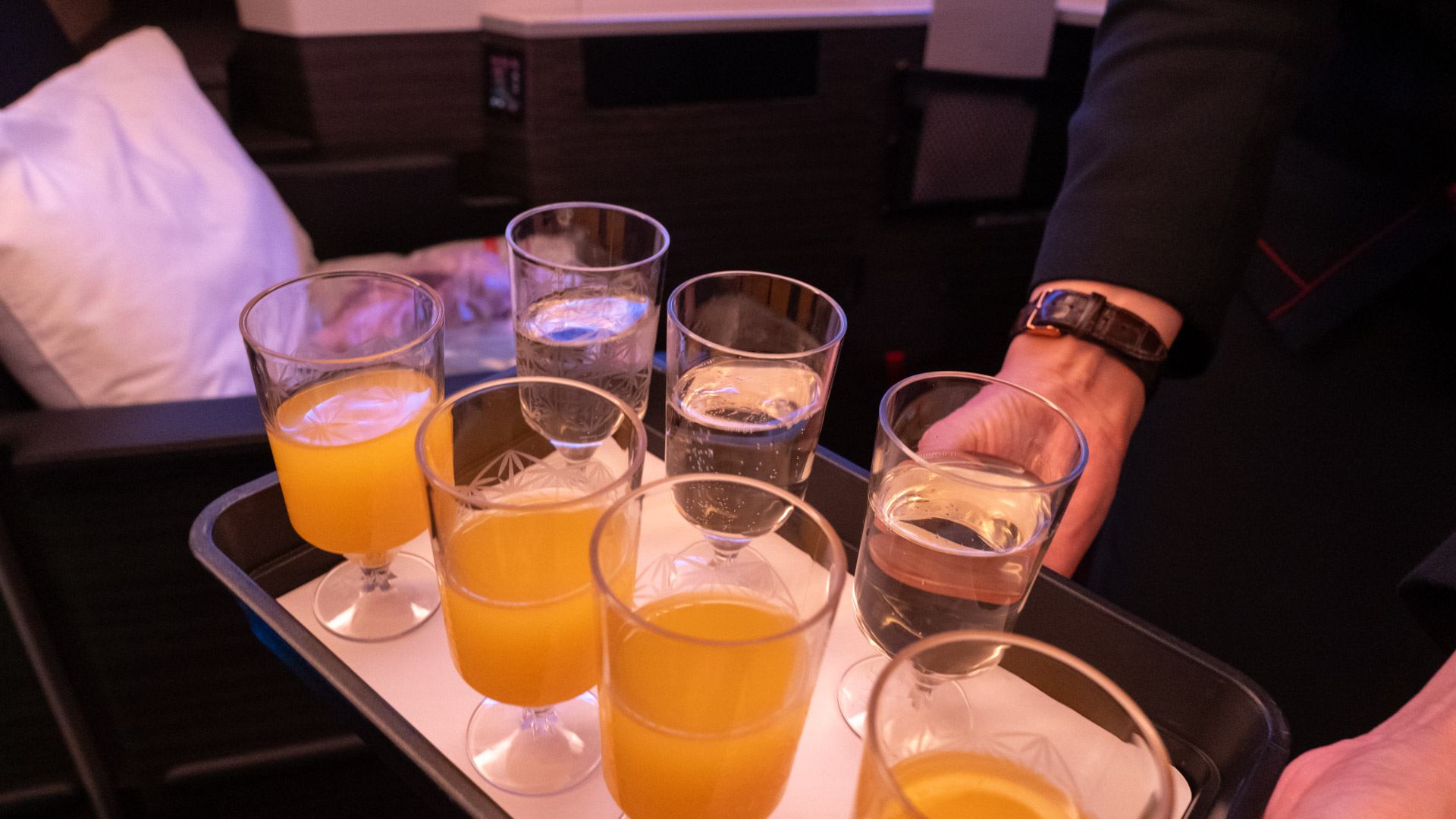
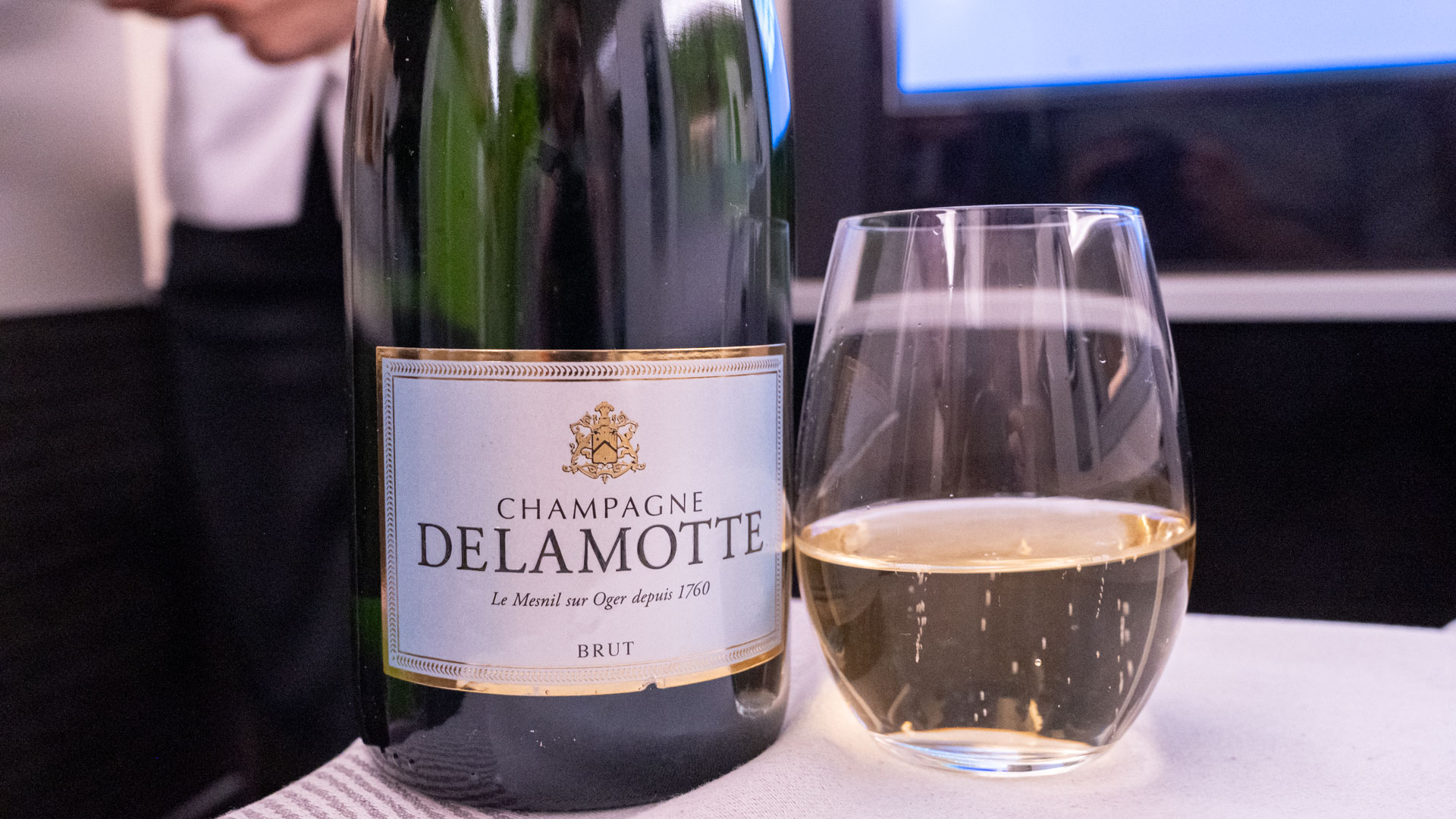
Before take-off, the friendly crew offer glasses of orange juice or Champagne in plastic cups. While this isn’t as fancy as using proper glassware, it seems to be the norm in Japan, as ANA does it too.
A full Washoku in the skies
Japan Airlines’ Washoku menu, designed by various celebrated chefs, brings authentic Japanese flavours to the sky. This edition is by Chef Jun Mishina of the one-Michelin-starred Ren Mishina in Ginza.
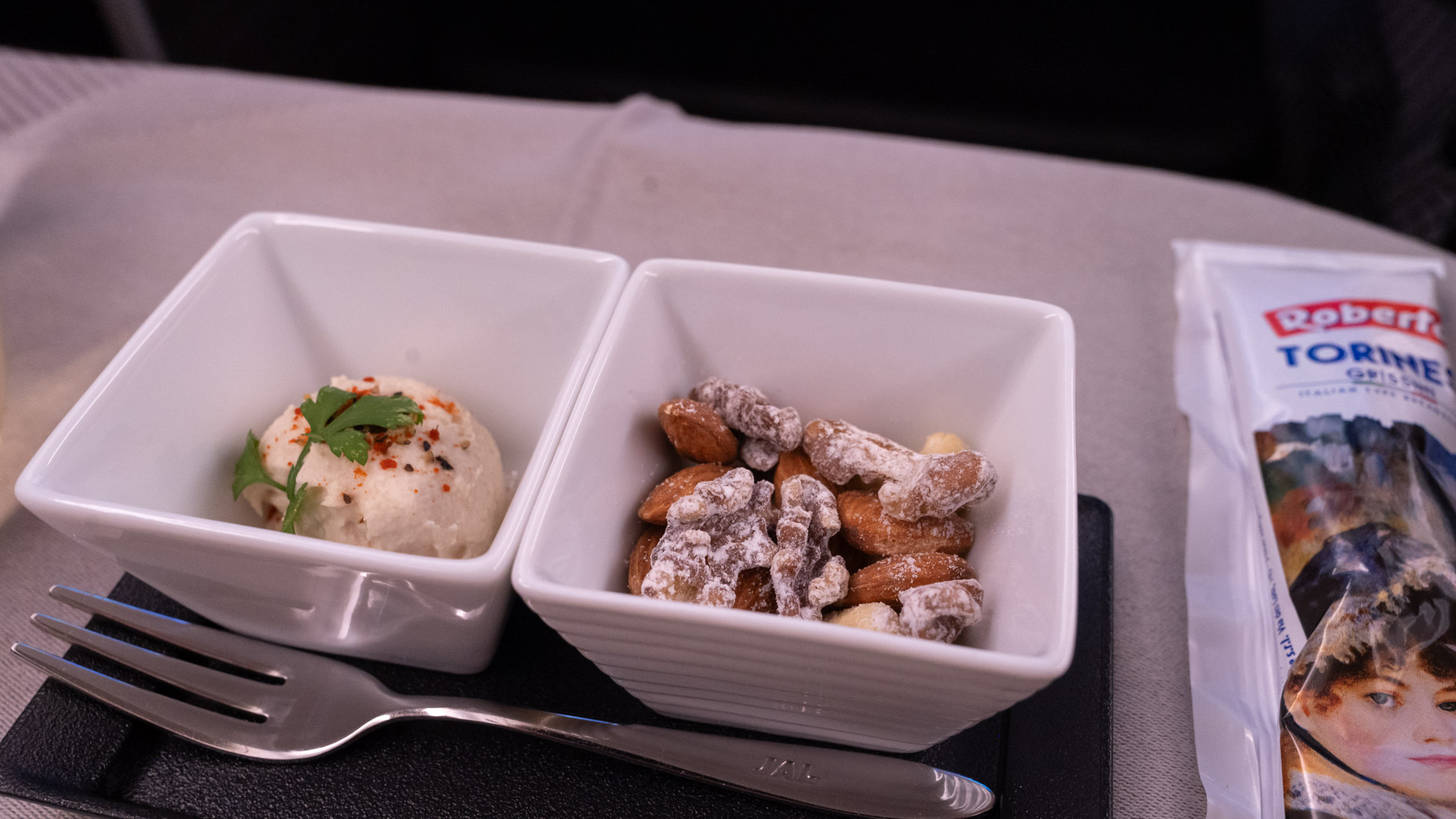
Before dinner kicks off, the crew come around with a full drinks service, this time served in proper glassware. Following that is a pair of amuse-bouche, such as some nuts.
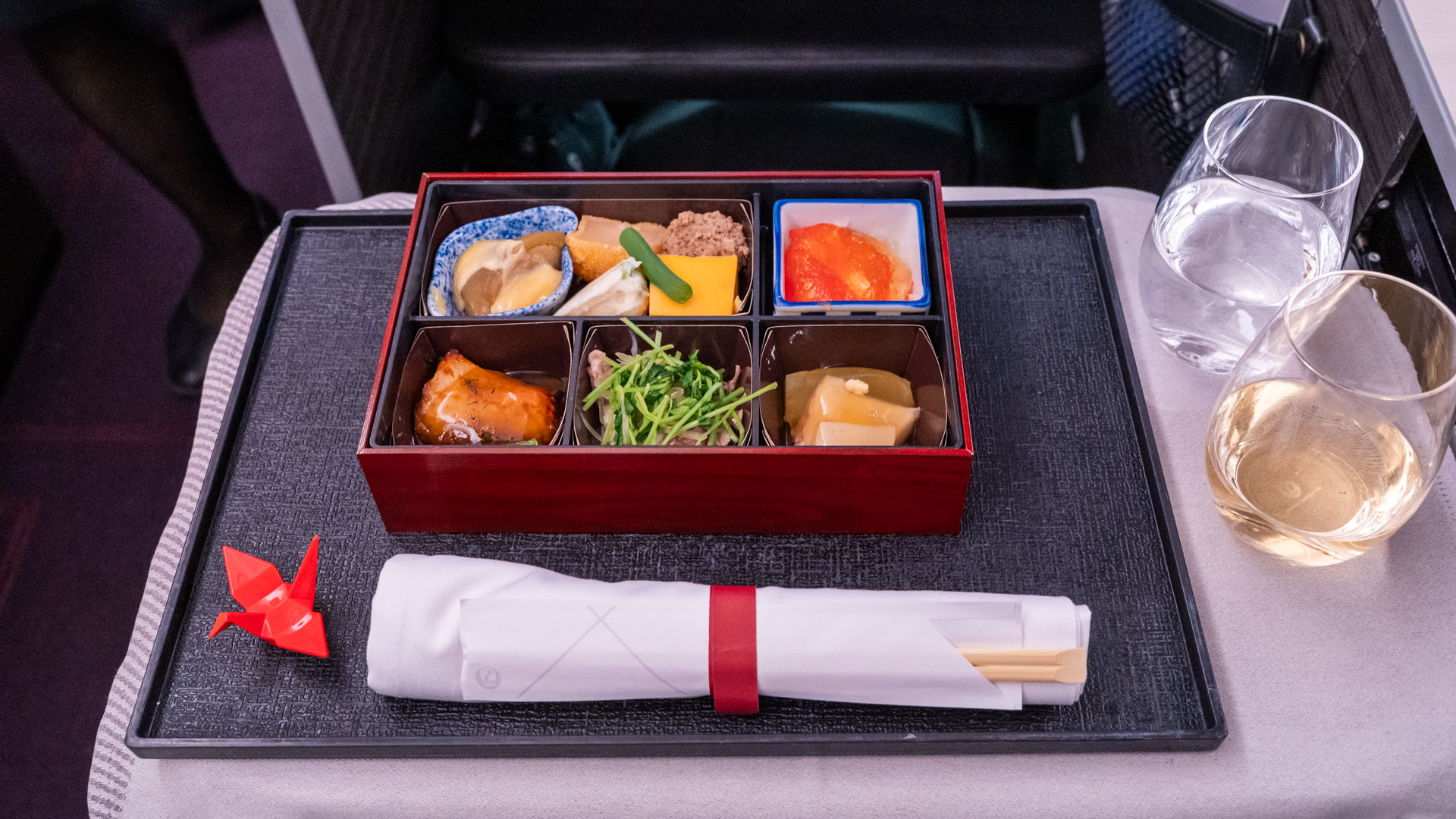
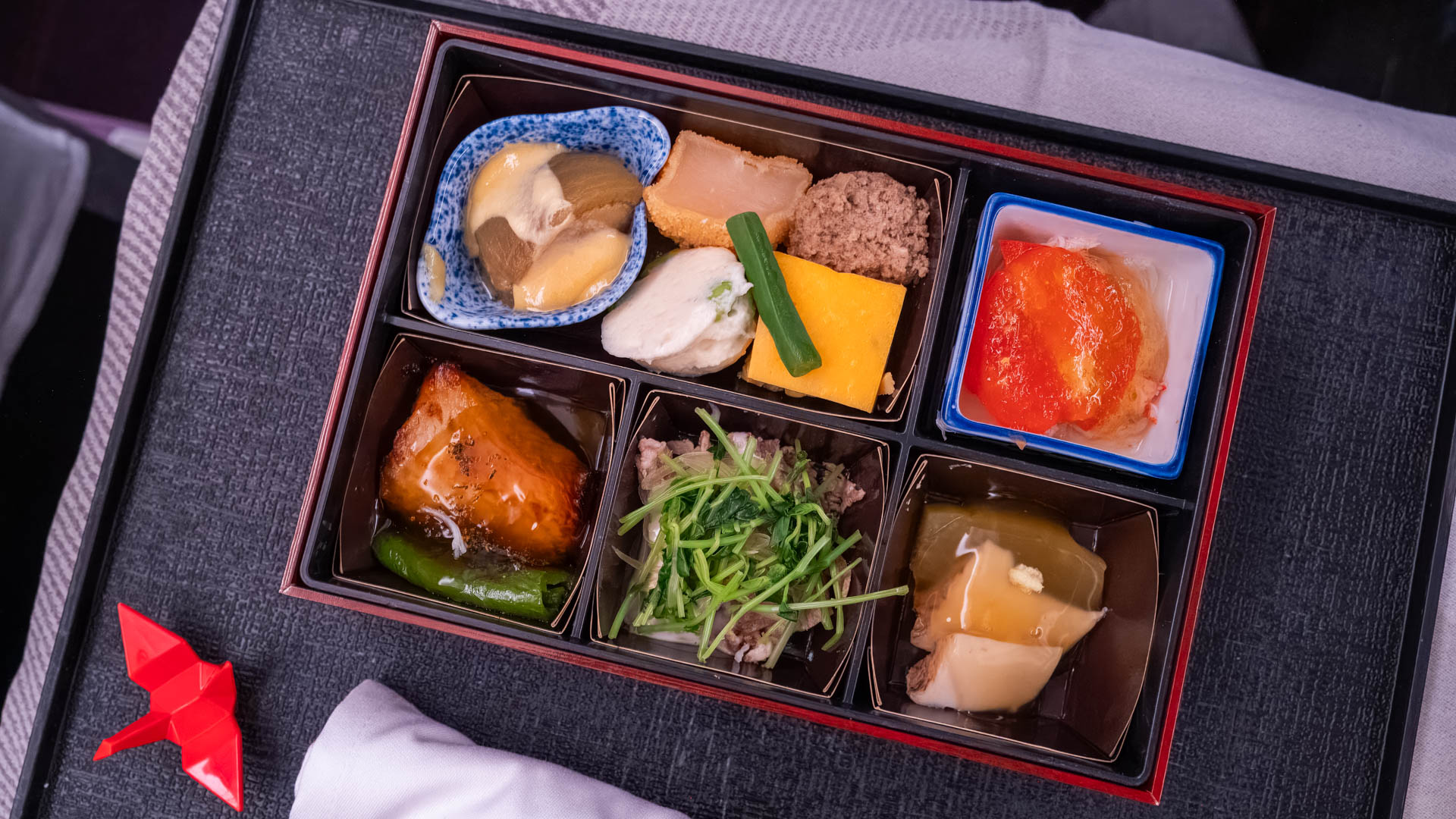
I start with the Irodori Gozen selection – a tray of beautifully arranged small dishes:
- Sliced wagyu beef with sesame sauce and ginger shoots
- Simmered abalone and wax gourd in thickened dashi
- Grilled black cod with Manganji pepper
- Snow crab topped with vinegared dashi gelée
- Assorted seasonal bites, including duck meatball and edamame fishcake
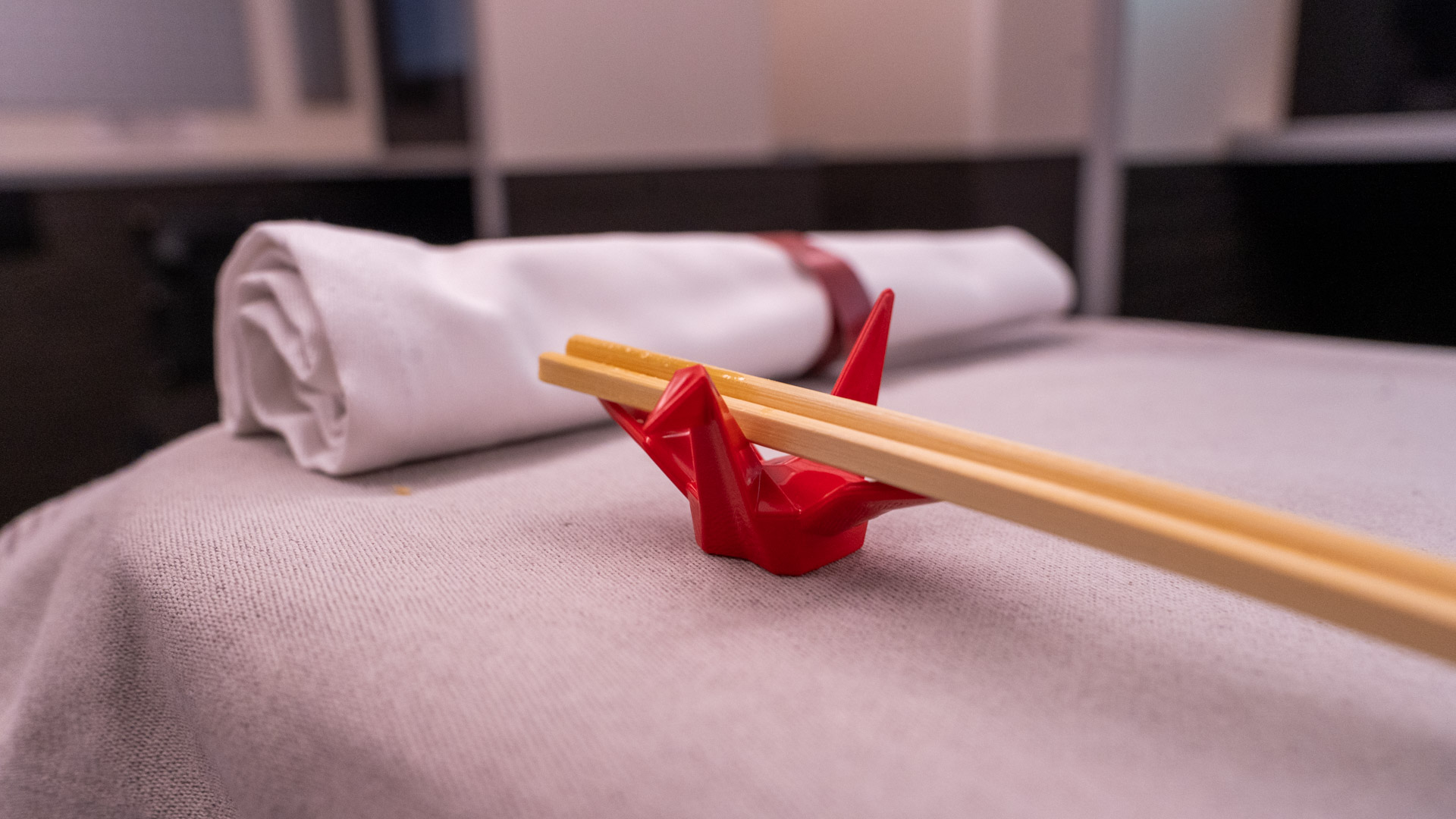
The flavours are delicate yet layered, with a clear emphasis on freshness and balance. The presentation, as expected based on my experience with Japanese airlines, is immaculate.
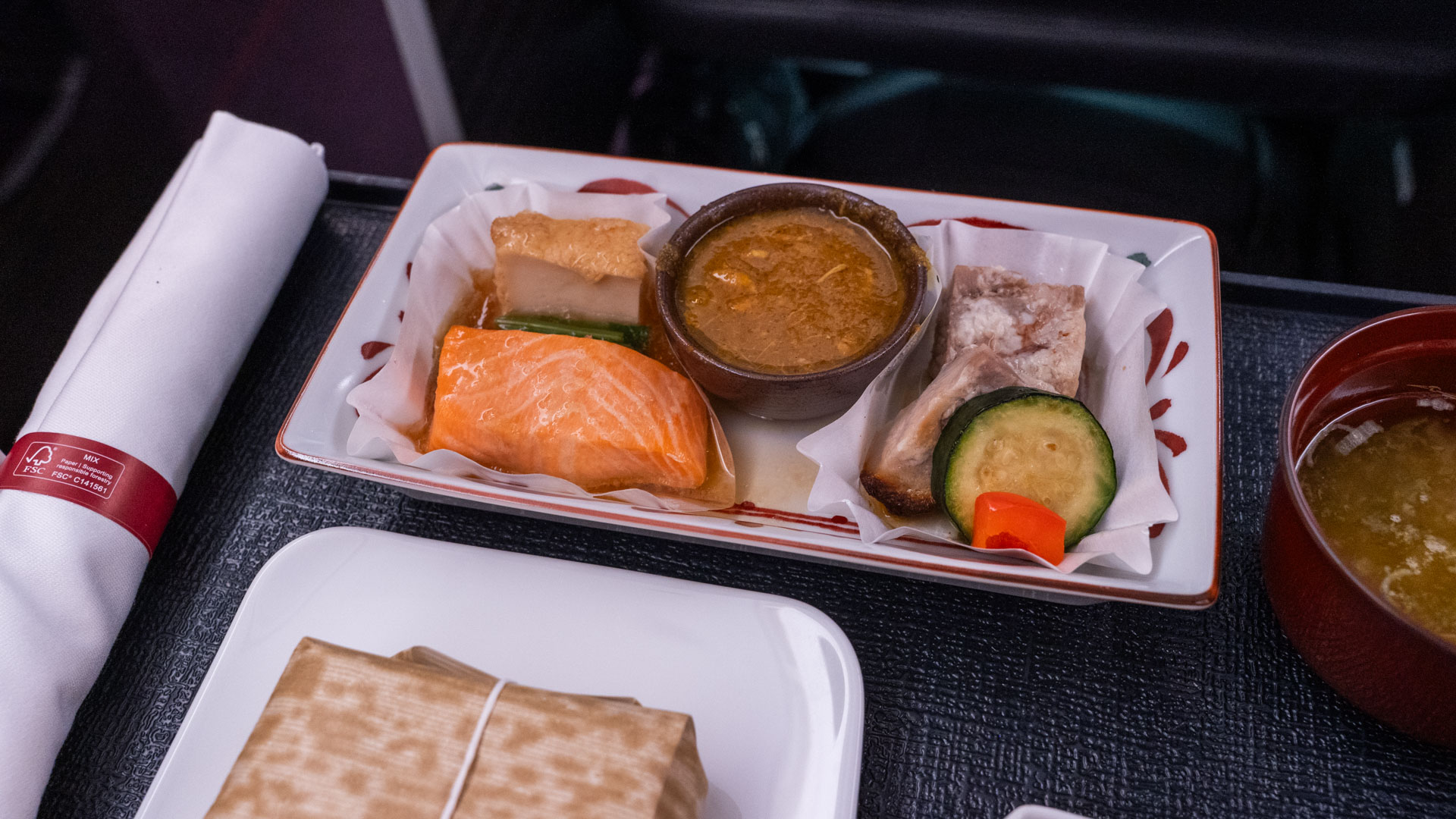
The Dainomono (main course) follows. In true Japanese fashion, all dishes are served together with fluffy rice, miso soup and pickles:
- Grilled shiokoji-marinated pork shoulder loin, tender and slightly sweet from the fermentation
- Grilled salmon with deep-fried tofu & spinach
- Ren’s special curry
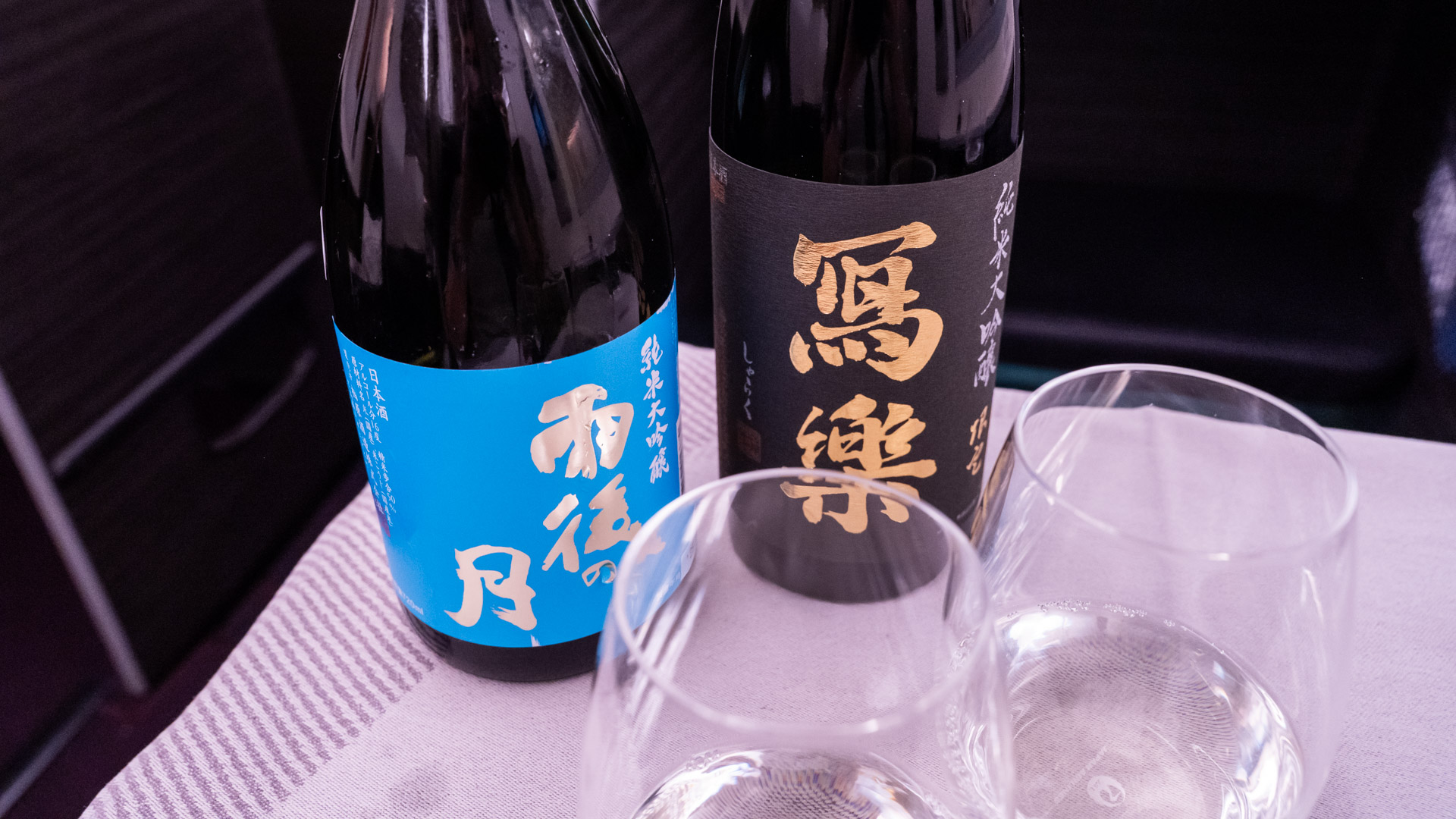
The variety means every bite feels different and nuanced. Of course, each dish is also excellent in its own way. To complement all the flavours, I ask if I can try some sake. The crew encourage me to sample both sakes on offer, and I’m glad they do. They’re equally refreshing on the palate.
Still, if I had to pick one, the blue label JAL exclusive (Ugo-no-Tsuki Junmai Daiginjo Betsu-atsurae) from Hiroshima has an alluring sweetness that leaves me wanting more.
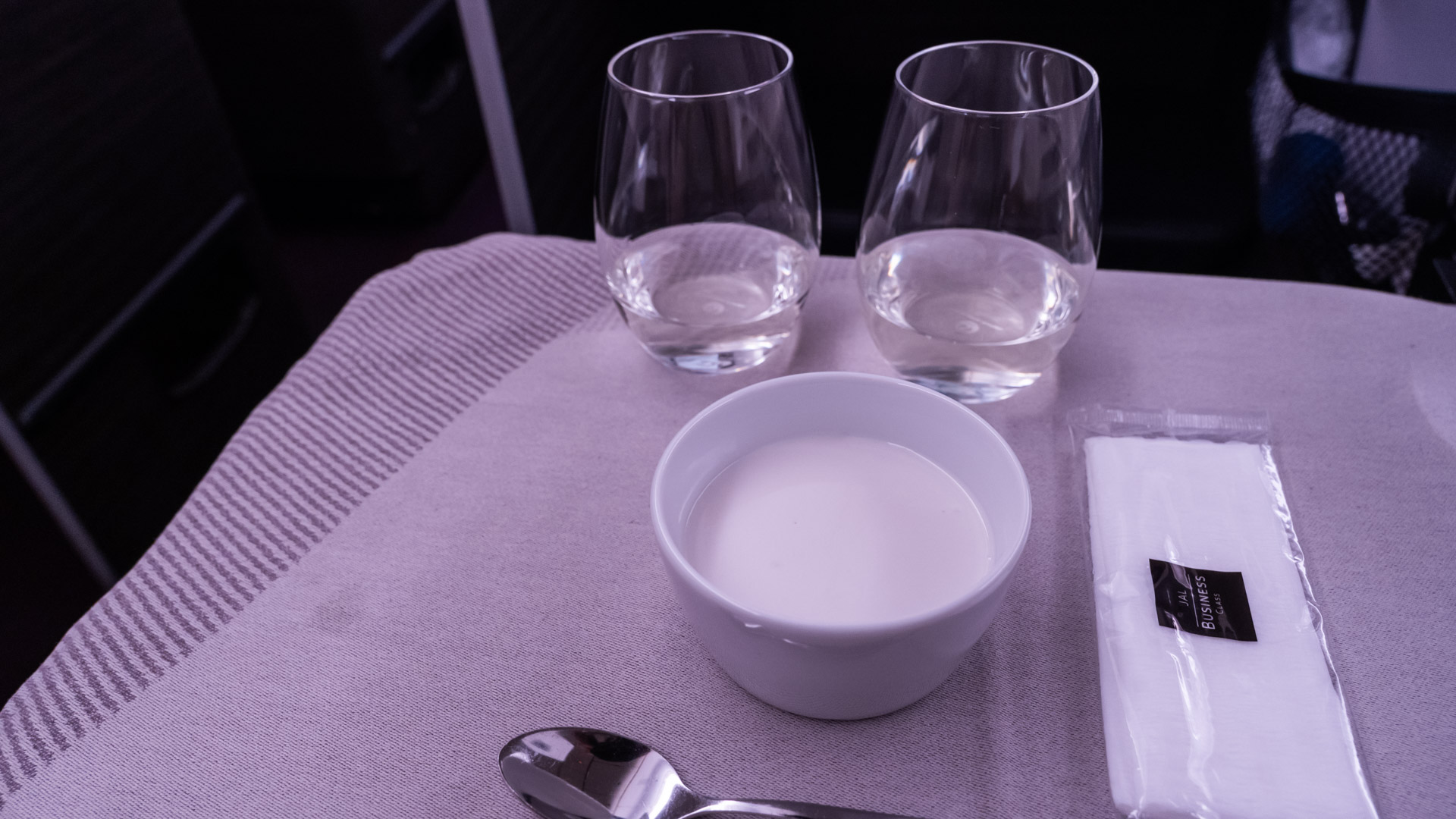
Dessert is a light peach agar jelly with coconut milk, followed by Uji green tea. It’s the perfect ending: refreshing and understated.
Mid-flight snacks and pre-landing meal
Mid-flight, I wake to try a selection of JAL’s snack options: ‘Sangenton’ pork cutlet sandwich and the Soranoiro-style yuzu ramen, both available on demand.
They’re surprisingly satisfying at altitude, especially when paired with the fresh fruit plate. The sandwich still retains a shadow of crunch, while the yuzu broth profile helps wake up my taste buds.
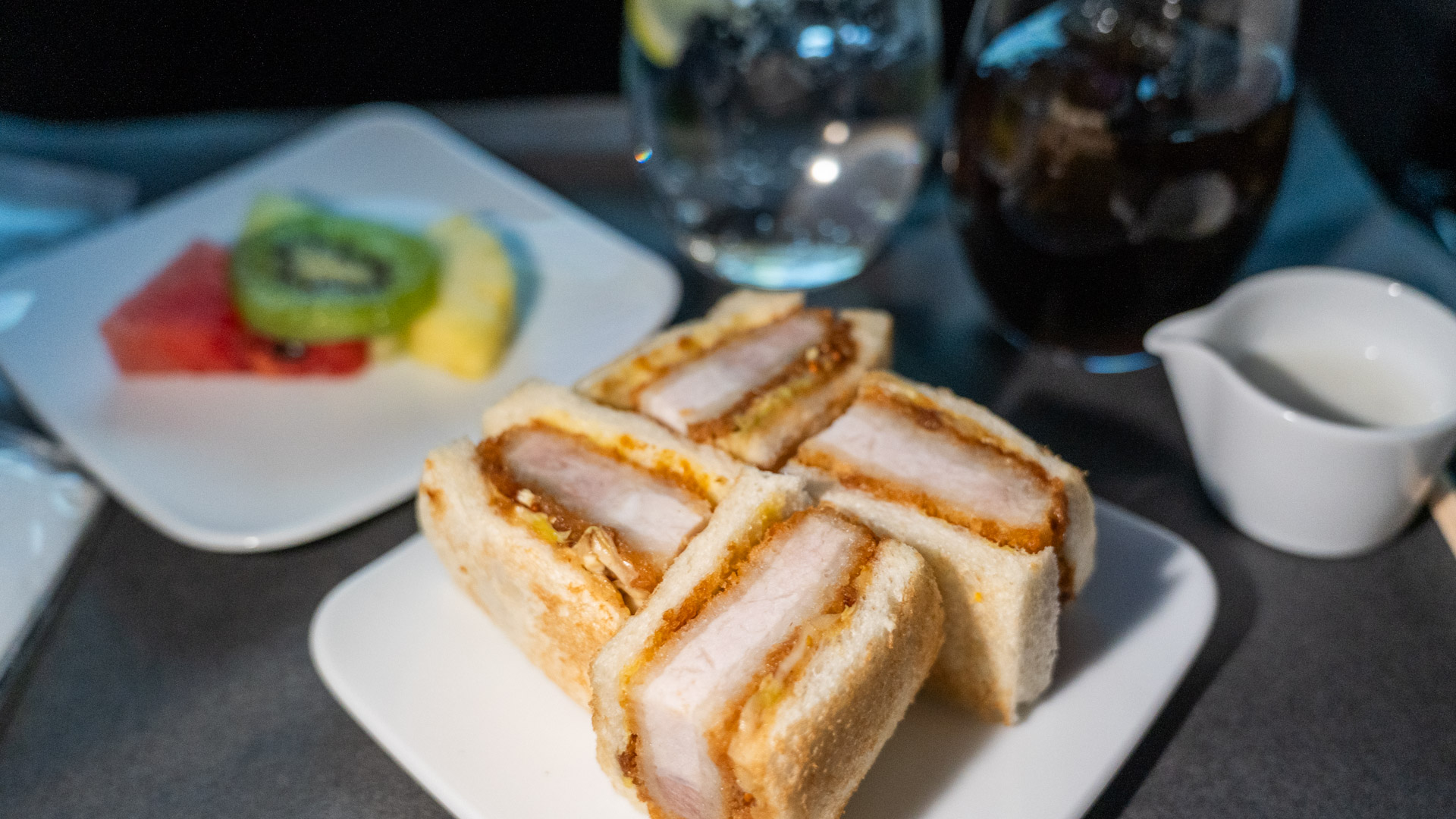
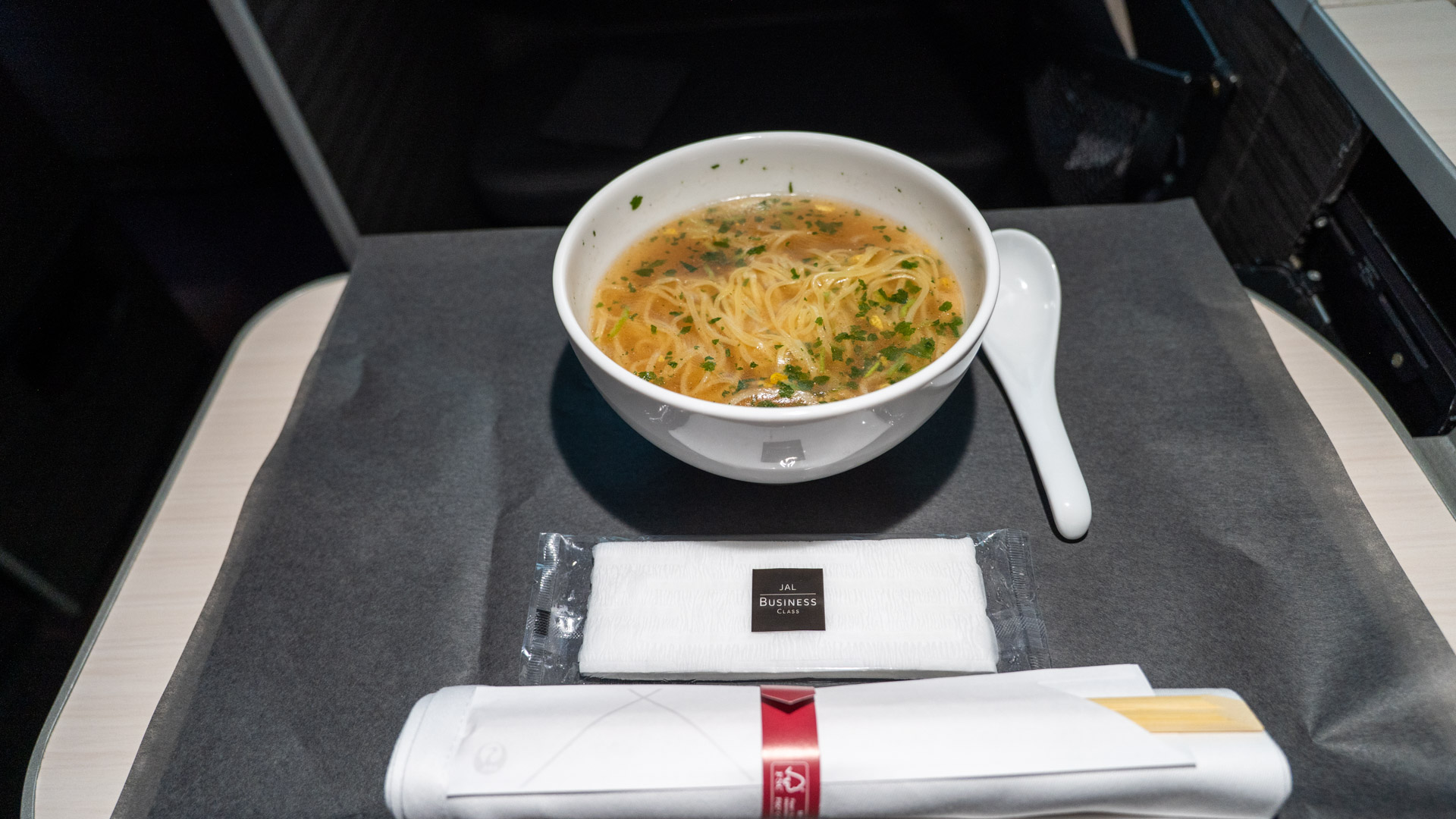
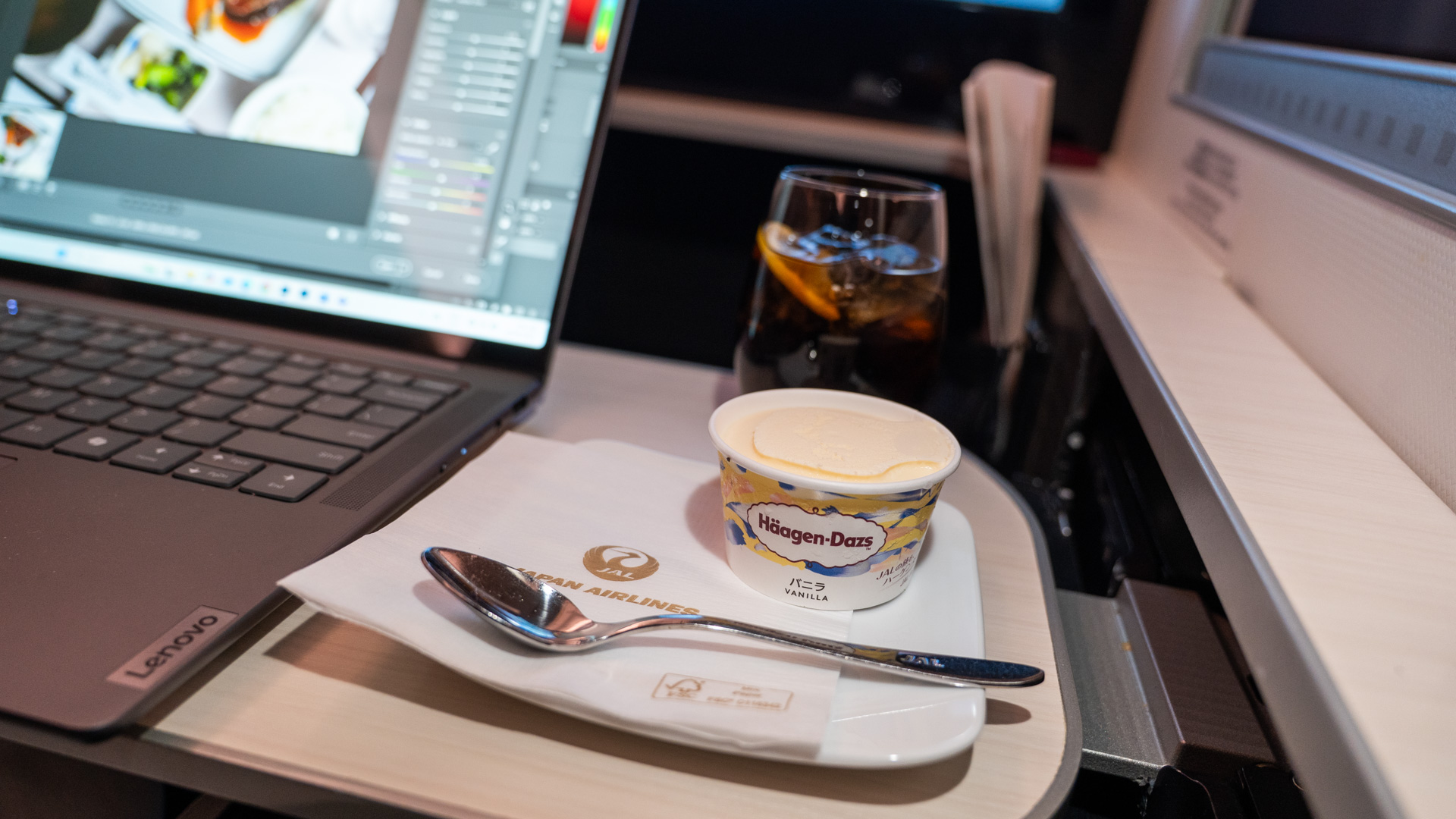
The other main meal options from the à la carte menu are available on demand throughout the flight, but otherwise they’re also served around two hours before landing.
Of course, Fumiko’s Washoku course is my pick, featuring a sublime grilled cutlassfish with all the usual sides. A dash of Kanosuke Single Malt Japanese Whisky seals the deal. From start to finish, dining is the highlight of this flight.
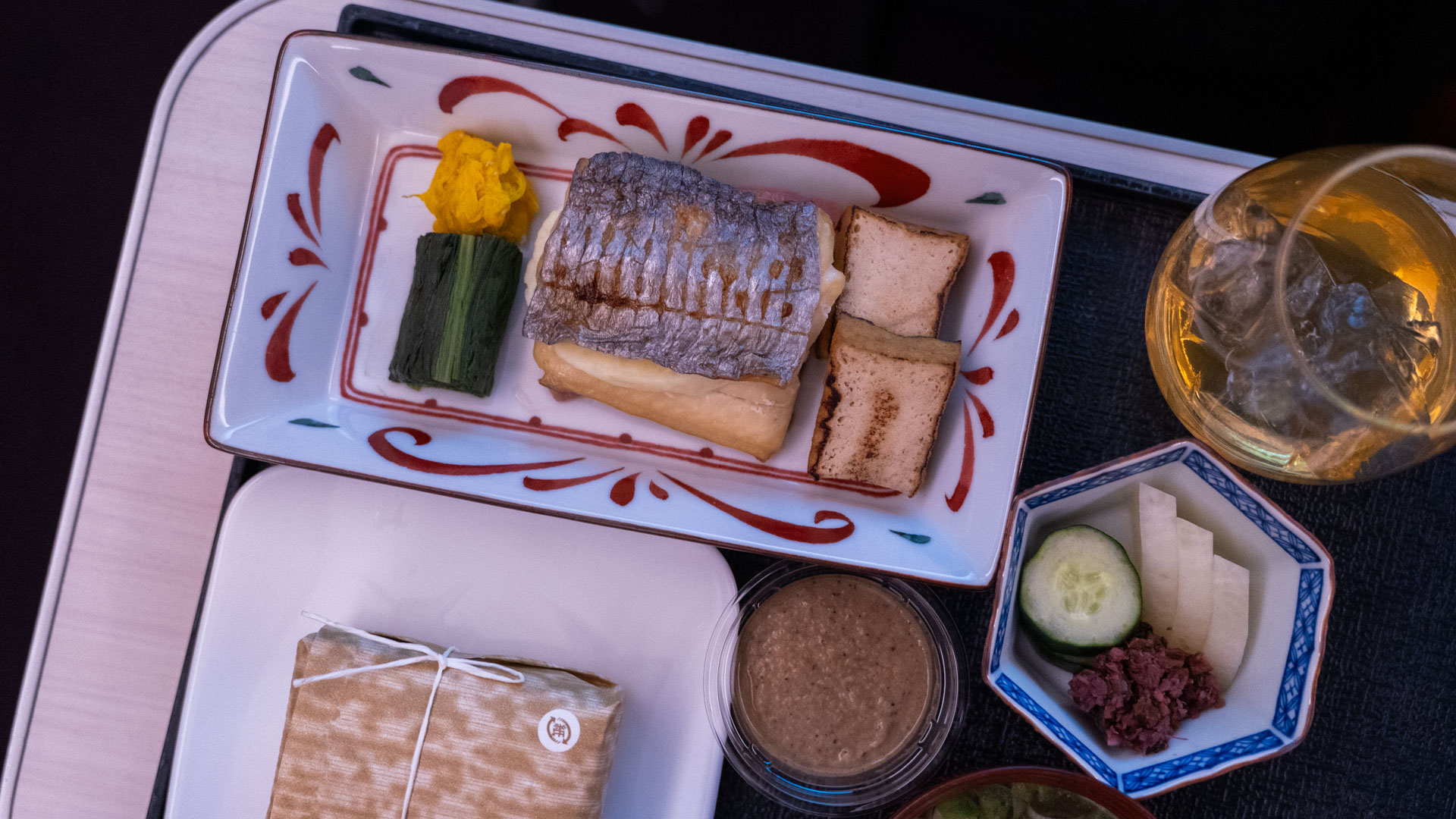
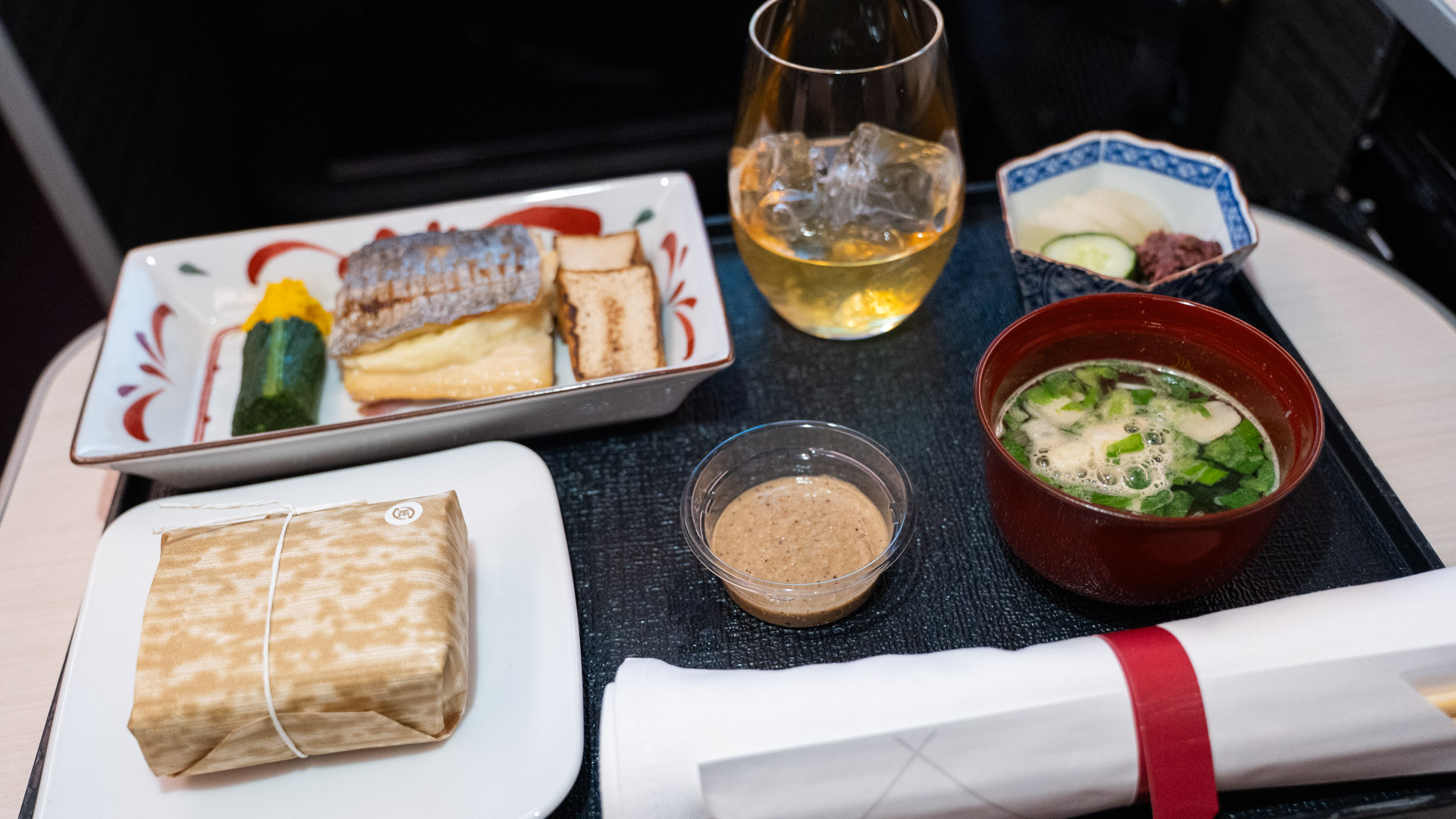
See the full menu from this flight below.
Service and amenities
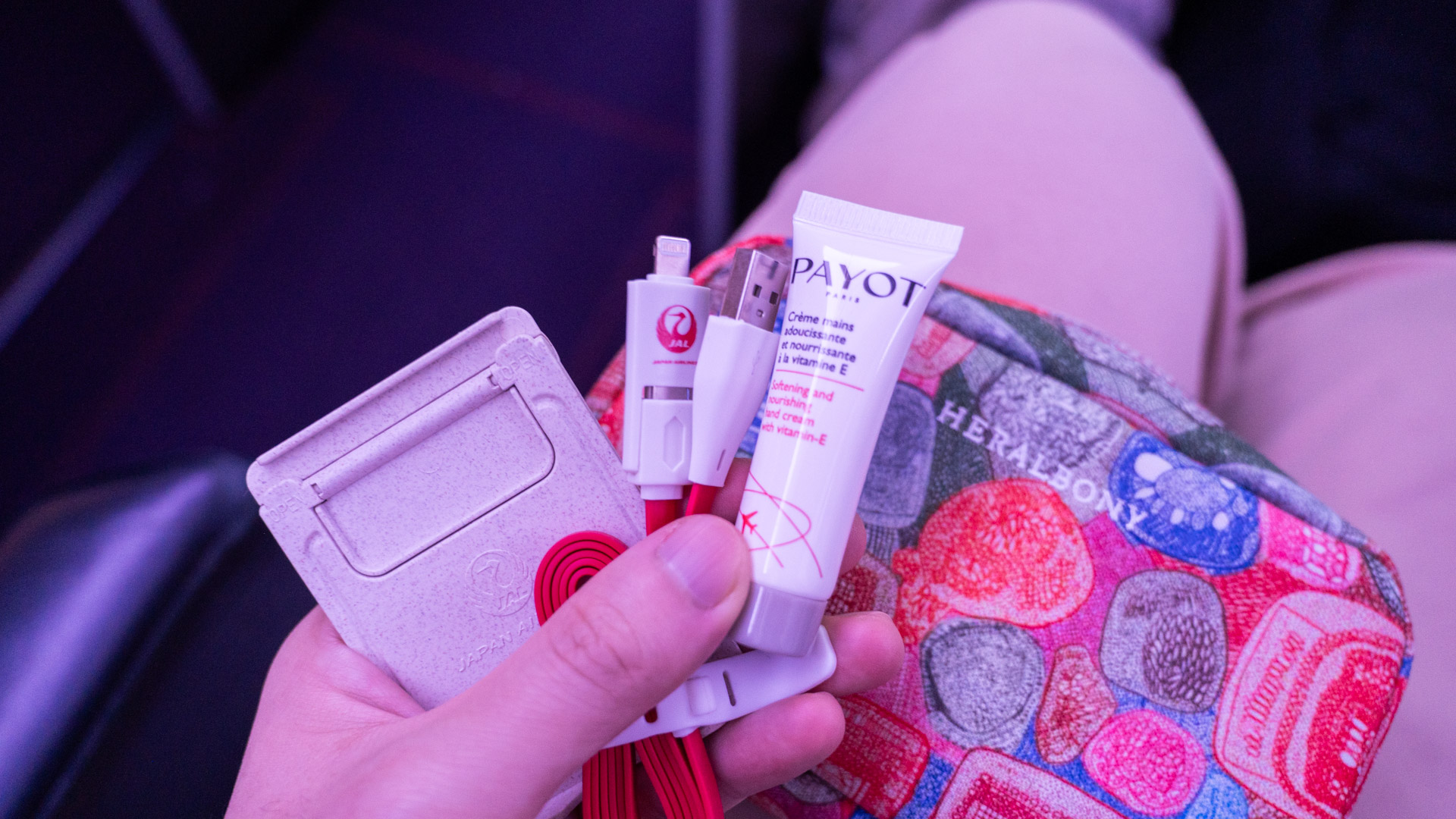
Trust Japan Airlines to do something a bit different. The amenity kit features Payot products, yes, but also a USB-C/Lightning to USB-A cable, which is quite a useful inclusion. There’s also a pop-up phone stand, which is a bit more on the quirky side.
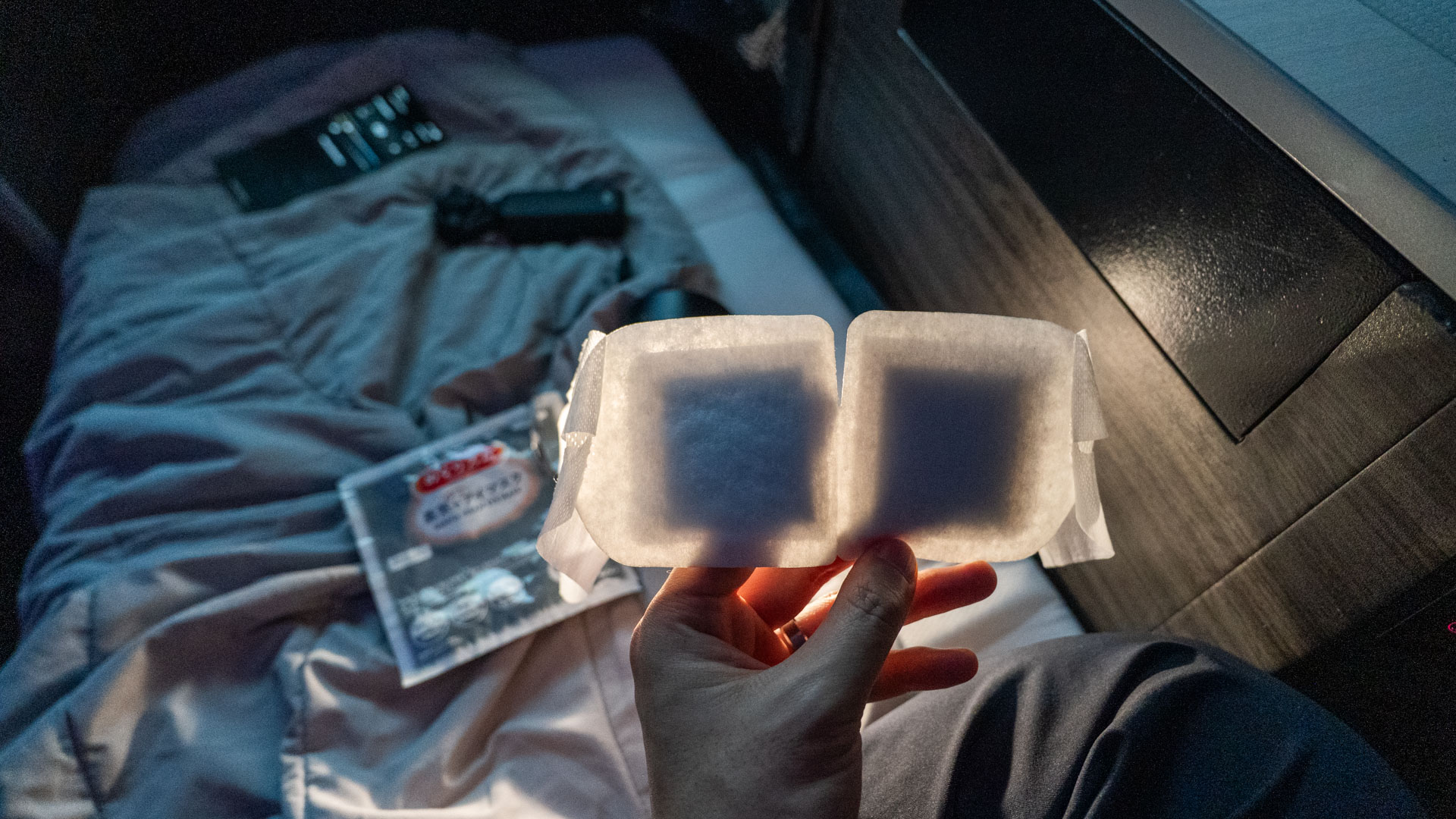
I’m delighted to see the steam eye mask make a return here, after experiencing it in First Class. The only issue is that the cabin is too warm to fully enjoy the eye mask, so I’d take it home as a souvenir in the future.
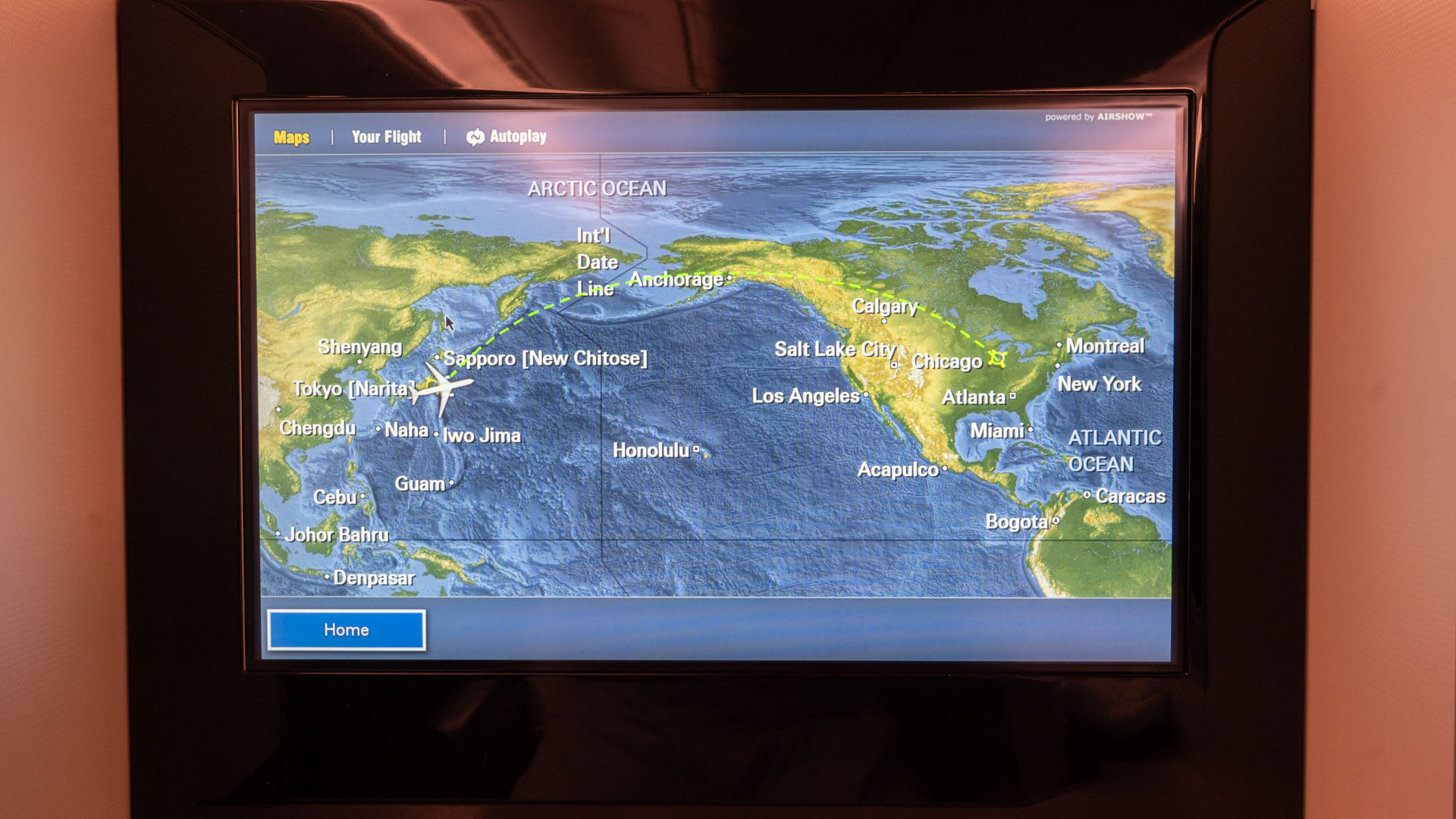
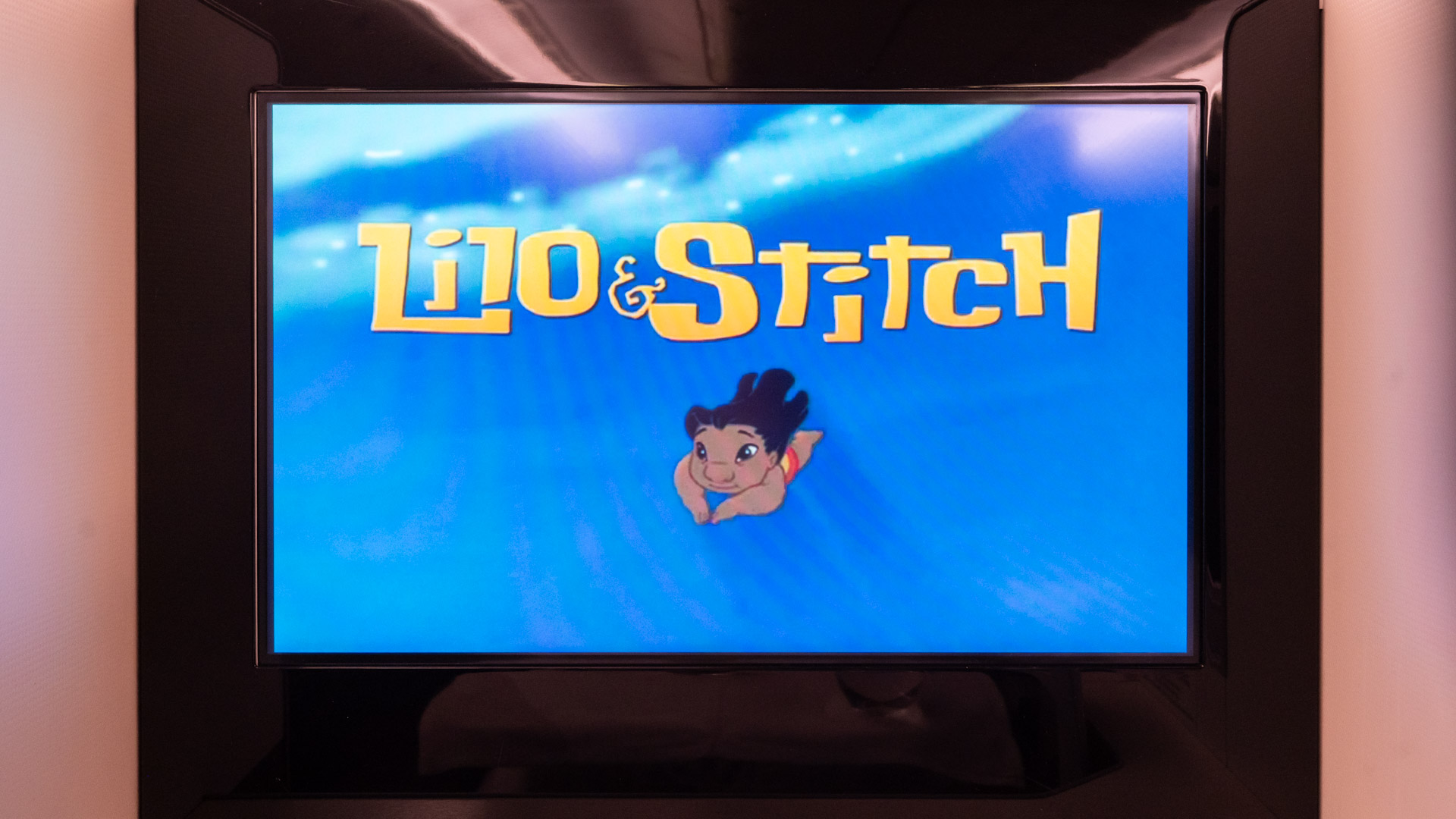
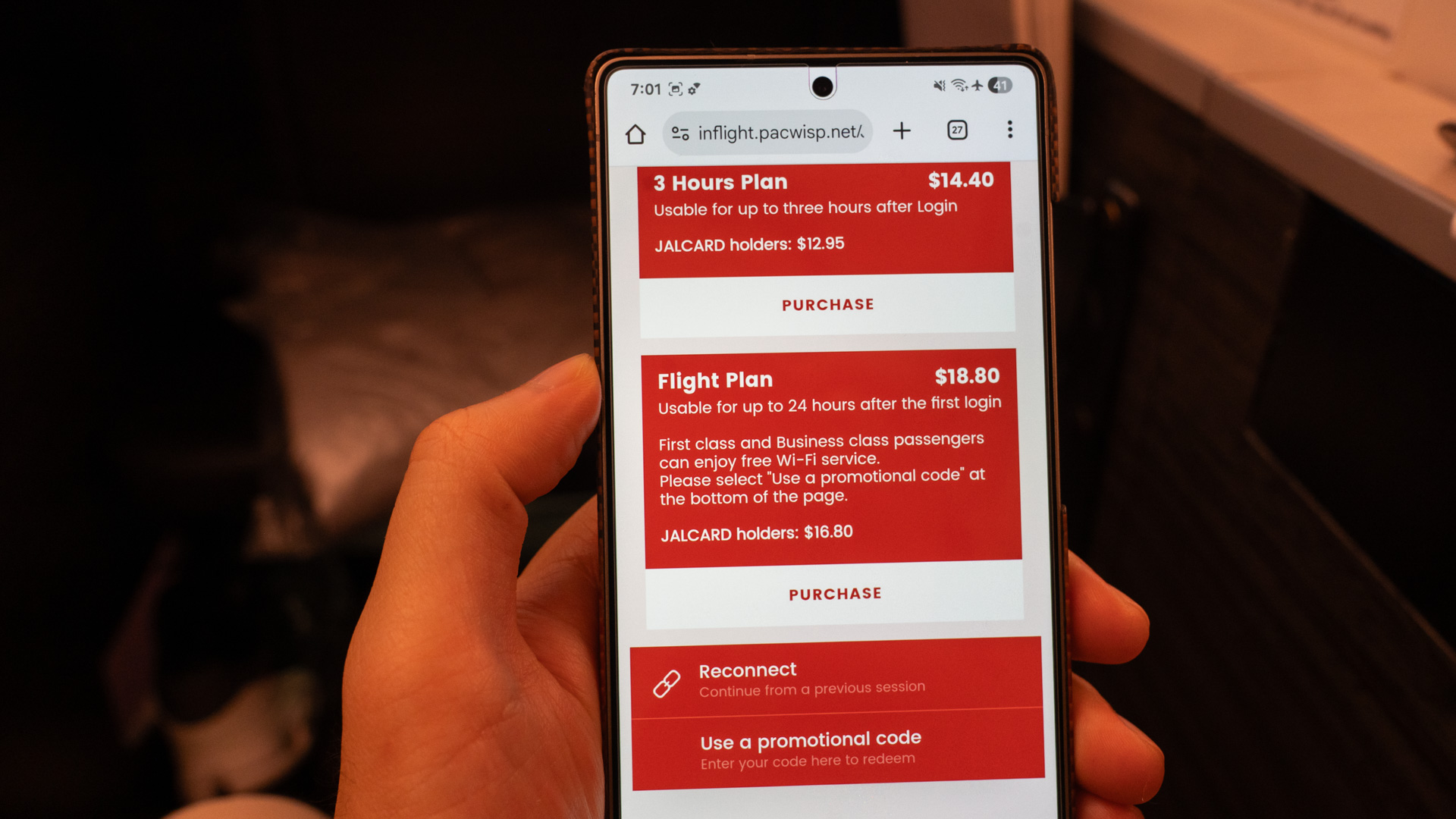
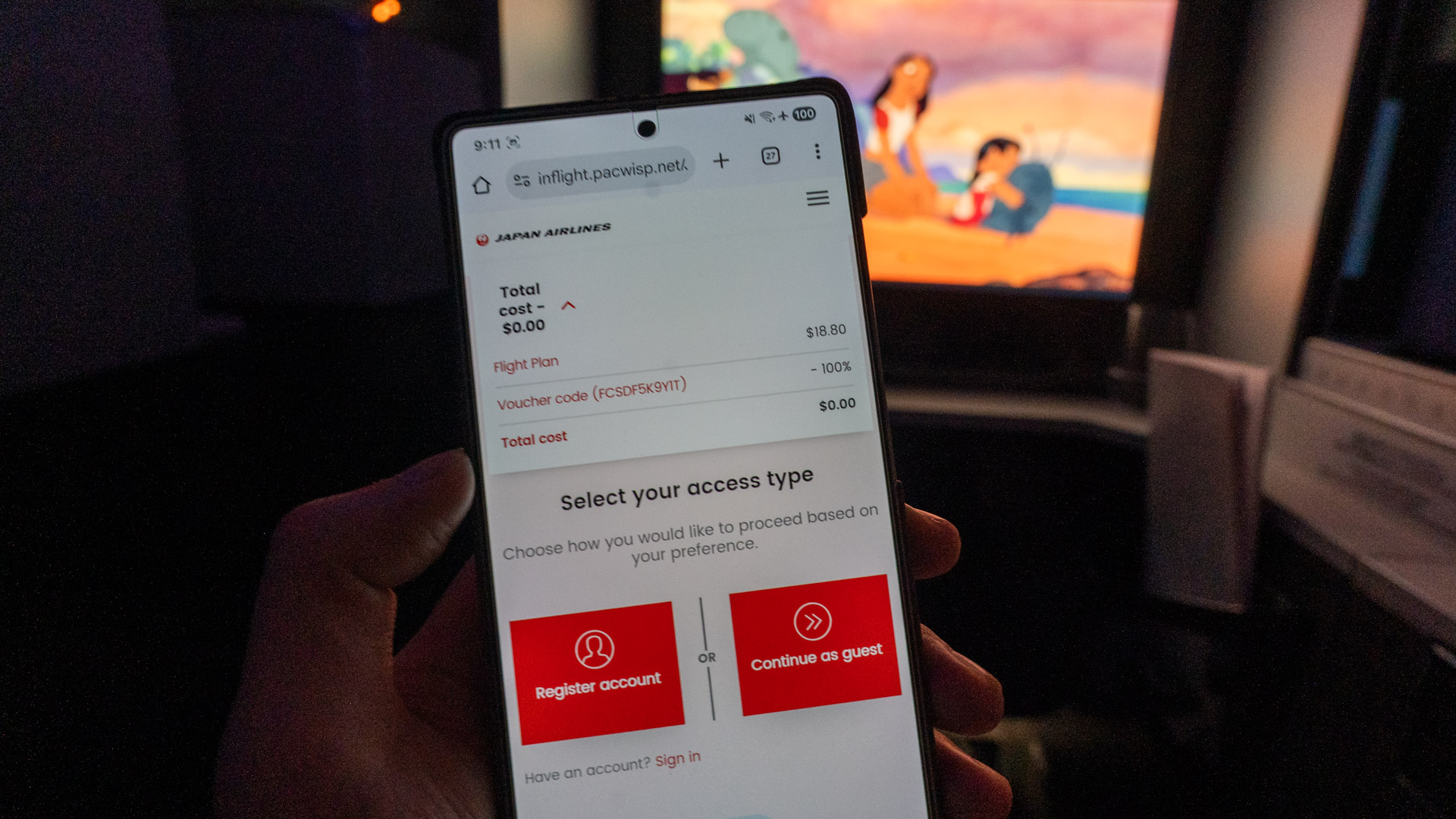
On the tech front, everything works well enough. The in-flight entertainment system is clunky and offers a modest but well-curated selection of Japanese and international films. The Wi-Fi connection (usually priced at US$18.80 for the whole flight) is free for Business Class guests and works reliably for emails and light browsing.
My power adapter easily plugs into the AC port and keeps my devices topped up throughout the flight.
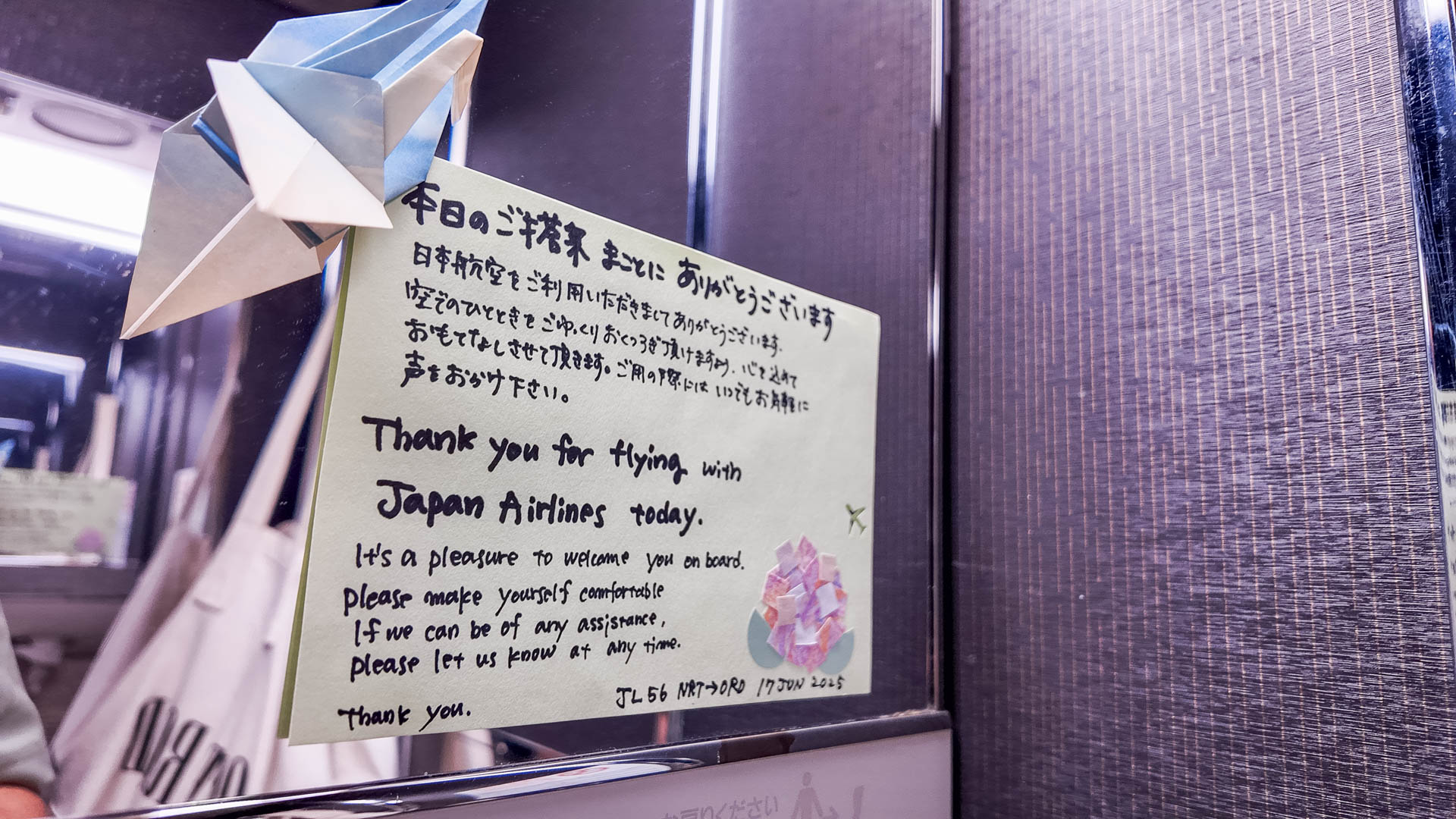
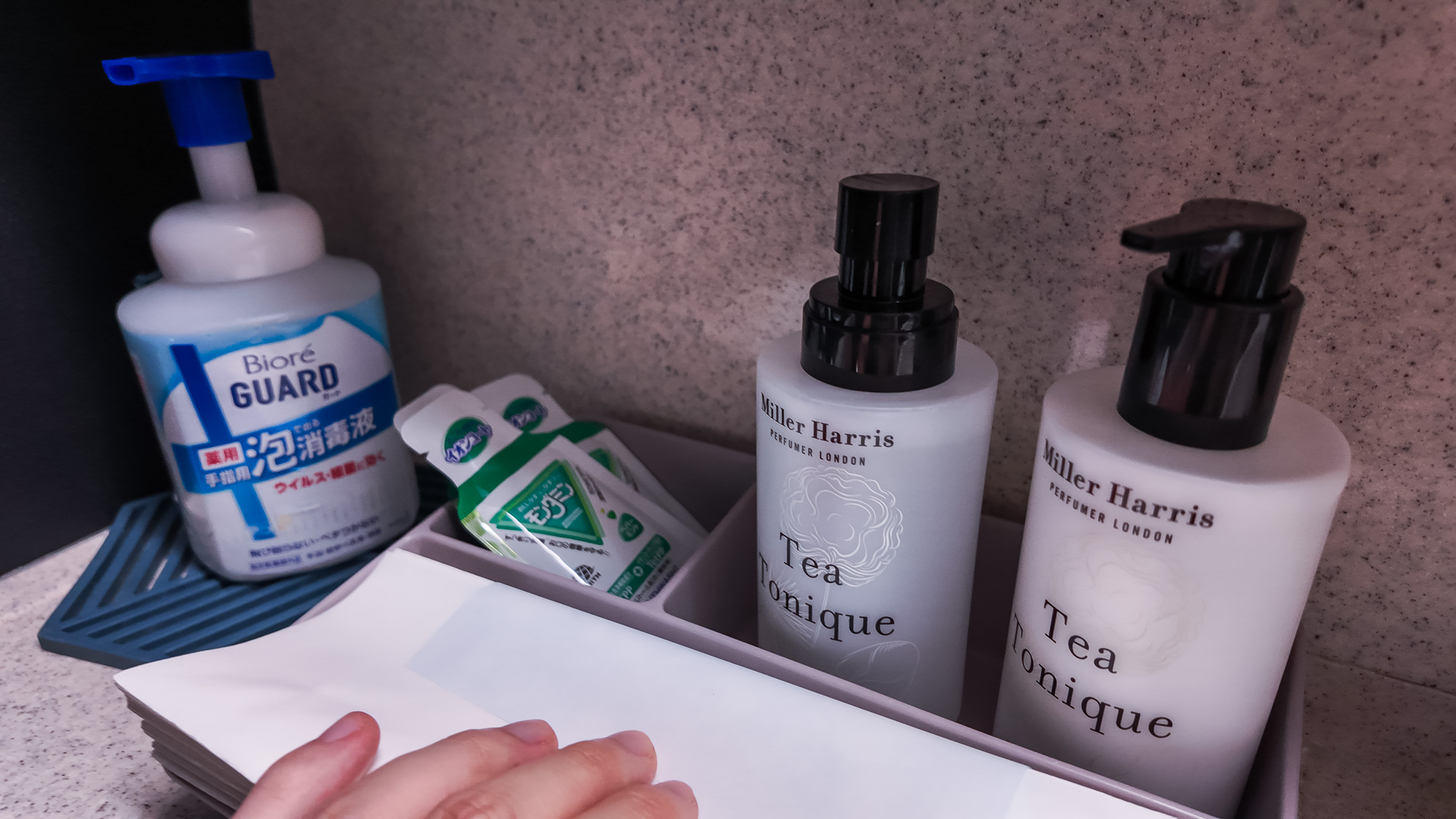
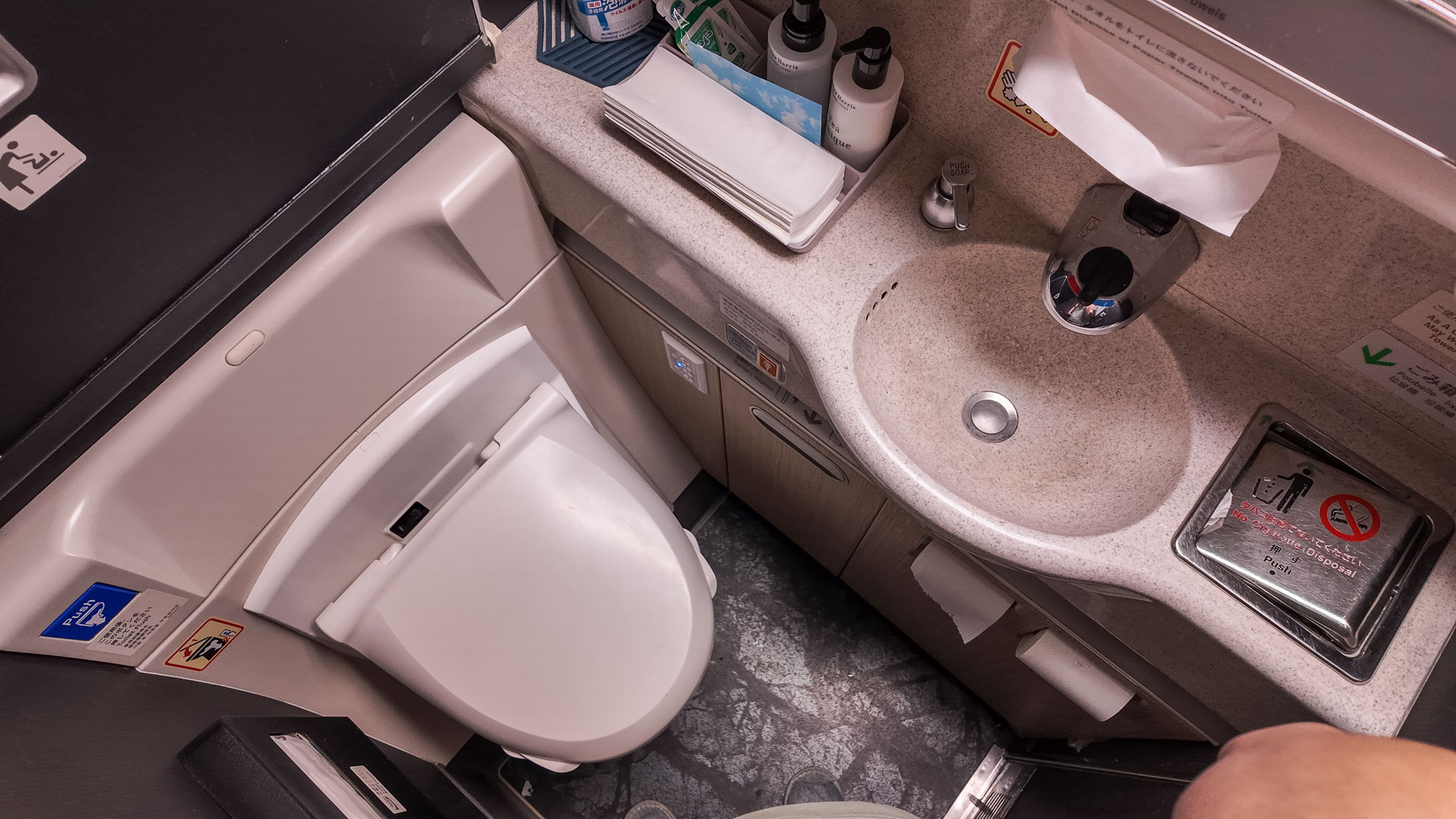
Even the lavatories impress – spotless throughout, equipped with bidets, mouthwash and fresh amenities, plus a handwritten thank-you note from the crew. I’ve never seen a team go above and beyond like this.
How to book Japan Airlines Business Class with points
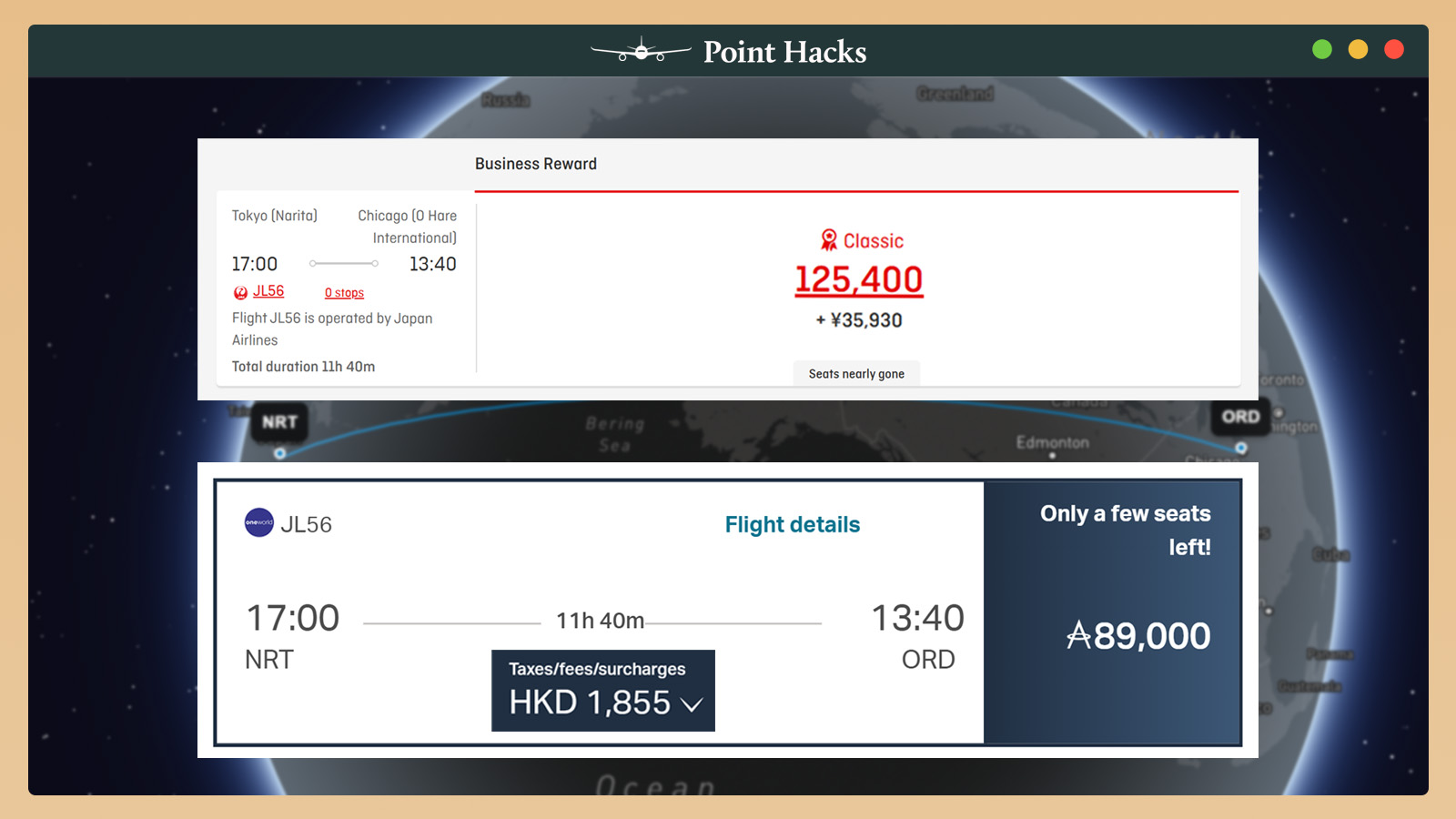
This Tokyo-Chicago route is a great way to experience Japan Airlines’ service across the Pacific. It’s also fully bookable with several major frequent flyer programs used by Australians.
- Qantas Points: 125,400 Qantas Points + ¥35,930 (~A$365)
- Cathay Asia Miles: 89,000 miles + HKD 1855 (~A$368)
- JAL miles: 55,000 miles + A$365.80
Many people have Qantas Points. Unfortunately, the latest Classic Reward rate increases make it a relatively expensive redemption. It’s not bad as part of a round-the-world redemption, though.
Cathay’s Asia Miles offers better value and is still a relatively easy transfer partner to access, while JAL Mileage Bank provides unbeatable rates – starting from just 55,000 miles for this flight.
JAL Mileage Bank miles are now even easier to earn in Australia thanks to a new partnership with Pay.com.au, which allows small business owners to earn JAL miles on eligible payments to suppliers, rent, and more.
Point Hacks is affiliated with Pay.com.au.
Our verdict: Japan Airlines Boeing 777 Business Class
Japan Airlines Business Class on the Boeing 777 isn’t cutting-edge, but it’s refined, consistent, and still a comfortable experience. The Apex Suite design prioritises physical space (though not so much storage or privacy), while the service, cuisine, and attention to detail remain among the best in Asia.
If you value execution over extravagance, this is a Business Class experience worth your money, especially when booked with points. Just keep an eye on the cabin temperature, and don’t be afraid to approach the crew if it gets too warm – as it often does on Asian carriers.
Photography by Brandon Loo, who travelled at Point Hacks’ expense.
American Express Platinum Card

- Sign-up Bonus:
- 200,000 bonus Membership Rewards Points¹
- Rewards Earn Rate:
- Earn 2.25 Membership Rewards points per $1 on all eligible purchases, except for spend with government bodies, for which you will earn 1 point per $1 spent
- Annual Fee:
- $1,450 p.a.
- Offer expires
- 25 August 2026
- Enjoy 200,000 bonus Membership Rewards Points¹ when you spend $5,000 on eligible purchases in the first 3 months. (Offer available to new American Express Card Members only. Offer ends 25 August 2026. T&Cs apply.) Unlock premium perks including unlimited airport lounge access, international travel insurance, Amex Hotels and Resorts benefits, up to $400 in Global Dining Credit¹⁰, and a $450 Travel Credit⁵ each year. Earn up to 2.25 Membership Rewards Points per $1 on eligible spend. The annual fee is $1,450.
One thing I found pleasantly surprising recently was the quality of the western meals on Japanese airlines. I used to belong to the camp of people who scoff at anyone ordering a western meal when they can have the stunning Japanese one. After trying a couple recently both on JAL and ANA, I can comfortably say that they are just as good, and (surprisingly?) are a uniquely Japanese take of a western meal. Not sure if it’s the balance or the attention to detail, but I found them to be superb.